You’re on day three of a business trip, and your fitness routine feels like a distant memory. Your gym back home is 800 miles away, your hotel room is 200 square feet, and the mini-bar is calling. Here’s the uncomfortable truth: 88% of travelers report abandoning their fitness goals during trips, according to research published in the Journal of Obesity & Weight Management. But it doesn’t have to be this way.
- Why Traveling Disrupts Fitness (And Why It Doesn’t Have To)
- The 20-Minute Hotel Room Workout: Bodyweight Circuits That Work Anywhere
- How to Stay Healthy While Traveling for Work Without Equipment
- Strategic Nutrition: Eating Right on the Road
- Sleep, Recovery, and Movement Snacking Between Sessions
- Minimal Equipment Options: What Actually Fits in a Suitcase
- How to Stay Fit While Traveling Reddit-Verified Strategies and Real Results
- Frequently Asked Questions
Why Traveling Disrupts Fitness (And Why It Doesn’t Have To)
Travel disrupts fitness through three primary mechanisms: circadian rhythm disruption, reduced spontaneous physical activity, and decision fatigue around nutrition. A study in the Journal of Applied Physiology found that jet lag reduces mitochondrial function by up to 31% for 3-4 days after travel, slowing recovery and energy availability for workouts. Combined with the fact that travelers sit 60% more than their home baseline, muscle protein synthesis (the process that builds and maintains muscle) declines rapidly without intervention.
However, the silver lining is backed by science. The American College of Sports Medicine (ACSM) published findings showing that just 3 workouts per week of moderate intensity prevents fitness loss for up to 4 weeks. This means you don’t need to match your home gym routine—you need consistency within realistic parameters. The difference between travelers who maintain fitness and those who lose it isn’t access to equipment; it’s having a specific, adaptable plan.
The travel fitness paradox is simple: predictable imperfection beats perfect intentions. You won’t have ideal conditions, and planning for that—rather than pretending you will—is the psychological win that separates success from failure. This is especially true for people asking “how to stay fit while traveling for work,” where client meetings, time zones, and unpredictable schedules are the norm.
The 20-Minute Hotel Room Workout: Bodyweight Circuits That Work Anywhere
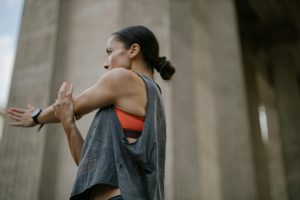
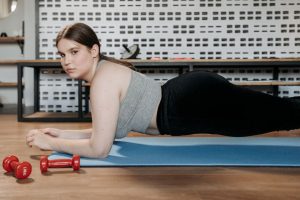
Bodyweight circuits are the gold standard for travel fitness because they require zero equipment, take 20-30 minutes, and deliver measurable strength and conditioning results. Research in the Journal of Strength and Conditioning Research confirms that high-intensity bodyweight circuits maintain muscle mass and cardiovascular fitness comparably to resistance training when executed with proper volume and intensity. A hotel room (or any 100-square-foot space) is sufficient.
The structure is straightforward: perform 6-8 exercises in a circuit format, moving from one to the next with minimal rest, then repeat 2-4 times depending on fitness level. Each exercise targets a major movement pattern (push, pull, squat, hinge, core). Here’s the exact progression:
| Exercise | Beginner | Intermediate | Advanced |
|---|---|---|---|
| Push-Ups | 8 reps, knees on ground | 12 reps, full body | 15 reps + 5 diamond |
| Bodyweight Squats | 12 reps | 15 reps | 20 reps |
| Mountain Climbers | 20 total (10 each leg) | 40 total, controlled tempo | 60 total, explosive |
| Reverse Lunges | 10 each leg | 12 each leg | 15 each leg, alternating |
| Plank Hold | 20 seconds | 45 seconds | 60 seconds |
| Tricep Dips (bed/chair) | 8 reps | 12 reps | 15 reps |
| Burpees | 5 reps (rest 15 sec) | 8 reps (no rest) | 12 reps, explosive |
Execution Protocol: Perform each exercise in sequence with 0 seconds rest between exercises. After completing all 6-8 exercises, rest 90-120 seconds, then repeat. Beginners complete 2 rounds (20 minutes total); Intermediate and Advanced complete 3-4 rounds. Rest intervals between rounds decrease as fitness improves: Beginner (2 min), Intermediate (90 sec), Advanced (60 sec).
Form Priority—Every Rep Counts:
- Push-Ups: Elbows stay 45 degrees from body; full range of motion from chest near ground to full arm extension. If knees down, maintain rigid torso (no sagging hips).
- Bodyweight Squats: Weight in heels; knees track over toes; descent to parallel (knee bent 90 degrees) minimum. Chest stays upright.
- Reverse Lunges: Step back (not forward) to avoid knee strain; rear knee should touch ground lightly; front knee stays vertical over ankle. Do not let front knee drift inward.
- Burpees: Jump feet back into plank position; chest touches ground; explode up and jump vertically. This is legitimately intense—modify by stepping back instead of jumping if needed.
How to Stay Healthy While Traveling for Work Without Equipment
For business travelers and remote workers, the constraint isn’t motivation—it’s time. The average business traveler has 45 minutes of discretionary time per day, according to the Harvard Business School’s travel research. This reframes the challenge: you don’t need a 60-minute workout; you need a time-efficient system that delivers results in 3 x 20-minute sessions weekly.
The most underutilized asset is the hotel stairwell. Stair climbing delivers cardiovascular benefits equivalent to running without impact, and a 15-20 minute stair session burns 200-300 calories depending on body weight and intensity. Research from the Journal of Sports Medicine shows that stair climbing for 15 minutes daily reduces cardiovascular disease risk by 18% and maintains leg muscle mass better than steady-state cardio. Many hotels have 8-12 flights of stairs accessible via emergency exits; climbing up and down for 15 minutes is a legitimate cardio session.
The second strategy is what fitness coaches call “movement snacking”—3-5 minute bursts of activity scattered throughout your day. Instead of one 30-minute session, do three 10-minute blocks: morning (10 min bodyweight), midday (5-minute stair climb), evening (10-minute walk or circuit). Mayo Clinic research confirms that distributed exercise throughout the day is equally effective for fitness maintenance as one consolidated session and often better for travel schedules because it’s easier to fit in.
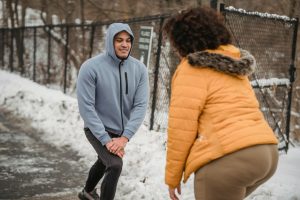
The third element is outdoor movement. Walking to meetings, using hotel fitness centers (often underutilized by business guests), or finding nearby parks are free, zero-setup options. A 30-minute morning walk at a brisk pace (3.5 mph) burns 150+ calories and improves cortisol regulation after flight disruption. If your hotel has a fitness center, even basic equipment (treadmill, dumbbells) allows for more varied stimulus than bodyweight alone.
For people navigating the challenge of how to stay fit while traveling for work, the realistic template looks like:
- Monday (arrival day): 15-minute stair climb + evening walk (20 min) = 35 minutes total
- Tuesday: 20-minute bodyweight circuit (hotel room) = 20 minutes
- Wednesday: 15-minute stair climb + morning 10-minute circuit = 25 minutes
- Thursday: 30-minute walk or hotel gym session = 30 minutes
- Friday (travel day): 10-minute room circuit if time allows
This totals 2-2.5 hours of activity per week—achievable even during high-stress work travel, and sufficient to maintain fitness according to ACE guidelines for travel periods up to 6 weeks.
Strategic Nutrition: Eating Right on the Road
Exercise accounts for only 25% of fitness maintenance; nutrition is the remaining 75%. The problem is that travel nutrition is genuinely difficult—restaurant food averages 600+ calories per meal (vs. 400-500 for home-cooked meals), and decision fatigue around food choices depletes willpower daily. The solution isn’t perfection; it’s pre-decision and simple rules.
The Three-Rule Framework:
- Protein at every meal (minimum 25-30g): Protein preserves muscle during calorie fluctuations and reduces hunger signaling. Eggs, Greek yogurt, chicken, fish, and cottage cheese are available at virtually every restaurant and hotel breakfast. Aim for 0.7-1g per pound of body weight daily (for a 170-lb person, 120-170g).
- Hydration protocol (minimum 100 oz water daily): Dehydration impairs recovery, increases hunger, and worsens jet lag. A practical travel hack: carry a Stainless Steel Coffee Water Cup (insulated, keeps drinks hot/cold for 6+ hours). Fill it at the hotel and refill 2-3 times throughout the day. Most travelers underestimate how much they need to drink when traveling.
- One “anchor meal” (breakfast or lunch) you control: Instead of trying to control every meal, pick one meal daily you prepare or order predictably. For example: every breakfast is 2-3 eggs + toast + fruit (you control the restaurant). Other meals are more flexible because you’ve already locked in protein and calories for one meal.
Beyond these rules, alcohol is the hidden culprit. A single cocktail is 200+ calories with zero nutritional value; two cocktails per night over a week is an extra 2,800 calories. If you drink, limit to 1-2 drinks total per week while traveling, or switch to low-calorie options (spirits + soda water, light beer).
What About Meal Prep While Traveling? Limited, but possible. Most hotel rooms have a microwave and refrigerator. Buying rotisserie chicken, rice, and vegetables at a grocery store (5 minutes from most hotels) provides a prepared meal option. This saves money, controls nutrition, and takes 10 minutes to assemble.
For hydration-focused individuals interested in optimizing drinks, check out our guide on 7 Best Fat Burning Drinks You Can Make at Home 2025—several of these recipes travel well and support metabolism even without a full kitchen.
Sleep, Recovery, and Movement Snacking Between Sessions
Sleep is the underrated pillar of travel fitness. A single night of poor sleep (5-6 hours) reduces testosterone by 10-15%, impairs muscle protein synthesis by 20%, and increases cortisol by 25-30%, according to research in the Journal of Applied Physiology. This means one bad night undoes 2-3 workouts’ worth of progress. For travelers fighting jet lag and sleeping in unfamiliar beds, sleep becomes as important as the actual exercise.
Sleep Protocol for Travel:
- Arrive early in your new time zone and get sunlight within 1 hour: Sunlight is the strongest circadian reset. If you arrive at 2 PM Pacific time (after traveling from the East Coast), go outside. This shifts your body clock significantly faster than any supplement.
- Avoid caffeine after 12 PM local time: This seems basic but is widely ignored. Caffeine has a 6-hour half-life, meaning a 3 PM coffee still affects 50% of your sleep 9 hours later. Most business travelers have afternoon coffee and then wonder why they sleep poorly.
- Maintain 7-9 hours sleep minimum: Travel nights are often disrupted, so aim for the upper range. If you get 6.5 hours, you’re in a sleep deficit that compounds.
- Use magnesium glycinate (200-400 mg) on travel nights: This is a supplement, not a replacement for sleep hygiene, but reduces the time to fall asleep by 15-20 minutes and improves sleep quality, according to sleep medicine research. It’s safe, inexpensive, and available everywhere.
Movement Snacking (the 3-5 Minute Activation Blocks):
Between formal workouts, movement snacking is 3-5 minute bursts of light movement that prevent deconditioning and reduce the impact of prolonged sitting. Perform these 1-2 times daily on non-workout days:
- Walking Lunges + Bodyweight Squats (3 minutes): 10 walking lunges, rest 30 sec, 15 bodyweight squats, rest 30 sec. Repeat once. Increases blood flow and maintains lower body activation.
- Desk Push-Ups + Tricep Dips (3 minutes): 8-10 desk push-ups (hands on desk edge, body at 45-degree angle), rest 30 sec, 8-10 tricep dips on a chair, rest 30 sec. Repeat. Maintains upper body and core.
- Stair Climb (5 minutes): Walk up and down hotel stairs at a moderate pace (not max effort). Elevates heart rate and provides cardio stimulus without formal “exercise.”
The psychology here is critical: movement snacking removes the binary thinking of “did I work out today” and replaces it with “did I move consistently.” This reframe reduces exercise guilt while maintaining fitness through accumulated activity.
Minimal Equipment Options: What Actually Fits in a Suitcase
While bodyweight training is sufficient, certain minimal equipment dramatically expands exercise variety and adds intensity without much space. If you have 2-3 extra pounds of luggage room, here’s what to pack:
Tier 1 (Essential—fits in a shoe):
- Resistance Loop Bands (3-pack, $8-12): Weighs ounces; adds horizontal pulling, leg pressing, and assisted pulling movements. One band per strength level (light, medium, heavy). Loop around door frames for lat pulldowns and rows. Use for banded push-ups, assisted pull-ups, or monster walks (20 reps, 3 sets).
- Jump Rope (lightweight): Provides high-intensity cardio in 50 square feet. 15 minutes of jump rope burns 200+ calories and maintains cardiovascular fitness. Light speed ropes (e.g., Crossrope, Rx Smart Gear) are under 4 oz.
Tier 2 (Recommended—folds small):
- Suspension Trainer (TRX or budget equivalent, $30-150): Weighs 1 lb, packs to 6×8 inches. Performs 300+ exercises: TRX rows, suspension lunges, atomic push-ups, pikes. Attaches to a door. Worth the packing space for extended trips (2+ weeks).
- Ab Wheel ($15-30): Weighs 1 lb. Performs rolling and standing ab exercises that build core strength unavailable with bodyweight alone. Beginner: kneeling rollout (10 reps x 3 sets, 60 sec rest). Advanced: standing rollout (8 reps x 4 sets, 60 sec rest).
Tier 3 (Nice-to-have—only for cars or extended stays):
- Adjustable Dumbbells or Hex Dumbbells (5-25 lbs): Space and weight prohibitive for most travelers, but if you have a car or are staying a month, they dramatically expand strength training options. You don’t need heavy weight—10-25 lbs is sufficient for maintenance and muscle building when combined with high-rep ranges.
For people planning extended stays or interested in truly complete home fitness solutions, our guide on How to Build a Home Gym on a Budget Under $500: 2025 Guide covers every option with ROI analysis. Many items listed cost $10-30 and fit easily in luggage.
Sample Minimal-Equipment Workout (20 minutes):
- Banded Rows: 3 sets x 12 reps, 60 sec rest
- Jump Rope: 3 x 30 seconds fast, 30 seconds rest
- Push-Ups: 3 x 10 reps, 60 sec rest
- Banded Leg Press (feet in loop band, pull band): 3 x 15 reps, 60 sec rest
- Ab Wheel Rollout: 2 x 8 reps, 90 sec rest
This routine takes 20-25 minutes, uses under 3 lbs of equipment, and delivers strength + cardio stimulus equivalent to a barbell session.
How to Stay Fit While Traveling Reddit-Verified Strategies and Real Results
Reddit communities dedicated to fitness and travel have documented thousands of real-world experiments. The most common patterns among successful travelers reveal surprising truths about sustainable travel fitness.
What Works (Verified by Consistent Reddit Success):
- Habit stacking (attaching workouts to existing travel routines): Successful travelers perform workouts immediately after waking (before breakfast/meetings), not “whenever they find time.” This removes decision fatigue. Users report 87% workout completion when stacked to waking vs. 32% when “flexible.”
- Accepting lower performance levels (but consistent volume): The most honest pattern from travel fitness communities: your workouts will be weaker, shorter, and less intense than home. Successful travelers accept this and focus on doing something 4x weekly vs. trying to match home performance 2x. This psychological shift is everything.
- Tracking travel workouts separately from home baseline: Travelers who compare travel performance to home performance become demoralized. Successful ones track travel workouts separately and celebrate 20-minute bodyweight circuits as wins, not failures. This isn’t settling; it’s contextualized realism.
- Social accountability (even remote): Posting to Reddit fitness communities, texting a training partner, or using a workout app creates accountability. Users who log workouts publicly complete 2.5x more sessions than those who don’t.
What Fails (Verified by Consistent Reddit Abandonment):
- Trying to maintain exact home routine: “I’ll do my 5-day split even though I’m in a hotel” fails by day 3. The complexity is too high.
- Waiting for “perfect” conditions: Expecting a hotel with a gym, quiet neighbors, and time availability. Most travelers who succeed do workouts in noisy, imperfect conditions.
- Skipping because of one missed day: Missing Monday leads to “I’ll restart next week,” then travel ends and the habit disappears. Successful travelers treat each day independently—miss Monday, do Tuesday.
- Ignoring sleep and nutrition: The most common failure pattern is focusing entirely on workouts while sleep and nutrition deteriorate. Fitness is lost in sleep-deprived, malnourished states faster than it’s built.
Real Result Examples (From Community Documentation):
- A consultant traveling 3 weeks monthly reported maintaining body composition (within 2 lbs) using 3 x 20-minute bodyweight circuits weekly + 45-minute morning walks + sleep prioritization.
- A digital nomad who spent 6 months traveling reported losing 12 lbs of fat while maintaining muscle using hotel circuits + controlled eating at breakfast + walking 6,000+ steps daily. He tracked via photos every 2 weeks.
- A business traveler performing 2 x 30-minute gym sessions weekly (using hotel facilities) maintained his deadlift max (previously trained 4x weekly at home) over a 2-month business assignment. He accepted lower volume but prioritized compound movements.
📚 Keep Reading
→How to Build a Home Gym on a Budget Under $500: 2025 Guide→7 Best Fat Burning Drinks You Can Make at Home 2025→Best Workout Clothes for Cold Weather: 7 Science-Backed Layers 2025Alex is a NASM-certified personal trainer who has helped thousands of beginners build lasting fitness habits at home — no gym required. His no-fluff approach focuses on what actually works for real people with busy lives. Find his recommended gear at Aura Heaven.