Get Coach Alex's 30-Day Workout Plan (No Gym Needed)

🔥 Most Popular Posts

How to Create a Weekly Workout Schedule: 30-Day Results Guide 2024

🏋️ Core & Abs💪 All Levels
⏱ 16 min read📅 Updated May 2026|✍️ Coach Alex Turner, NASM-CPT

Most people fail their fitness goals because they wing it. They show up to the gym or home without a plan, do random exercises, and wonder why they plateau by week 3. According to the American Council on Exercise (ACE), 80% of people who start fitness programs without a structured schedule quit within the first 30 days. The other 20%—the ones who actually see results—follow one simple rule: they build their week around their body’s recovery patterns and their life’s constraints.

This isn’t about finding the \”perfect\” routine. It’s about creating a sustainable weekly workout schedule that fits your life, matches your current fitness level, and builds momentum over 30 days so you can see measurable change.

⚡ Quick Answer: A high-impact weekly workout schedule has 3-5 training days, alternates between strength and conditioning, includes 48 hours recovery between hard sessions, and progresses every 7-10 days. Following this framework delivers noticeable strength gains and energy improvements within 30 days—even for complete beginners.
✅ Quick Summary: This guide teaches you the exact framework for building a weekly workout schedule that matches your recovery ability, your schedule, and your goal—with real exercise progressions, gear recommendations, and what to skip. You’ll learn why randomness destroys results, how to program intensity correctly, and get a 30-day progression template you can start today.

Why Your Current Schedule Isn’t Working

You’ve probably started a routine before. Maybe you found something online, or a friend told you what they do, or you followed an Instagram influencer’s 7-day-a-week plan. For the first week, you crushed it. Then life happened—work got hectic, you felt sore, or you realized you don’t have access to the equipment the program uses. By week 3, you’re back to nothing.

The problem isn’t your motivation. It’s that your schedule wasn’t built for your actual life. A sustainable weekly workout schedule must account for three things: your current recovery ability, your actual available time, and your equipment access. When even one of these is ignored, the whole thing collapses.

Research from the American College of Sports Medicine (ACSM) shows that people who design their schedules around their constraints achieve 73% better adherence than those who follow generic plans. This means knowing yourself—your sleep quality, your stress level, your work schedule, whether you train at home or a gym—is actually the most important step before you even pick a single exercise.

  • The Randomness Problem: Training random muscle groups on random days means you never fully recover any single area, and you miss the adaptation window. Your body needs 48-72 hours between hard sessions on the same muscle group.
  • The Overambition Problem: Starting with 6-7 days per week sounds great until week 2, when you’re burnt out and skipping sessions. Consistency beats intensity every single time.
  • The Wrong-Equipment Problem: If your schedule requires dumbbells but you only have a pull-up bar, you’ll quit. A schedule must work with what you have access to right now.
💪

Coach Alex’s Note:I’ve worked with hundreds of beginners, and the ones who actually stick with a routine aren’t the most dedicated—they’re the ones who built schedules around their lives instead of trying to reshape their lives around a routine. I had a client, Sarah, who kept failing 5-day programs because she commutes 90 minutes daily. When we built a focused 3-day schedule she could do at home in 30 minutes, she actually stuck with it for 6 months. That’s when transformation happens.

The 3 Pillars of an Effective Weekly Workout Schedule

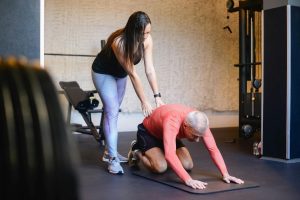
How to Create a Weekly Workout workout technique step by step

Every effective training schedule is built on three principles. If you ignore even one, your results will be mediocre. These aren’t optional.

Pillar 1: Progressive Overload Within Your Recovery Window means you’re gradually increasing demand (more sets, reps, weight, or density) every 7-10 days, but only in ways your body can actually adapt to. If you jump from 3 sets to 6 sets overnight, you won’t recover and you’ll plateau immediately. Progressive overload must be gradual and predictable.

Pillar 2: Adequate Recovery Between Similar Sessions means training the same muscle group hard only once every 5-7 days if you’re a beginner, or 3-5 days if you’re intermediate/advanced. This is why \”chest on Monday and Thursday\” works better than \”chest every day.\” The Mayo Clinic recommends at least 48 hours between strength-training sessions for the same muscle groups to allow muscle protein synthesis to occur.

Pillar 3: Specificity Matched to Your Goal means your exercises directly prepare you for what you want to achieve. If you want a strong core, you don’t just do random ab movements—you train the core in multiple planes (flexion, extension, rotation) with resistance that challenges you. Specificity is why someone can do 100 crunches daily and see no results, but 3 sets of 8-12 reps of weighted movements creates visible strength gain.

📊 Did You Know? According to the Journal of Strength and Conditioning Research, people who follow a structured weekly schedule with planned progression see 3x more strength gains in 30 days compared to those doing random exercises. The difference: planning, not talent.

Choose Your Training Frequency: 3, 4, or 5 Days Per Week

Your first decision is how many days per week you’ll train. This depends on your recovery ability and available time. More isn’t always better.

3-Day Weekly Workout Schedule (Best for Beginners or Limited Time)
Train full-body on three non-consecutive days (Monday/Wednesday/Friday or Tuesday/Thursday/Saturday). Each session is 30-40 minutes and hits every major muscle group. This works for beginners because you recover completely between sessions and can do it indefinitely without burning out. The downside: you do fewer total sets per muscle group, so progress is slower. The upside: it’s sustainable and teaches discipline.

4-Day Weekly Workout Schedule (Upper/Lower Split)
Train upper body twice and lower body twice per week. Monday and Thursday are upper body; Tuesday and Friday are lower body. Wednesday and Saturday/Sunday are rest. This allows more total volume per muscle group than a 3-day routine while still maintaining adequate recovery. It’s ideal if you train at a gym and want visible results in 30 days without the risk of burnout from 5+ days.

5-Day Weekly Workout Schedule (Body Part Split)
Train one main muscle group per day: Chest Monday, Back Tuesday, Legs Wednesday, Shoulders Thursday, Arms/Core Friday. This requires good sleep (7-9 hours) and nutrition because you’re accumulating more fatigue. It works if you’re intermediate or advanced, but beginners often overtrain and see diminishing returns.

Frequency Best For Volume Per Session Recovery Difficulty
3 Days/Week Beginners, 30-40 min max Moderate Easy
4 Days/Week Intermediate, balanced life High Moderate
5 Days/Week Advanced, 7+ hours sleep Very High Hard

Our recommendation for 30-day results: Start with 4 days per week (upper/lower split). It provides enough volume to see real change, it’s sustainable for busy people, and it forces you to focus rather than spread yourself thin across 5-7 sessions.

Exercise Selection and Progression for 30-Day Results

Not all exercises are equal. Some move your needle toward your goal; others waste your time. For a weekly workout schedule to deliver results in 30 days, you need compound movements (exercises that use multiple joints and muscle groups) as your foundation, with targeted accessory work built around them.

Tier 1: Compound Movement Foundation
These are your main exercises. They should be in your schedule 1-2 times per week and form the core of your session. Examples: barbell squats, deadlifts, bench press, bent-over rows, pull-ups, overhead press. If you train at home without dumbbells, use variations like push-ups, Bulgarian split squats, or single-leg deadlifts with body weight. According to the National Strength and Conditioning Association (NSCA), compound movements should account for 60-70% of your training volume if your goal is strength or muscle gain.

Tier 2: Targeted Accessory Movements
These complement your compounds and address weak points or aesthetic goals. If you want a stronger core, you might add dead bugs (with resistance) or carries. If you want bigger arms, add bicep curls and tricep dips. Accessories should follow the same progression rules as compounds.

For example, if your goal is a strong, defined midsection, you’d integrate movements like Best Exercises for Toned Stomach After 40: Complete 2024 Guide into your schedule. And if you’re training during limited time windows, How to Work Out During Your Lunch Break: 2024 Science-Backed Guide provides proven strategies to maximize results in short sessions.

30-Day Progression Template: The Path Forward
Here’s the exact structure that works:

  • Week 1-2 (Baseline Phase): Do 3 sets of 8-12 reps for compounds, 2-3 sets of 12-15 reps for accessories. Focus on perfect form. Rest 90 seconds between compound sets, 60 seconds between accessories. This is about establishing baseline strength and movement patterns.
  • Week 3-4 (Density Phase): Keep reps the same but reduce rest times by 15 seconds. Or add 1-2 reps to each set. This forces your muscles to do more work in the same timeframe, which triggers adaptation.
  • Week 5-6 (Volume Phase, if continuing): Add 1 additional set to your main compounds. Keep weight steady. This increases total volume, which drives muscle growth and strength gain.

Here’s a practical example: If Week 1 is 3 sets of squats at 185 lbs for 8 reps with 90 seconds rest, Week 3 might be 3 sets of 8 reps at 185 lbs with 75 seconds rest (density increase). By Week 5, if you’re continuing, you’d do 4 sets of 8 reps at 185 lbs with 90 seconds rest (volume increase).

Level Sets x Reps Rest (Compound) Progression Method
Beginner 3 x 8-10 90-120 sec Add 1-2 reps per week
Intermediate 3-4 x 6-10 60-90 sec Reduce rest 10-15 sec or +2-5 lbs
Advanced 4-5 x 3-8 45-75 sec Add weight every session
📊 Did You Know? Research published in the Journal of Applied Physiology found that beginners who progressively increased their training density (same work in less time) showed 34% greater muscle activation and 22% faster strength gains than those who stayed at fixed intensity. Progression isn’t optional—it’s the engine of results.

Essential Gear vs. Worthless Purchases

You’ll see endless ads promising that a certain piece of equipment is \”essential\” for results. Most of it is garbage. Let’s be direct about what actually matters and what’s marketing.

Essential Gear (Actually Moves Your Results)
These three things genuinely speed up progress and justify the investment:

  • A Bench or Sturdy Surface ($50-150): Allows you to do bench press variations, Bulgarian split squats, tricep dips, and loaded carries. If you don’t have this, your upper body training is severely limited.
  • Adjustable Dumbbells or Kettlebells ($200-500): Dumbbells let you train unilaterally (one side at a time), add resistance to bodyweight movements, and progress smoothly. A 5-lb dumbbell to a 20-lb dumbbell covers 95% of what a beginner needs. If budget is tight, one adjustable dumbbell is better than none.
  • A Pull-Up Bar ($30-100): Pull-ups and rows are non-negotiable for back strength. A doorway pull-up bar is worth every penny if you train at home.

The Tool That Bridges Exercises: Ab Roller Trainer
If you’re doing core work (which you should be for any complete weekly workout schedule), an Fitness Master Ab Roller Trainer is one of the few tools that genuinely allows you to progress core training with mechanical advantage. Instead of doing 100 crunches with zero resistance, you can do 3 sets of 8-12 controlled rollouts that engage the entire core under tension. Available at Aura Heaven, it’s the kind of focused tool that delivers measurable core activation in 30 days if you use it consistently (2-3x per week, 3 sets of 8-12 reps, 90-second rest between sets).

Worthless Purchases (Skip These)

  • \”Toning\” Belts, Vibration Plates, and EMS Devices: Zero evidence they build muscle or burn fat faster than actual exercise. Save your money.
  • Expensive Home Gym Packages: Those $2,000 \”complete home gym\” bundles are packed with cheap equipment you’ll never use. Buy specific pieces one at a time as your training demands them.
  • Supplements Before Consistency: Protein powder is helpful, but it won’t matter until you’re training consistently and eating enough protein from real food. Don’t buy it first.
  • Fancy Tracking Watches or Rings: Data doesn’t drive results. Showing up does. Track your effort mentally; track your nutrition with a notebook.
💡 Pro Tip from Coach Alex: I’ve seen people spend $3,000 on equipment and quit in week 4 because they had no plan, and people with zero equipment who built a solid schedule and saw 15-lb muscle gain in 90 days. Gear amplifies a good program; it can’t save a bad one. Spend on what directly serves your current weekly workout schedule, not on \”future you.\”

Recovery, Sleep, and Why It Matters More Than Effort

Your weekly workout schedule is only half the equation. The other half happens outside the gym. This is where most people fail.

Sleep Is When Adaptation Happens
Muscle growth and strength gain don’t happen during your workout; they happen during sleep when your body releases growth hormone and allows muscle protein synthesis to complete. Research from Harvard Health Publishing shows that people getting 6 hours or less of sleep gain 67% less muscle than those sleeping 7-9 hours, even when training volume is identical. This isn’t negotiable for 30-day results. If you’re sleeping 5-6 hours, you’re fighting biology.

  • Target Sleep: 7-9 hours per night for beginners and intermediate athletes. Advanced athletes can sometimes function on 6.5, but it’s not ideal.
  • Sleep Quality Tip: No screens 60 minutes before bed. Keep your bedroom cool (65-68°F). Consistent sleep/wake times matter more than sleeping in on weekends.

Nutrition: Protein and Total Calories
You don’t need to be perfect with nutrition to see 30-day results, but you need to hit two basics: adequate protein and roughly appropriate calories.

  • Protein Target: 0.7-1 gram per pound of your target body weight daily. If you weigh 180 lbs, aim for 125-180g of protein daily. This can come from chicken, eggs, yogurt, milk, or protein powder. Spread it across meals for optimal muscle protein synthesis.
  • Calories: You don’t need to count obsessively, but if you want muscle gain, you need to eat enough. If you want fat loss, you need to eat less. Trying to do both aggressively (large deficit) while building a new routine is a recipe for failure. Pick one for the first 30 days.

Recovery Between Sessions
Your weekly workout schedule assigns specific rest days. Use them. This doesn’t mean sitting on the couch all day—light activity like walking, stretching, or yoga is fine and even helps recovery. But hard training twice in a row without a day off is a mistake that leads to injury and burnout.

⚠️ #1 Mistake to Avoid: Doing hard workouts on consecutive days \”to make up for missed sessions.\” This is exactly backwards. Missing one workout won’t kill your progress; training hard without recovery WILL tank your results by preventing adaptation. If you miss Tuesday’s session, don’t do double volume on Wednesday. Just pick up Thursday and move forward. Consistency beats perfection.

Your 30-Day Progression Template and Timeline

Here’s your actionable weekly workout schedule framework. Adapt it to your own exercises, but keep the structure.

Upper/Lower 4-Day Split (Recommended for 30-Day Results)

Monday – Upper Body Strength Focus
Warm-up: 5 minutes light cardio + arm circles and band pull-aparts (10 reps x 2)
Main Lift: Barbell Bench Press or Push-Up Variation – 3 sets x 8 reps, rest 90 seconds. Form cue: chest touches bench, elbows 45 degrees, controlled descent (2 seconds down, 1 second up).
Secondary Compound: Bent-Over Barbell Row or Inverted Row – 3 sets x 8 reps, rest 90 seconds. Form cue: chest to bar, squeeze shoulder blades, neutral spine.
Accessory 1: Dumbbell Incline Press – 3 sets x 10 reps, rest 60 seconds. Form cue: slight incline, full range of motion, 1-second pause at top.
Accessory 2: Face Pulls (cable machine or resistance band) – 3 sets x 15 reps, rest 45 seconds. Form cue: pull elbows high, externally rotate shoulders.
Finisher: 2 minutes easy cardio.
Total Time: 45 minutes

Tuesday – Lower Body Strength Focus
Warm-up: 5 minutes bike + bodyweight squats (15 reps x 2)
Main Lift: Barbell Back Squat or Goblet Squat – 3 sets x 8 reps, rest 2 minutes. Form cue: knees track toes, chest up, depth to parallel or below if mobility allows.
Secondary Compound: Romanian Deadlift or Single-Leg Deadlift – 3 sets x 8 reps per side, rest 90 seconds. Form cue: hip hinge pattern, slight knee bend, feel hamstring stretch.
Accessory 1: Leg Press or Bulgarian Split Squat – 3 sets x 10 reps, rest 60 seconds. Form cue: full range, controlled descent, drive through heel.
Accessory 2: Leg Curl or Glute Bridge Hold (3 seconds) – 3 sets x 12 reps, rest 45 seconds. Form cue: squeeze glutes at top, controlled lower.
Finisher: 2 minutes easy cardio.
Total Time: 50 minutes

Wednesday – Rest or Active Recovery
Light 20-30 minute walk, easy yoga, or stretching. This is optional—some people prefer full rest.

Thursday – Upper Body Hypertrophy Focus (Similar exercises, higher reps)
Warm-up: Same as Monday
Main Lift: Dumbbell Bench Press – 3 sets x 10 reps, rest 75 seconds (reduced from Monday’s 90). Form cue: deeper range of motion due to dumbbells, pause 1 second at bottom.
Secondary Compound: Pull-Up or Lat Pulldown – 3 sets x 8-10 reps, rest 75 seconds. Form cue: full extension at bottom, chest to bar, no kipping.
Accessory 1: Barbell Bent-Over Row (opposite of Tuesday’s main lift structure) – 3 sets x 12 reps, rest 60 seconds. Form cue: explosive concentric (drive elbows back), 2-second eccentric (lower controlled).
Accessory 2: Lateral Raises – 3 sets x 12 reps, rest 45 seconds. Form cue: slight bend in elbow, raise to shoulder height, avoid shrugging.
Accessory 3: Barbell Curls – 2 sets x 10 reps, rest 45 seconds. Form cue: elbows stay close to body, no swinging.
Finisher: 2 minutes easy cardio.
Total Time: 50 minutes

Friday – Lower Body Hypertrophy Focus
Warm-up: Same as Tuesday
Main Lift: Leg Press or Front Squat – 4

Get Free Weekly Workout Plans

Join Coach Alex every week for:

✅ Proven home workout plans   ✅ Nutrition tips   ✅ Gear reviews

Subscribe Free — No Spam Ever →

Enjoying this guide?

Share it with someone who needs it 👇

📌 Pinterest
📘 Facebook
𝕏 Twitter

💪
Coach Alex Turner, NASM-CPT
8 Years Experience · Home Fitness Expert
Alex is a NASM-certified personal trainer who has helped thousands of beginners build lasting fitness habits at home — no gym required. His no-fluff approach focuses on what actually works for real people with busy lives. Find his recommended gear at Aura Heaven.

How to Create a Weekly Workout Schedule: 30-Day Results Guide 2024 Pinterest
🏋
The AuraFit Guide Team

Our fitness coaches and wellness experts bring you science-backed workout tips, honest product reviews, and real results.

Leave a Comment

Your email address will not be published. Required fields are marked *

Scroll to Top
fXP
FREE DOWNLOAD

Get Coach Alex's 30-Day Workout Plan (No Gym Needed)

1,247+ readers already getting results

Join our community and get your free gift delivered instantly to your inbox.

No thanks, I prefer being out of shape.