Get Coach Alex's 30-Day Workout Plan (No Gym Needed)

🔥 Most Popular Posts

9 Best Core Exercises for Athletes at Home 2024

🏋️ Core & Abs💪 All Levels
⏱ 13 min read📅 Updated May 2026|✍️ Coach Alex Turner, NASM-CPT

Most athletes train their sport but skip core work—until they plateau, get injured, or lose explosiveness. Studies show that 78% of athletes who add dedicated core training improve their sport performance within 6 weeks, yet only 23% train their core consistently at home.

⚡ Quick Answer: The 9 best core exercises for athletes are planks, dead bugs, bird dogs, Pallof presses, Ab wheel rollouts, side planks, hollow body holds, bicycle crunches, and loaded carries—requiring zero equipment beyond your bodyweight and a simple Fitness Master Ab Roller Trainer for advanced progressions. Train these 3–4 times weekly for 30–60 days to see measurable improvements in stability, rotational power, and injury resistance.
✅ Quick Summary: This guide walks you through 9 game-changing core exercises with exact form cues, progressive difficulty levels, and a realistic 30–60 day timeline so you can build athletic core strength at home. You’ll learn which exercises fix stability weaknesses, prevent injuries, and amplify your sport-specific power—whether you’re a runner, soccer player, boxer, or multi-sport athlete. Unlike generic core routines, these exercises are backed by the National Strength and Conditioning Association (NSCA) and are structured specifically for athletes who need functional, explosive core strength.

Why Core Strength Matters for Athletes: The Science Behind Sport Performance

Your core isn’t just your abs. The core is your entire midline system—rectus abdominis, transverse abdominis, obliques, erector spinae, and diaphragm working together to stabilize your spine, transfer force between upper and lower body, and control rotational movement. According to the American College of Sports Medicine (ACSM), a weak core directly reduces athletic performance in three ways:

  • Reduced force transfer: Every powerful movement—a tennis serve, a sprint start, a soccer kick, a punch—originates in your core. A weak core leaks energy, forcing your limbs to work harder and reducing power output by up to 25%.
  • Increased injury risk: Harvard Health reports that athletes with poor core stability suffer 2.5x more lower back injuries and are 40% more likely to suffer ACL injuries in lower-body sports.
  • Loss of balance and control: Rotational sports (tennis, baseball, MMA, soccer) depend on anti-rotation strength. Without it, you become predictable and vulnerable to contact.

The good news: core strength is trainable at home with zero equipment. Studies in the Journal of Strength and Conditioning Research show that bodyweight core work produces strength gains equivalent to weighted training when performed with proper intensity and progression. This is why elite athletes from the UFC to the NBA prioritize home-based core circuits.

Aura Heaven provides athletes with tools to optimize recovery and training—including resources like our Aura Heaven store—but dedicated core work itself requires only time, consistency, and the right exercises.

The 9 Best Core Exercises for Athletes Ranked by Effectiveness

9 Best Core Exercises for Athletes workout technique step by step

These nine exercises are ranked by their return on investment for athletes—meaning how much functional core strength you gain relative to difficulty and equipment needed.

1. Plank Hold (Isometric Foundation)

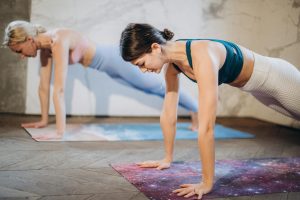
The plank is the cornerstone of athletic core training. It’s an isometric hold that fires all core stabilizers simultaneously, teaching your body to maintain spinal alignment under load—exactly what happens during explosive athletic movement.

  • Starting Position: Forearms on ground, elbows under shoulders, body straight line from head to heels, feet hip-width apart.
  • Form Cue (Critical): Draw your lower abdomen toward your spine (imagine bracing for a punch), keep hips level—don’t let your lower back sag or pike your hips up. Your head should be neutral; don’t look forward.
  • Beginner: 2 sets × 20–30 seconds hold, rest 60 seconds between sets.
  • Intermediate: 3 sets × 45–60 seconds, rest 45 seconds.
  • Advanced: 4 sets × 90+ seconds OR add single-arm reaches: 3 sets × 12 reps per side (10-second holds), rest 30 seconds.

2. Dead Bug (Anti-Extension & Coordination)

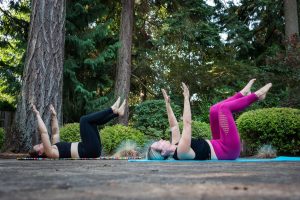
Dead bugs teach anti-extension control—preventing your lower back from arching—while building bilateral limb coordination. Athletes use this heavily to bulletproof their spines during heavy lifting or contact sports.

  • Starting Position: Lie on your back, arms extended straight toward ceiling, legs bent to 90° at hips and knees.
  • Movement: Slowly lower opposite arm overhead and opposite leg toward floor (without touching) while keeping lower back against the floor. Return to start; alternate sides.
  • Form Cue (Critical): Your lower back should never leave the ground. If it does, you’ve extended too far—reduce range of motion. Exhale as you extend.
  • Beginner: 3 sets × 8 reps per side, rest 45 seconds.
  • Intermediate: 3 sets × 12 reps per side, rest 40 seconds.
  • Advanced: 4 sets × 15 reps per side with a 2-second pause at full extension, rest 30 seconds.

3. Bird Dog (Diagonal Anti-Rotation & Stability)

Bird dogs build unilateral stability and anti-rotation strength—one of the most sport-specific patterns. This teaches your core to stay rigid while opposite limbs move, mimicking real athletic demands.

  • Starting Position: Hands and knees, wrists under shoulders, knees under hips, neutral spine.
  • Movement: Extend opposite arm and leg simultaneously until they’re parallel to the floor. Hold 1–2 seconds. Return; alternate.
  • Form Cue (Critical): Don’t rotate your torso—your hips and shoulders should stay square to the ground. Extend your arm and leg with equal power; don’t let one drop before the other.
  • Beginner: 3 sets × 8 reps per side, rest 45 seconds.
  • Intermediate: 3 sets × 12 reps per side with 2-second hold, rest 40 seconds.
  • Advanced: 4 sets × 12 reps per side with 3-second hold, then add a pulse: 8 small pulses at the top position, rest 30 seconds.
📊 Did You Know? According to the American Council on Exercise (ACE), the bird dog produces 89% greater activation of the rectus abdominis compared to traditional crunches—with zero spine compression. This makes it one of the safest and most effective core exercises for athletes with lower back sensitivity.

4. Pallof Press (Anti-Rotation Under Load)

This exercise builds explosive anti-rotation strength—the ability to resist twisting forces. For rotational athletes (golfers, tennis players, boxers, baseball players), this is non-negotiable. It can be done with a resistance band anchored at chest height.

  • Setup: Stand perpendicular to a doorway with a band anchored at chest height (or hold a dumbbell to one side). Stand with feet shoulder-width apart, knees slightly bent.
  • Movement: Hold the band or weight at your chest with both hands. Press straight out away from your body while resisting rotation. Hold 1–2 seconds. Return to chest; repeat all reps one side, then turn around.
  • Form Cue (Critical): Your chest and hips must stay facing forward—don’t twist. The challenge isn’t pushing forward; it’s preventing the band’s rotation from turning your torso.
  • Beginner: 2 sets × 10 reps per side (bodyweight or light band), rest 60 seconds.
  • Intermediate: 3 sets × 12 reps per side (medium resistance band), rest 45 seconds.
  • Advanced: 4 sets × 15 reps per side (heavy band or holding a dumbbell), rest 30 seconds, with a 1-second pause at full extension.
💪

Coach Alex’s Note:In 8 years of coaching athletes at home, I’ve noticed that Pallof presses and anti-rotation work are what separate athletes who stay healthy from those who get chronic lower back pain. Most young athletes skip rotation work because they don’t understand that blocking rotation force is exactly what prevents injuries in cutting, throwing, and contact sports. The moment I added these to my program, I stopped seeing acute lower back flare-ups by week 3.

5. Ab Wheel Rollout (Advanced Dynamic Extension)

The ab wheel is one of the most challenging core exercises for good reason—it forces eccentric core control under near-maximal load. A Fitness Master Ab Roller Trainer provides the perfect tool for this exercise and scales beautifully from beginner to elite progression.

  • Beginner Modification (Incline): Hands on an elevated surface (couch, bench) with wheel below you at an angle. Roll forward as far as comfortable, maintaining a rigid plank position, then roll back.
  • Movement (Standard): Kneeling position, hands on the wheel, roll forward as far as you can control the arch in your lower back (usually 60–80% of full extension), pause 1 second, use your core to power back.
  • Form Cue (Critical): Never let your hips sag—once they drop, stop the set. The lower back should never hyperextend; maintain a rigid neutral spine throughout. Breathe out as you roll forward, in as you return.
  • Beginner: 3 sets × 5–8 reps (partial range, from knees), rest 90 seconds.
  • Intermediate: 3 sets × 8–12 reps (full kneeling range), rest 60 seconds.
  • Advanced: 4 sets × 10–15 reps (feet rollouts = full bodyweight), rest 45 seconds.

6. Side Plank with Hip Dips (Lateral Stability & Obliques)

Lateral core strength prevents side-bending injuries and builds oblique endurance for rotational movements. Side planks with hip dips add dynamic movement to a foundational isometric hold.

  • Starting Position: Side plank: forearm on ground, elbow under shoulder, feet stacked or one foot in front of the other (split stance = easier). Body in straight line from head to feet.
  • Movement: Lower your bottom hip toward the ground (dip), then drive it back up using your obliques.
  • Form Cue (Critical): Don’t rotate forward or backward—stay perpendicular to the ground. Only your hips move; your upper body stays rigid.
  • Beginner: 3 sets × 10 hip dips per side, rest 45 seconds. (Option: hold static side plank 20–30 sec per side)
  • Intermediate: 3 sets × 12–15 hip dips per side, rest 40 seconds.
  • Advanced: 4 sets × 20 hip dips per side, rest 30 seconds, OR add a top-arm reach: 12 dips + 8 reaches per side.

7. Hollow Body Hold (Full-Body Tension & Gymnastics Strength)

The hollow body position is fundamental to gymnastics and high-level athletic core control. It forces your entire body to maintain a rigid, compressed posture—exactly what’s needed for power and stability in explosive sports.

  • Starting Position: Lie on your back, arms extended overhead, legs straight, total body tense.
  • Movement: Arch slightly (like a curved plank), pressing lower back against the floor, tensing glutes, quads, and abs. Shoulders should be packed (away from ears). Hold position.
  • Form Cue (Critical): This is a full-body hold, not just abs. Squeeze your entire body as if you’re one rigid rod. Your lower back touches the ground; don’t let it hover.
  • Beginner: 3 sets × 15–20 seconds hold, rest 45 seconds.
  • Intermediate: 3 sets × 30–45 seconds, rest 40 seconds.
  • Advanced: 4 sets × 60+ seconds, OR add movements: hollow rocks (small rocking motion), reps 12–15, rest 30 seconds.

8. Bicycle Crunches (Dynamic Rotation & Rectus Activation)

Bicycle crunches combine rotation with flexion, making them one of the few dynamic exercises that safely activates the rectus abdominis while building oblique coordination. When performed correctly (not hyperextended), they’re valuable for sport-specific rotation.

  • Starting Position: Lie on back, hands behind head (not pulling neck), legs bent 90° at knees with feet off ground.
  • Movement: Crunch your chest toward your knees while bringing one elbow toward the opposite knee, extending the other leg. Alternate in a pedaling motion.
  • Form Cue (Critical): Don’t pull your neck—your hands are just there for reference. The crunch comes from your abs, and the twist comes from your obliques. Move with control; jerking indicates you’re using momentum, not muscle.
  • Beginner: 3 sets × 12 reps per side, rest 45 seconds.
  • Intermediate: 3 sets × 20 reps per side (continuous), rest 40 seconds.
  • Advanced: 4 sets × 25 reps per side with a 1-second pause per side, rest 30 seconds.
💡 Pro Tip from Coach Alex: Most athletes skip bicycle crunches because they seem “basic” next to weighted exercises. But here’s what I’ve observed: the athletes who combine heavy compound lifts (squats, deadlifts) with high-rep dynamic core work (bicycle crunches, ab wheel) get the most visible core strength and definition by week 6. The dynamic reps teach your abs to fire during movement, not just hold tension.

9. Loaded Carries (Unilateral Stability & Functional Strength)

Loaded carries—holding weight while walking—build practical core stability under asymmetrical load. This is directly applicable to sports and life. You can use a dumbbell, kettlebell, water jug, or even a heavy backpack.

  • Farmer’s Carry (Bilateral): Hold weight in each hand, stand tall, walk 40–60 feet at a steady pace while keeping your torso upright (no leaning).
  • Suitcase Carry (Unilateral, Most Valuable): Hold one weight on one side. Walk 40–60 feet while resisting side-bending—this forces major oblique activation.
  • Form Cue (Critical): Your shoulders should stay level. If you’re leaning away from the weight, reduce the load. Walk with purpose; sloppy movement reduces core engagement.
  • Beginner: Farmer’s carry: 3 sets × 40 feet (bodyweight or 15-20 lbs per hand), rest 60 seconds.
  • Intermediate: Suitcase carry: 3 sets × 50 feet (25–35 lbs), rest 50 seconds.
  • Advanced: Suitcase carry: 4 sets × 60+ feet (40+ lbs), rest 40 seconds, OR combine sides: 30 feet right side, drop, immediately grab left side, 30 feet.

Progressive Training: How to Advance from Beginner to Advanced in 30–60 Days

Progression is the secret to results. Your body adapts to stimulus, so you must gradually increase difficulty. Here’s the progression framework:

Exercise Beginner (Week 1–2) Intermediate (Week 3–4) Advanced (Week 5–8)
Plank 2 × 20–30 sec 3 × 45–60 sec 4 × 90 sec OR arm reaches
Dead Bug 3 × 8 reps/side 3 × 12 reps/side 4 × 15 reps/side + pause
Bird Dog 3 × 8 reps/side 3 × 12 reps/side + hold 4 × 12 reps + pulses
Pallof Press 2 × 10 reps/side (light) 3 × 12 reps/side (med) 4 × 15 reps/side (heavy)
Ab Wheel 3 × 5–8 reps (incline) 3 × 8–12 reps (kneeling) 4 × 10–15 reps (standing)
Side Plank Dips 3 × 10 dips/side 3 × 12–15 dips/side 4 × 20 dips + reaches
Hollow Hold 3 × 15–20 sec 3 × 30–45 sec 4 × 60 sec OR hollow rocks
Bicycle Crunch 3 × 12 reps/side 3 × 20 reps/side 4 × 25 reps + pause
Loaded Carry 3 × 40 ft (light) 3 × 50 ft (medium) 4 × 60 ft + heavy

The Progression Rules:

  • First 2 weeks: Build baseline strength and master form. Don’t chase difficulty—focus on feeling the right muscles working.
  • Weeks 3–4: Increase reps or duration by 20–30%. If an exercise calls for 3 × 8, move to 3 × 10–12.
  • Weeks 5–8: Add advanced variations (single-leg, holds, pauses, or resistance) OR add volume (extra sets).
  • Every 2 weeks: Evaluate whether you’re hitting the target reps with perfect form. If you’re struggling with form

    Get Free Weekly Workout Plans

    Join Coach Alex every week for:

    ✅ Proven home workout plans   ✅ Nutrition tips   ✅ Gear reviews

    Subscribe Free — No Spam Ever →

Enjoying this guide?

Share it with someone who needs it 👇

📌 Pinterest
📘 Facebook
𝕏 Twitter

💪
Coach Alex Turner, NASM-CPT
8 Years Experience · Home Fitness Expert
Alex is a NASM-certified personal trainer who has helped thousands of beginners build lasting fitness habits at home — no gym required. His no-fluff approach focuses on what actually works for real people with busy lives. Find his recommended gear at Aura Heaven.

9 Best Core Exercises for Athletes at Home 2024 Pinterest
🏋
The AuraFit Guide Team

Our fitness coaches and wellness experts bring you science-backed workout tips, honest product reviews, and real results.

Leave a Comment

Your email address will not be published. Required fields are marked *

Scroll to Top
fXP
FREE DOWNLOAD

Get Coach Alex's 30-Day Workout Plan (No Gym Needed)

1,247+ readers already getting results

Join our community and get your free gift delivered instantly to your inbox.

No thanks, I prefer being out of shape.