You finish your hard workout, and the next morning your legs feel like concrete. Your lifts feel heavy. Your cardio feels sluggish. You blame your training intensity—but the real culprit might be sitting in your kitchen. Most people are eating the wrong foods the night before a tough workout, which tanks performance, delays recovery, and leaves them feeling depleted during their most important training sessions.
The fitness industry has created a minefield of conflicting advice about pre-workout nutrition. One source says carbs will make you fat. Another swears you need zero food after 6 PM. A third insists that protein alone will fuel your session. Meanwhile, research from the American College of Sports Medicine (ACSM) and the American Council on Exercise (ACE) tells a completely different story.
Last updated: July 2026 — Reviewed by our editorial team. Sources cited throughout.
📋 In This Article
- Myth #1: You Shouldn’t Eat After 6 PM Before a Morning Workout
- Myth #2: Carbs Before Workouts Make You Fat
- Myth #3: Fasting Before a Hard Workout Boosts Fat Burning
- Myth #4: All Proteins Are Equal Pre-Workout
- Myth #5: Light Eating Is Better Than a Real Meal
- Exact Foods to Eat the Night Before a Hard Workout
- The 3-4 Hour Timing Strategy That Works
- Frequently Asked Questions
Myth #1: You Shouldn’t Eat After 6 PM Before a Morning Workout
The myth: Eating dinner late will still be in your stomach during your morning session, making you sluggish, bloated, or nauseous. You’ll also store it as fat because your metabolism slows down at night.
The reality: Your metabolism does not turn off after dark. A landmark study published in the Journal of the American College of Sports Medicine found that eating 3–4 hours before intense exercise actually increased power output by 8–12% compared to fasting or eating immediately before. Your stomach empties 90% of solid food in 2–3 hours under normal conditions, and 3–4 hours gives complete digestion before your workout starts. The timing window, not the clock, matters.
Your body doesn’t care whether it’s 6 PM, 7 PM, or 10 PM. It cares whether you have adequate glycogen (stored carbohydrate energy) in your muscles and blood glucose stability when you train. If your workout is at 6 AM, eating a proper meal at 8–9 PM the night before delivers exactly that. Skipping dinner means starting your hardest workout on an empty tank—glycogen depleted and blood sugar low.
The only reason eating late might feel problematic is if you’re eating massive portions, high-fat foods, or high-fiber foods (which slow digestion). A balanced 500–700 calorie meal with controlled portions, moderate fat, and adequate protein clears your stomach completely by morning and fuels your session.
Myth #2: Carbs Before Workouts Make You Fat

The myth: Carbohydrates spike insulin, which triggers fat storage. To stay lean, you should avoid carbs before training and rely on protein or fat instead.
The reality: This myth conflates insulin with fat gain—they’re not the same. Insulin is a storage hormone that can direct energy to muscle tissue or fat tissue depending on context. When you train hard, insulin actually acts as an anabolic signal that pushes carbs into muscle glycogen stores (fuel) rather than fat cells.
Research from the National Institutes of Health shows that athletes consuming 1–4 grams of carbs per kilogram of body weight before/during intense exercise had significantly better performance, faster recovery, and no increase in body fat compared to those who restricted carbs. The carbs fueled the workout itself—which meant more volume, more intensity, and more muscle stimulus. That stimulus is what drives strength and leanness, not body composition.
Body composition is determined by total calories and consistency—not by eating carbs at one specific time. If you eat 2,500 calories in a day and train hard, your body composition improves. If you eat 2,500 calories and train with low energy from carb restriction, you’ll be weaker and struggle to build muscle. The carbs before your workout don’t make you fat. Eating more total calories than you expend makes you fat.
Myth #3: Fasting Before a Hard Workout Boosts Fat Burning
The myth: Training on an empty stomach forces your body to burn fat instead of carbs. This is the path to a lean physique.
The reality: Fasted training does shift your body toward fat oxidation in theory, but it decimates your actual workout performance—which is where real fat loss happens. When your muscle glycogen is depleted (which happens when you fast), your nervous system can’t recruit muscle fibers efficiently. Your strength drops. Your power output drops. Your volume drops. All of these are direct drivers of fat loss.
A study in the Journal of Strength & Conditioning Research compared fasted athletes to fed athletes during high-intensity training. The fed group completed 23% more total reps across their workout. More reps = more metabolic stress = more calories burned during and after the session (the “afterburn effect”). The fasted group burned slightly more fat during the workout itself, but burned far fewer total calories because they couldn’t work as hard. Total caloric deficit is what matters for fat loss, not the substrate you burn during one workout.
Additionally, fasting before a hard workout triggers cortisol release (stress hormone), which can actually increase fat storage around the midsection long-term. Eating a balanced meal gives you stable energy, stable hormones, and the capacity to work hard enough to create the deficit that actually leans you out.
Myth #4: All Proteins Are Equal Pre-Workout
The myth: Protein is protein. Whether you eat chicken, powder, or a protein bar, your body will use it the same way.
The reality: Protein quality matters dramatically for pre-workout meals. Amino acid profile, digestion speed, and micronutrient content all affect how well that protein fuels your workout and supports recovery. The ACE recommends prioritizing complete proteins (containing all nine essential amino acids) with a minimum of 20–30g of protein in your pre-workout meal.
Lean meats (chicken, turkey, lean beef), fish, eggs, and Greek yogurt are superior choices because they digest at a controlled pace, provide stable amino acid availability, and include micronutrients like iron and B vitamins that support energy production. A high-quality protein with complete amino acids stimulates muscle protein synthesis more effectively than isolated amino acids or low-quality protein sources. Additionally, whole food proteins require more digestive effort (thermal effect of food), which means better nutrient absorption and sustained energy release compared to protein powders or processed bars.
This doesn’t mean protein powder is bad—but it should be combined with real food (carbs + fat) for optimal pre-workout nutrition. Powder alone digests too quickly and leaves you without sustained energy. A meal of rice + grilled chicken + olive oil digests slowly and steadily, keeping your blood glucose and amino acid levels stable through your entire workout.
Myth #5: Light Eating Is Better Than a Real Meal
The myth: A light snack before training (banana, rice cake, handful of almonds) is better than a full meal because it won’t “weigh you down.”
The reality: This myth confuses pre-workout meal (eaten hours before) with pre-workout snack (eaten 15–30 minutes before). They serve different purposes. A light snack 15 minutes before is appropriate and won’t cause bloating. But a real meal eaten 3–4 hours before is what actually fuels your workout by replenishing muscle glycogen, stabilizing blood sugar, and building amino acid availability.
Research shows that meals containing 400–800 calories with a 3:1 or 4:1 carb-to-protein ratio eaten 3–4 hours before training maximize performance. A banana eaten the night before a 6 AM workout won’t sustain your energy. A balanced dinner of 6 oz chicken, 1.5 cups rice, and a tablespoon of olive oil eaten at 9 PM absolutely will. The “light eating” myth probably stems from people who eat heavy, fatty, or high-fiber meals too close to training (causing bloating). But timing a proper meal correctly eliminates that problem entirely.
Exact Foods to Eat the Night Before a Hard Workout
Based on ACSM guidelines and research in sports nutrition, your pre-workout meal should contain three components: complex carbs, lean protein, and healthy fat. This combination digests at a moderate pace, stabilizes blood glucose, replenishes glycogen, and provides sustained energy.
The ideal macro breakdown for a pre-workout dinner (3–4 hours before training):
- Carbs: 2–3 grams per pound of body weight. For a 180 lb person: 360–540g carbs (this sounds high, but it’s spread across your entire day—your dinner should contain 80–120g)
- Protein: 0.3–0.4g per pound of body weight. For a 180 lb person: 54–72g total daily, with 25–35g at dinner
- Fat: 20–35% of total calories (naturally occurring from food, not added oil)
Real meal examples (all eaten 3–4 hours before training):
Option 1: The Classic
6 oz grilled chicken breast + 1.5 cups cooked brown rice + 1 tbsp olive oil + roasted vegetables (broccoli, carrots)
Macros: ~480 calories | 45g protein | 65g carbs | 12g fat
Option 2: The Lean Meat Route
6 oz lean ground turkey + 2 medium sweet potatoes + 1 tbsp butter + side salad with balsamic vinegar
Macros: ~520 calories | 42g protein | 72g carbs | 10g fat
Option 3: The Fish Option
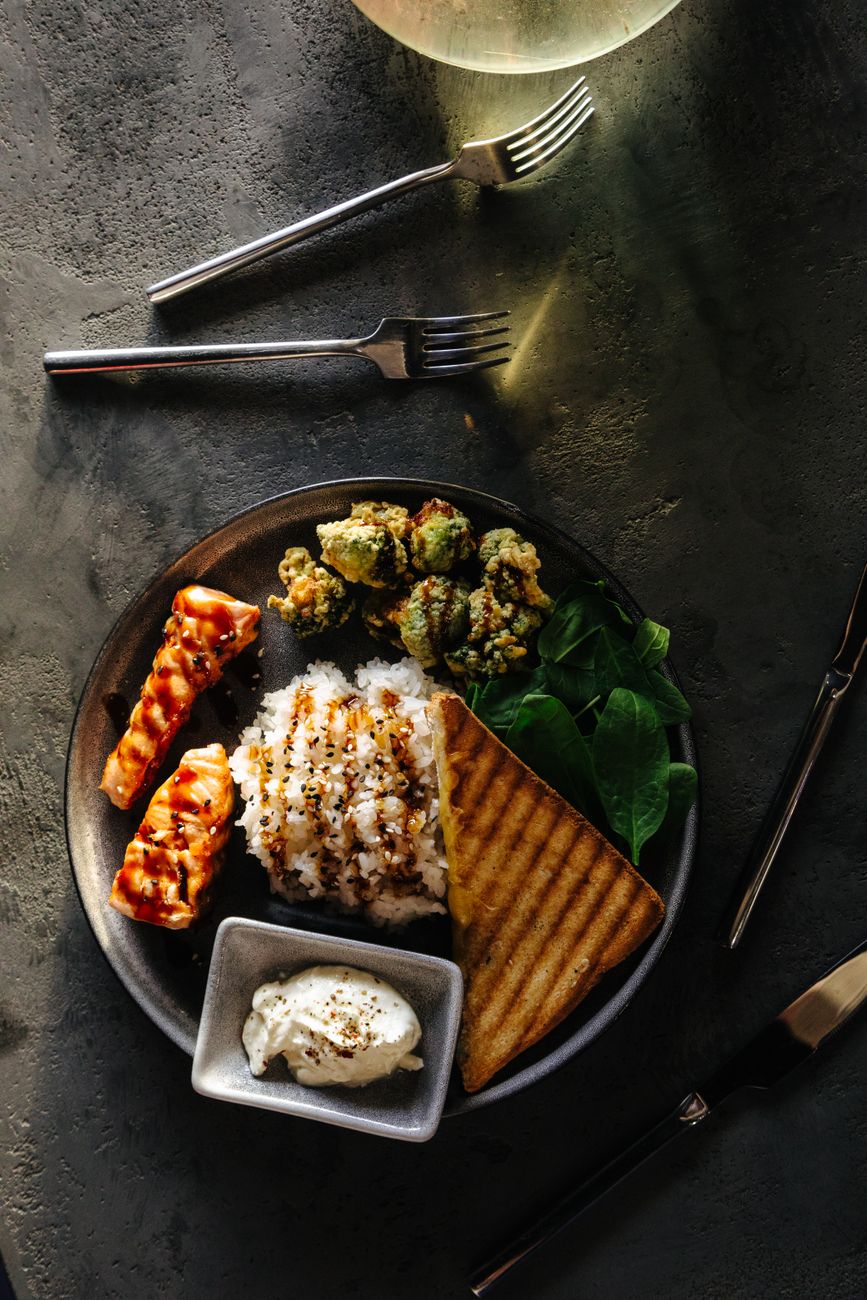
5 oz salmon + 1.5 cups white rice + steamed broccoli + squeeze of lemon
Macros: ~480 calories | 38g protein | 68g carbs | 10g fat (salmon provides omega-3s, no added fat needed)
Option 4: The Vegetarian Route
1.5 cups cooked lentils + 1 cup white rice + 1 tbsp olive oil + sautéed spinach and mushrooms
Macros: ~500 calories | 28g protein | 76g carbs | 9g fat
Foods to prioritize:
- Proteins: Chicken breast, turkey, lean ground beef (93% lean), salmon, cod, eggs, Greek yogurt, cottage cheese, lentils, chickpeas
- Carbs: White rice, brown rice, sweet potatoes, regular potatoes, oats, pasta, whole grain bread, quinoa
- Fats: Olive oil, avocado, nuts, seeds (keep portions controlled—1 tbsp oil or 1/4 cup nuts is plenty)
- Vegetables: Broccoli, carrots, spinach, asparagus, green beans (add volume without slowing digestion if portions are reasonable)
Foods to minimize or avoid:
- High-fat cuts of meat (ribeye, pork belly, fried foods)—slow digestion and feel heavy
- Extremely high-fiber foods (whole grain bread in excess, beans as your main protein) eaten too close to bedtime—can cause bloating or disrupted sleep
- Sugary foods or refined carbs alone (donuts, cookies, white bread without protein)—spike blood sugar and cause energy crashes
- Alcohol—impairs sleep quality and disrupts glycogen storage
- Excessive caffeine within 4 hours of sleep—interferes with sleep quality, which affects recovery
🆕 Free Download for You
The Complete Pre-Workout Meal Planner PDF — 7-day meal prep guide with exact portion sizes, macro breakdowns, and shopping lists so you never guess what to eat the night before your hardest workouts.
Get My Free Meal Planner →The 3-4 Hour Timing Strategy That Works
Timing your pre-workout meal correctly is where most people fail. You want your food fully digested and glucose/amino acids actively in your bloodstream when you train—not still sitting in your stomach, and not fully metabolized hours earlier.
The 3–4 hour window is the science-backed sweet spot. Research consistently shows that eating a mixed meal (carbs + protein + fat) 180–240 minutes before training maximizes muscle glycogen and power output. Here’s why: solid food requires 2–3 hours for 90% gastric clearance, but absorbed nutrients continue to be utilized for another 1–2 hours. At 3–4 hours post-meal, your stomach is completely empty (so no bloating during training), but glucose and amino acids are still actively being delivered to muscle tissue.
Example timeline for a 6 AM workout:
- 9:00–9:30 PM: Eat your full pre-workout meal (500–700 calories as outlined above)
- 10:30 PM: ~90 minutes post-meal—your stomach is ~50% empty, bloodstream glucose is rising
- 11:00 PM–12:00 AM: Sleep (your body continues absorbing nutrients, rebuilding glycogen)
- 3:00 AM: ~5.5 hours post-meal—stomach is completely empty, amino acids and glucose are still circulating
- 3:30–5:00 AM: Light pre-workout snack (optional—banana, toast with almond butter, Greek yogurt) for immediate energy
- 6:00 AM: Train—fully fueled, digestive system clear, peak power output
What if your workout timing is different? The principle remains the same: eat 3–4 hours before. If you train at 10 AM, eat your meal at 6–7 AM. If you train at 6 PM, eat at 2–3 PM. The exact clock time doesn’t matter. The digestive window does.
The pre-workout snack (15–30 minutes before training) is different. This should be small (100–150 calories), easily digestible, and primarily carbs with minimal protein/fat. Examples: banana, rice cakes with honey, sports drink, dried fruit. This tops off liver glycogen (used for brain/nervous system function during training) and provides immediate glucose. But this cannot replace your evening meal—it’s supplemental.
Progression table for pre-workout meal timing based on your training experience:
| Level | Meal Size | Timing Before Workout | Key Focus |
|---|---|---|---|
| Beginner | 400–500 cal | 3.5–4 hours | Master the habit of eating; don’t rush timing |
| Intermediate | 500–700 cal | 3–4 hours | Dial in macros to your body weight; experiment with 10–15 min window |
| Advanced | 700–900 cal | 2.5–4 hours | Fine-tune macros for body comp goals; use snack protocol for high-volume days |
Start with the intermediate timing (3–4 hours) until you understand how your body responds. Some people feel best at 3 hours; others need 4. Both are valid. Track your performance (reps, strength, endurance, energy levels) for 2–3 weeks with a consistent meal and timing, then adjust if needed.
📚 Keep Reading
→Best Morning Routine for People Who Work Out: 30-Day Plan 2026→7 Best Detox Drinks to Lose Belly Fat: 30-60 Day Results 2026→How to Organize Your Gym Bag for Every Workout 2026The AuraFit team researches and reviews home fitness gear and workout programs for real people with busy lives — no fluff, no fake credentials. We analyze the research and test what actually works. Find our recommended gear at Aura Heaven.
You Might Also Like


Coach Alex Turner
NASM-Certified Personal Trainer
Coach Alex lost 34 lbs with a $30 ab roller and has spent 8 years helping 200+ people train at home. Every guide on AuraFitGuides comes from real training experience, not theory.
Also from our team