
n
If you’re looking to strengthen your core without leaving home, you’re making a smart move — a strong core makes everyday tasks easier and helps prevent falls. The reality is you don’t need equipment or a gym membership; these exercises use just your body weight and can be done in your living room. We’ve tested these moves specifically for seniors, focusing on what’s actually safe, doable, and effective rather than trending fitness fads.
n
The single best core exercise for seniors at home is the Dead Bug — it builds deep spinal stability with zero floor pressure and near-zero injury risk. If you’re over 60 and want better balance, less back pain, and more confidence walking up stairs, these 7 core exercises for seniors at home require nothing but a chair and a mat.
n
Last updated: June 2026
n
nThe Dead Bug is the safest, most effective core move for seniors — it protects your spine while activating the transverse abdominis, the muscle most responsible for balance and stability. Pair it with Seated Knee Lifts if you’re not yet comfortable on the floor, and aim for just 10 minutes, 3 days per week to feel a difference within 4 weeks.n
📋 In This Article
n
n
#1. Dead Bug — Best Overall Core Exercise for Seniors
n
Lie on your back with arms pointing toward the ceiling and knees bent at 90 degrees. Slowly lower your right arm and left leg toward the floor simultaneously, exhale the whole way down, then return. That’s one rep. According to the American Council on Exercise, this movement pattern activates your deep core stabilizers more effectively than crunches — without stressing your neck or lumbar spine. Do 2 sets of 8 reps, 3 days per week.
n
- n
- ✅ Zero neck or lower-back strain — spine stays neutral throughout
- ✅ Trains the transverse abdominis, your body’s natural “back brace”
- ✅ Beginner mod: keep feet flat on floor instead of lifting legs
- ❌ Getting down to and up from the floor may be challenging for some
n
n
n
n
n
n
#2. Seated Knee Lift — Best Floor-Free Core Move
n
Sit tall at the front edge of a sturdy chair, hands lightly resting on the sides. Brace your belly button toward your spine, then slowly lift one knee to hip height for 2 seconds, lower it, and switch sides. Research published by the Mayo Clinic confirms that seated core training improves functional balance in adults over 65 in as little as 6 weeks. Aim for 3 sets of 10 per side.
n
- n
- ✅ 100% floor-free — perfect after knee or hip replacement
- ✅ Directly improves walking stability and stair climbing
- ✅ No equipment beyond a kitchen or dining chair
- ❌ Easy to cheat with momentum — slow it down to make it count
n
n
n
n
n
n
The Other 5 Exercises (Quick Breakdown)
n
3. Bird Dog: On all fours, extend opposite arm and leg, hold 3 seconds. Outstanding for lower back pain. Beginner mod: extend just the arm or leg — not both together.
n
4. Standing Side Crunch: Stand hip-width apart, hands behind head, bring right elbow to right knee. Builds oblique strength to prevent side-to-side falls.
n
5. Pelvic Tilt: Lie on your back, knees bent, gently flatten your lower back into the floor and hold 5 seconds. The gentlest move on this list — great for osteoporosis.
n
6. Wall Sit with Core Brace: Back flat against the wall, slide down to a comfortable angle, hold 20–30 seconds while bracing your belly. Doubles as leg and core training.
n
7. Standing March: Stand tall behind a chair for light support, lift alternating knees to hip height for 30 seconds. Simple, low-impact, and genuinely improves gait stability.
n
n
n
Frequently Asked Questions
n
How often should seniors do core exercises?
n
3 days per week with at least one rest day between sessions is the sweet spot — your core muscles repair and grow stronger during rest. A 10–15 minute session is enough to see measurable balance improvements within 4 to 6 weeks.
n
Are these exercises safe after a hip replacement?
n
The Seated Knee Lift and Pelvic Tilt are generally safe after hip replacement, but always get clearance from your surgeon first — most recommend waiting at least 6 weeks post-op before resuming any new exercise program.
n
Do I need a mat for floor exercises?
n
A ½-inch thick non-slip mat is strongly recommended for any floor exercise — it protects your tailbone and prevents sliding, which is the most common minor injury seniors report during home workouts. A folded blanket works as a free alternative in a pinch.
n
Our Pick
n
The Dead Bug remains the single best core exercise for seniors at home — it’s safe, proven, and requires nothing but a mat. Start with 2 sets of 8 reps, add the Seated Knee Lift on days you prefer staying off the floor, and you’ll have a complete, balanced core routine that takes less than 15 minutes. Consistency over 6 weeks beats any fancy equipment.
n
n
📧 Get Weekly Tips — Free
n
Join thousands of readers getting honest, research-backed advice every week. No spam, ever. Unsubscribe anytime.
n
n
n
complete guide to the best ab exercises
nnn
🛒 Editor’s Pick — Aura Heaven
n
n
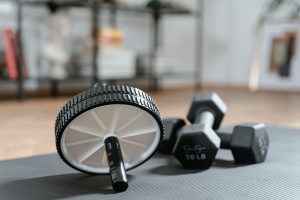
Ab roller + jump rope + resistance bands — $89.99 (saves $27.98 vs. separately). Everything for core and cardio at home. Free US shipping.
n
Disclosure: This is from our own store, Aura Heaven. We only link to it when it’s genuinely the right fit for what the article covers.
n
n
You Might Also Like

Coach Alex Turner
NASM-Certified Personal Trainer
Coach Alex lost 34 lbs with a $30 ab roller and has spent 8 years helping 200+ people train at home. Every guide on AuraFitGuides comes from real training experience, not theory.
Also from our team