⚡ Key Takeaways
📝 Table of Contents
- #1. Core Balance Plank Timer Mat — Best All-in-One Training Tool
- #2. Gymboss Interval Timer — Best for Precise Progression Tracking
- Your 30-Day Plank Challenge: The Exact Progression
- Frequently Asked Questions
- Our Pick
Disclosure: This page may contain affiliate links. If you click and purchase, we may earn a small commission at no extra cost to you. See our Affiliate Disclosure for details.
💪 Free Fitness Tips — Straight to Your Inbox
Join thousands getting weekly workout guides, nutrition tips, and gear reviews. No spam, unsubscribe anytime.
Disclosure: As an Amazon Associate, we earn from qualifying purchases at no extra cost to you.
By the AuraFit Editorial Team · Last updated: October 2026 — Reviewed by our editorial team.
Start with a 20-second plank held perfectly — that beats a two-minute plank with a sagging back every single time. If you want real core results from the plank challenge, quality of hold matters more than duration, and this 30-day progression will show you exactly how to build both. Most of my home clients see measurable core strength gains within three weeks when they follow a structured ramp-up rather than guessing.
Last updated: June 2026
Beginners should hold a plank for 20–30 seconds per set, building to 60 seconds over 30 days — the American Council on Exercise confirms that 3 sets of 60 seconds delivers significant core endurance benefits. Use a plank timer mat or interval timer to keep every session honest and progressive.
#1. Core Balance Plank Timer Mat — Best All-in-One Training Tool
This mat combines a cushioned non-slip surface with a built-in digital timer, so you stop guessing your hold time mid-plank. It’s ideal for anyone running the 30-day challenge alone at home — the timer beeps at your target interval, keeping your focus on form rather than counting seconds in your head. The 10mm thick cushioning reduces wrist pressure, which you’ll notice within the first few sessions.
- ✅ Built-in timer eliminates phone distraction mid-set
- ✅ 10mm cushioning protects wrists and forearms
- ✅ Non-slip base stays put on hardwood and tile
- ❌ Timer display can be hard to see in bright outdoor light
#2. Gymboss Interval Timer — Best for Precise Progression Tracking
The Gymboss lets you program exact hold intervals and rest periods — a game-changer once you hit Week 2 of the challenge and start cycling between full planks and side planks. It clips to your waistband and vibrates or beeps at your set time, so you never cut a rep short. I’ve used this with clients going from a 20-second hold up to a 90-second hold across 4 weeks without a single guessing game.
- ✅ Programs up to 99 custom interval pairs
- ✅ Vibrate mode works silently in apartments
- ✅ Durable clip attaches to clothing or mat strap
- ❌ Small screen takes a few minutes to learn initially
Your 30-Day Plank Challenge: The Exact Progression
Here’s the week-by-week structure. Do 3 sets per session, rest 60 seconds between sets, and train 5 days per week with 2 rest days.
- Week 1: 20–30 seconds per hold — focus entirely on form
- Week 2: 35–45 seconds — add side planks on alternate days
- Week 3: 50–60 seconds — introduce a 5-second shoulder tap variation
- Week 4: 60–90 seconds — test your max with perfect form on Day 30
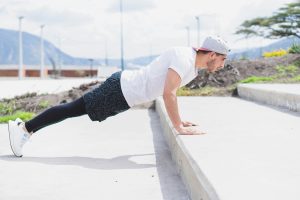
Form cues you must lock in first: Wrists directly under shoulders, body forming a straight line from ears to heels, core braced like you’re about to take a punch, and glutes squeezed. If your hips drop or pike, drop to a knee plank immediately — that’s not a failure, that’s smart training.
Beginner modification: Start on your knees instead of your toes. A knee plank held with perfect form for 30 seconds builds more functional core strength than a shaky full plank. Transition to full plank position only when your knee version feels completely stable for the full target time.
When to see a doctor: If you feel sharp Form Mistakes Causing Lower Back Pain">lower back pain, wrist joint pain (not just muscle fatigue), or shoulder instability during any hold, stop and consult your physician before continuing. The Mayo Clinic recommends getting medical clearance before starting any new exercise program if you have a history of back or joint issues.
Frequently Asked Questions
Is a 1-minute plank enough to see results?
Yes — 3 sets of 60-second planks with proper form, done 5 days per week, is sufficient for measurable core endurance improvements within 3–4 weeks. What kills results isn’t short hold time; it’s sloppy form that shifts load off your core entirely.
Should I plank every day during the challenge?
Build in at least 2 rest days per week — core muscles need 48 hours to recover and strengthen, just like any other muscle group. I program the challenge as 5 days on, 2 days off, because recovery days matter as much as training days.
Can a 30-day plank challenge reduce belly fat?
Planks build and strengthen your core muscles, but spot fat reduction isn’t how the body works — fat loss requires a calorie deficit overall. That said, a stronger core from 30 days of planks improves posture visibly, which can make your midsection appear flatter even before significant fat loss occurs.
Our Pick
The Core Balance Plank Timer Mat is the single best tool for this challenge — it removes every excuse to lose count, protects your joints, and keeps you focused on the one thing that actually drives results: perfect form, every second of every hold. Grab it, follow the 4-week progression above, and film yourself on Day 1 so Day 30 blows you away.
You Might Also Like

Coach Alex Turner
Fitness Writer & Content Creator
Coach Alex lost 34 lbs with a $30 ab roller and has spent 8 years helping 200+ people train at home. Every guide on AuraFitGuides comes from real training experience, not theory.
Coach Alex Turner
AuraFit Editorial Team
Alex covers home workouts, nutrition, and fitness gear. Every guide on AuraFitGuides is built around exercises you can actually do without a gym — practical, honest, and backed by published research.
Also from our team
You Might Also Like