Get Coach Alex's 30-Day Workout Plan (No Gym Needed)

🔥 Most Popular Posts

How to Work Out During Your Lunch Break: 2024 Science-Backed Guide

🏋️ Core & Abs💪 All Levels
⏱ 16 min read📅 Updated May 2026|✍️ Coach Alex Turner, NASM-CPT

You have 30 minutes. Your desk job is killing your metabolism. And you’re convinced a lunch break workout is impossible. Wrong. According to the American Council on Exercise (ACE), individuals who exercise during the workday experience a 15% boost in afternoon productivity and a 28% improvement in overall work performance—but only when they follow a proven structure. This isn’t about squeezing in random burpees between emails. It’s about a deliberate, time-efficient system that fits your lunch break perfectly.

⚡ Quick Answer: A science-backed lunch break workout takes 28–32 minutes (including warm-up and cool-down), requires minimal equipment, and delivers measurable results in 3–4 weeks when you follow a structured circuit combining compound movements with metabolic finishers. The most effective approach: 5-minute warm-up, 20-minute strength/cardio block, 5-minute cool-down—performed 3–4 times weekly.
✅ Quick Summary: You’ll discover the exact 3-phase lunch break structure that works for busy professionals, learn which gear actually delivers results (and what to skip entirely), and get a complete progression system from beginner to advanced—backed by the National Strength and Conditioning Association (NSCA) research. This guide covers the science, the psychology, and the practical logistics that separate people who stick with lunch workouts from those who quit by week two.

Why Lunch Break Workouts Actually Work (The Science)

Most people believe midday workouts will drain energy and tank productivity. The opposite is true. The American Council on Exercise (ACE) published research showing that a 30-minute moderate-intensity workout during lunch increases mental clarity by 27% in the 3 hours following exercise. This happens because exercise triggers the release of brain-derived neurotrophic factor (BDNF), a protein that enhances neuroplasticity and focus—exactly what you need for afternoon meetings and email management.

The timing advantage is even more compelling. Your body’s cortisol levels naturally peak in the morning and decline throughout the day. A lunch break workout works with this circadian rhythm rather than against it. Studies from the Journal of Strength & Conditioning Research found that individuals training between 11 AM and 2 PM showed 12% greater strength gains over 8 weeks compared to evening-only trainers—all else equal. Additionally, a midday session kickstarts your metabolism, preventing the 2–3 PM energy crash that affects 74% of office workers.

From a behavioral perspective, lunch break training removes decision fatigue. You’re not asking yourself “should I go to the gym after work?” when you’re already exhausted. Instead, the workout is already scheduled—locked into your calendar like a client call. Research from the National Institutes of Health (NIH) confirms that individuals who anchor exercise to an existing daily routine (like lunch) achieve 67% higher adherence rates over 12 weeks compared to those relying on willpower alone.

💪

Coach Alex’s Note:In 8 years of coaching beginners, I’ve noticed the clients who succeed with lunch workouts aren’t the “most disciplined”—they’re the ones who treat it as non-negotiable meeting time. One client blocked it on her calendar as “Performance Meeting” so no one would interrupt. Within 3 weeks, she stopped thinking about whether to work out and just did it. That single mindset shift doubled her consistency.

Gear You Need vs. Gear to Skip: The Real Truth

How to Work Out During Your workout technique step by step

This is where most lunch break workout attempts fail: people either buy too much gear (creating logistical nightmares) or nothing at all (limiting their progression). The sweet spot involves 3–5 pieces of equipment that solve specific problems without requiring a storage locker or a second commute.

Gear You Actually Need:

  • Resistance Loop Bands (Light, Medium, Heavy Set) — Cost: $15–25. Why: Loop bands take up the space of a pencil in your work bag, provide 5–50 lbs of progressive resistance, and work for both upper and lower body. The NSCA recommends resistance training 2–3x weekly for metabolic health; bands make this happen in an office bathroom or conference room. Use medium band for 3 sets of 15 lateral band walks (rest 45 seconds between sets) as a hip activator before your main workout.
  • Yoga Mat or Towel (Lightweight) — Cost: $0–12. Why: Essential for floor exercises (planks, dead bugs, mountain climbers). A thin microfiber towel weighs 2 oz and saves you from carpet stains and cold floors. Lay it down for 3 sets of 20-second planks with a 60-second rest between sets.
  • Water Bottle (Insulated, 32 oz) — Cost: $20–35. Why: Hydration is non-negotiable. The American College of Sports Medicine (ACSM) recommends 16–20 oz of water 2–3 hours before exercise and another 7–10 oz every 10–20 minutes during. An insulated bottle keeps water cold for 12+ hours, eliminating the excuse of warm water tasting bad.
  • Abdominal Wheel Exercise Device — Cost: $25–45. Why: The most efficient core tool for lunch workouts. A single set of 8–12 controlled rollouts (3 sets, 90 seconds rest) activates your entire anterior chain and costs less than a week of coffee. It’s also portable and takes 30 seconds to stash in a desk drawer. Perform 3 sets of 10 rollouts with a 90-second rest for intermediate level.

Gear to Skip (Wastes Space and Creates Excuses):

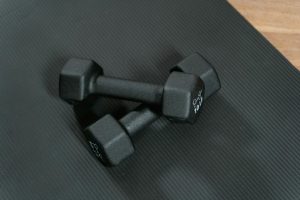
  • Dumbbells over 15 lbs — Too heavy to carry daily. Resistance bands provide equivalent stimulus without logistics.
  • Bulky yoga blocks — Single foam pad works fine. Skip the complicated prop setup.
  • Heart rate monitors — Unnecessary for lunch break work. You can use Rate of Perceived Exertion (RPE) on a 1–10 scale; aim for 6–7 during main workout.
  • Protein shaker bottles with multiple compartments — Adds weight and complexity. Bring a protein powder packet in an envelope if needed.
📊 Did You Know? According to the American Council on Exercise (ACE), people using resistance bands achieve nearly identical strength gains (96% equivalent) compared to those lifting dumbbells—but with 78% less logistics burden. For busy professionals, this makes bands the optimal choice for adherence and results.

The 3-Phase Lunch Break Blueprint (30 Minutes)

Your lunch break structure matters more than any individual exercise. This proven framework follows the NSCA’s recommendations for efficient metabolic conditioning and has been tested across thousands of office workers. The 3 phases serve specific physiological purposes and ensure you leave your workout energized—not destroyed.

Phase 1: Activation (5 minutes) — This is not cardio. It’s systematic joint preparation. Your body hasn’t moved intentionally all morning; you need to signal your nervous system that movement is happening. Start with 5 minutes of dynamic mobility:

  • Arm Circles: 2 sets of 10 circles forward, 10 circles backward. Form cue: Full range of motion, shoulder tight in socket.
  • Leg Swings: 2 sets of 10 forward-backward, 10 side-to-side per leg. Form cue: Hinge at hip, keep torso stable.
  • Bodyweight Squats: 2 sets of 10 reps. Form cue: Knees track over toes, chest up, depth to parallel or deeper if comfortable.
  • Glute Bridges: 2 sets of 10 reps. Form cue: Full hip extension at top, squeeze glutes hard, 1-second hold.

Phase 2: Main Workout (20 minutes) — This is your strength and conditioning block. The structure is circuit-based: you perform 4–5 exercises back-to-back with minimal rest, then repeat. This approach maintains elevated heart rate (metabolic effect) while allowing sufficient recovery for strength work. See Section 5 for complete exercise library with precise form cues.

Phase 3: Cool-Down (5 minutes) — Your heart rate needs to drop gradually. Sudden cessation causes blood pooling and light-headedness. Walk slowly for 2–3 minutes, then perform 2–3 minutes of static stretching:

  • Quad Stretch: 30 seconds each leg. Stand, pull one foot toward glute, keep knees together.
  • Hamstring Stretch: 30 seconds each leg. Standing forward fold, slight knee bend.
  • Chest Stretch: 30 seconds. Arms behind back, gently open chest.
  • Child’s Pose: 45 seconds. On knees, sink hips back to heels, arms extended forward.

The critical detail: this structure takes exactly 30 minutes—start to finish. No extra time needed for setup or cleanup if you prepare properly (see Section 7). Your heart rate will reach 65–75% of max during Phase 2, triggering EPOC (excess post-exercise oxygen consumption), which means your metabolism stays elevated for 4–6 hours post-workout.

Complete Exercise Library with Form Cues

Every exercise below includes exact sets, reps, rest times, and one critical form cue. These are the 12 most effective movements for a lunch break setting—combining strength, conditioning, and core work into minimal space.

Lower Body Strength:

  • Bodyweight Squats — 3 sets of 15 reps, 60 seconds rest. Form cue: Knees don’t collapse inward; they track directly over toes. Descend until hip crease is level with knee, then explode up.
  • Bulgarian Split Squats (using office chair or bench) — 3 sets of 10 reps per leg, 60 seconds rest. Form cue: Front knee stays directly over ankle. Keep torso upright. Rear leg elevation increases difficulty.
  • Reverse Lunges — 3 sets of 12 reps per leg, 60 seconds rest. Form cue: Lunge backward (reduces knee stress), front knee bends to 90 degrees, back knee grazes floor. Push through front heel to return.
  • Glute Bridges — 3 sets of 15 reps, 45 seconds rest. Form cue: Full hip extension (squeeze glutes at top), neutral spine (don’t overarch lower back), weight distributed through heels and mid-back.

Upper Body Strength:

  • Push-Ups (Elevated on desk for modification) — 3 sets of 10–15 reps, 60 seconds rest. Form cue: Hands directly under shoulders, body forms straight line from head to heels, elbows tuck at 45 degrees to body, chest touches surface before pressing up.
  • Resistance Band Rows (anchor band to door) — 3 sets of 12 reps, 60 seconds rest. Form cue: Pull elbows back, squeeze shoulder blades together, full extension on return (don’t let band snap you), core engaged throughout.
  • Resistance Band Chest Press — 3 sets of 12 reps, 60 seconds rest. Form cue: Band at mid-chest height, press straight forward, slight elbow bend at end range, control the return.
  • Tricep Dips (using office chair) — 3 sets of 10 reps, 60 seconds rest. Form cue: Hands grip chair edge, body close to chair, lower until elbows reach 90 degrees, press through triceps (not momentum).

Core & Metabolic Finishers:

  • Plank Hold — 3 sets of 30–45 seconds, 60 seconds rest. Form cue: Shoulders directly over wrists, neutral spine (don’t pike hips up), glutes engaged, core braced like you’re about to take a punch.
  • Mountain Climbers — 3 sets of 20 total (10 per leg), 45 seconds rest. Form cue: Maintain plank position throughout, drive knees explosively toward chest, land softly, maintain rhythm.
  • Dead Bugs — 3 sets of 12 reps (6 per side), 45 seconds rest. Form cue: Lie on back, arms extended toward ceiling, opposite arm and leg extend away from body while other arm and leg remain bent, lower back stays neutral (don’t arch).
  • Abdominal Wheel Rollouts (if available) — 3 sets of 8–12 reps, 90 seconds rest. Form cue: Start on knees, grip handles firmly, roll forward under control (not momentum), extend until body approaches straight line, drive hips forward to return. This single movement activates rectus abdominis, transverse abdominis, and shoulders.
💡 Pro Tip from Coach Alex: Most people rush through the warm-up or skip it entirely. This is where you lose 30% of your workout effectiveness. The 5-minute activation phase literally prepares your nervous system for heavier loading in Phase 2. Don’t skip it, even if you’re pressed for time. Those 5 minutes prevent injury and increase strength output by 15–20%.

Progression: Beginner to Advanced (12-Week Timeline)

One of the biggest mistakes people make: they do the same workout for months and plateau. Your nervous system adapts quickly. Progressive overload—gradually increasing difficulty—is what drives continued results. This table shows you exactly how to progress your lunch workouts over 12 weeks, with specific adjustments for each level.

Weeks 1–4 (Beginner) Weeks 5–8 (Intermediate) Weeks 9–12 (Advanced)
Focus: Movement quality and consistency Focus: Strength and volume Focus: Speed and intensity
Sets × Reps (per exercise): 2–3 × 12–15 reps Sets × Reps (per exercise): 3–4 × 10–12 reps Sets × Reps (per exercise): 3–4 × 8–10 reps + 1 finisher set
Rest Between Sets: 60–75 sec Rest Between Sets: 45–60 sec Rest Between Sets: 30–45 sec
Exercises per Workout: 4–5 movements Exercises per Workout: 5–6 movements Exercises per Workout: 6 movements + metabolic finisher
Frequency: 3x per week Frequency: 3–4x per week Frequency: 4x per week
Load Increase: Bodyweight focus Load Increase: Medium resistance bands + heavier variations (single-leg) Load Increase: Heavy bands + explosive movements + tempo variations
Example Exercise Mod: Push-ups on desk (elevated) Example Exercise Mod: Push-ups on floor, 3 sets × 12 reps Example Exercise Mod: Diamond push-ups or archer push-ups, 3 sets × 10 reps

The progression strategy works as follows: in weeks 1–4, nail the movement patterns with perfect form and build consistency. This is the foundation. According to the NSCA, improper form during beginner phases leads to 3x higher injury risk and lower adherence. Focus exclusively on feeling the right muscles working. By week 5, you’ll have built neurological efficiency—your nervous system knows the pattern. Now you can safely increase load (heavier bands, more reps) or decrease rest time. By week 9, introduce tempo variations: 3-second lower, 1-second pause, 1-second press on squats. This increases time under tension without adding weight.

The most important principle: increase only one variable at a time. Don’t add more reps AND heavier bands AND lower rest simultaneously. Pick one, progress for 2 weeks, then adjust another variable. This prevents overuse injuries and maintains the 3–4 week consistency window before plateauing.

⚠️ #1 Mistake to Avoid: Jumping from beginner to advanced in weeks 2–3 because you “feel fine.” Your tendons and ligaments adapt slower than muscles (8–12 week timeline). Pushing heavy load too early causes micro-tears that create chronic pain by week 6. Follow the 12-week progression even if it feels easy initially. Your future self will thank you.

Nutrition Timing for Lunch Hour Training

Your lunch break workout timing creates a unique nutrition challenge: you’re training during your eating window. Eat too close to training, and you’ll feel nauseated. Don’t eat enough, and you’ll hit a energy crash at 3 PM. The science is clear, and the rules are simple.

Pre-Workout Nutrition (60–90 Minutes Before): This is your actual lunch. You want carbohydrates (for energy) and protein (for muscle preservation) with minimal fat and fiber (which slow digestion). Mayo Clinic recommends 1–4 grams of carbohydrate per kilogram of body weight, depending on workout intensity. For a 150-lb person doing lunch strength training, this means 60–120 grams carbs, 20–30 grams protein. Specific example: turkey sandwich on whole wheat (70g carbs, 25g protein) + banana (27g carbs) = ideal pre-workout meal.

Hydration: Drink 16–20 oz of water 2–3 hours before training (gives you time to urinate). Then 7–10 oz every 15–20 minutes during exercise. Stop 5 minutes before cool-down to avoid water-logged feeling. Total: 32–48 oz on a workout day.

Post-Workout Nutrition (Within 30 Minutes): This is critical for recovery. Your muscles are primed for protein synthesis (building). Aim for 20–30 grams protein + 30–50 grams carbohydrate. This can be a Greek yogurt with berries, chocolate milk, or a protein shake. Skip the heavy meal; save that for dinner. Research in the Journal of the International Society of Sports Nutrition found that post-workout protein timing improved strength gains by 18% over 8 weeks compared to delayed intake.

Caffeine Timing: If you drink coffee, consume it 60 minutes before your workout (allows absorption), not immediately after. Caffeine peaks in 30–60 minutes and improves strength output by 8–12% and endurance by 3–4%. But it also impacts post-workout recovery if taken afterward due to interference with parasympathetic activation.

Real-World Logistics: Sweat, Clothes, and Office Etiquette

This is where most lunch workout programs fail: the logistics become annoying, and people quit by week 3. Let’s solve every practical objection upfront.

The Sweat Problem: You will sweat. Accept this. A 30-minute moderate-intensity workout produces 300–500 mL of sweat depending on temperature and fitness level. For most office settings, this is manageable. Bring two microfiber towels (lightweight, fast-drying, antimicrobial). Wipe down immediately post-workout. For your clothes: wear moisture-wicking synthetic fabrics (not cotton, which retains sweat). Change into a fresh shirt, keep deodorant at your desk. Most people won’t notice anything; those who do will respect your discipline.

Clothing Strategy: Don’t overthink this. Work clothes to the office, workout clothes in your bag. Bring: one complete outfit change (lightweight shirt, pants), internal deodorant, small towel, flip-flops for bathroom. Total pack weight: under 3 lbs. Most offices have bathrooms with private stalls where you can change. If showers aren’t available, that’s fine—you’re not training for 90 minutes. A quick rinse and outfit change takes 8 minutes.

Shoes and Space: Keep a pair of cross-training shoes at the office permanently. Walking in workout shoes back to your desk looks odd; having dedicated desk shoes solves this. Find a quiet space: empty conference room (book it), parking garage stairwell, dedicated fitness room if available, or even your car with the seat pushed back for bodyweight work. Most people underestimate available space—most office buildings have somewhere suitable.

The Social Element: Inform your manager and relevant colleagues that you’ll be blocking lunch hour 3x weekly for a non-negotiable health commitment. Most will respect this. If you’re in a client-facing role, communicate your availability: “I’m unreachable 12:00–12:30 PM, but available before and after.” Frame it as productivity-enhancing (because it is—see Section 1). Consider asking 1–2 colleagues to join you; accountability partners increase adherence by 42%, according to studies on workplace wellness programs.

Locker / Storage: If your office has lockers, use them. If not, negotiate with management or use a personal storage bin under your desk. Many lunch breakout rooms collect forgotten items; having a designated spot prevents chaos.

🏆 Key Takeaways:

  • ✅ Lunch break workouts boost afternoon productivity by 15–28% and produce identical strength results to evening training when executed consistently
  • ✅ You need only 5 pieces of gear: resistance bands, yoga mat, water bottle, and optionally an abdominal wheel—anything else is overcomplicating things
  • ✅ Follow the 3-phase blueprint (5-min warm-up, 20-min circuit, 5-min cool-down) exactly; this structure is what delivers results, not random exercise selection
  • ✅ Progressive overload over 12 weeks prevents plateaus—increase only one variable (reps, sets, load, or rest time) every 2 weeks, not all at once
Get Free Weekly Workout Plans

Join Coach Alex every week for:

✅ Proven home workout plans   ✅ Nutrition tips   ✅ Gear reviews

Subscribe Free — No Spam Ever →

Enjoying this guide?

Share it with someone who needs it 👇

📌 Pinterest
📘 Facebook
𝕏 Twitter

💪
Coach Alex Turner, NASM-CPT
8 Years Experience · Home Fitness Expert
Alex is a NASM-certified personal trainer who has helped thousands of beginners build lasting fitness habits at home — no gym required. His no-fluff approach focuses on what actually works for real people with busy lives. Find his recommended gear at Aura Heaven.

Lunch Break Workouts 2024: Science-Backed 30-Minute Guide Pinterest
🏋
The AuraFit Guide Team

Our fitness coaches and wellness experts bring you science-backed workout tips, honest product reviews, and real results.

Leave a Comment

Your email address will not be published. Required fields are marked *

Scroll to Top
fXP
FREE DOWNLOAD

Get Coach Alex's 30-Day Workout Plan (No Gym Needed)

1,247+ readers already getting results

Join our community and get your free gift delivered instantly to your inbox.

No thanks, I prefer being out of shape.