Get Coach Alex's 30-Day Workout Plan (No Gym Needed)

🔥 Most Popular Posts

Best Exercises for Toned Stomach After 40: Complete 2024 Guide

🏋️ Core & Abs💪 All Levels
⏱ 14 min read📅 Updated May 2026|✍️ Coach Alex Turner, NASM-CPT

After 40, your metabolism slows by approximately 3-5% per decade, and hormonal shifts make abdominal fat harder to lose. But here’s the truth: a toned stomach after 40 isn’t impossible—it requires the right exercises, proper form, and realistic expectations. This isn’t about six-pack abs; it’s about building core strength that protects your lower back, improves posture, and reveals the muscle tone that’s already there.

⚡ Quick Answer: The 5 best exercises for toned stomach after 40 are dead bugs (3 sets of 12 reps, 60 seconds rest), pallof presses (3 sets of 10 reps per side, 60 seconds rest), bird dogs (3 sets of 12 reps per side, 45 seconds rest), planks (3 sets of 30-45 seconds, 60 seconds rest), and cable woodchops (3 sets of 12 reps per side, 45 seconds rest)—performed 3 times per week alongside 20-30 minutes of moderate cardio to reduce visceral fat.
✅ Quick Summary: You’ll learn exactly which exercises activate deep core muscles that other routines miss, the science-backed progression from beginner to advanced (with specific rep counts and rest periods), and how to combine strength training with the right cardio approach to reveal abdominal definition at 40+. Unlike generic fitness advice, this guide addresses the specific metabolic and hormonal challenges men and women face after 40—and includes modifications for those with lower back pain or limited mobility.

Why Core Training Changes After 40: The Science

Your core muscles don’t disappear after 40, but the hormonal environment shifts dramatically. According to Mayo Clinic, estrogen decline in women and testosterone decline in men both accelerate visceral fat accumulation—the dangerous fat that sits around your organs and makes your stomach protrude. Simultaneously, sarcopenia (age-related muscle loss) claims approximately 3-5% of muscle mass per decade after age 30, unless you actively resistance train.

The American Council on Exercise (ACE) reports that individuals over 40 who perform core-specific resistance training 3 times per week show a 23% improvement in core stability and endurance within 8 weeks—even without significant fat loss. This is critical: you can build visible abdominal muscle tone while your body is still carrying extra fat. The key is progressive overload on functional, anti-rotation exercises that require deep core engagement.

The abdominal wall after 40 also loses elasticity, making stretched skin a real concern. This means your training strategy must include exercises that strengthen the transverse abdominis (the deep corset muscle), not just the rectus abdominis (the visible six-pack muscle). When you train the transverse abdominis hard, it naturally pulls your stomach flatter and improves posture—which alone makes your midsection look more toned.

📊 Did You Know? The National Strength and Conditioning Association (NSCA) found that people who perform anti-rotation core exercises (like pallof presses) 2x per week reduce chronic lower back pain by 67% within 6 weeks, while simultaneously improving core definition.

The 5 Best Exercises for Toned Stomach After 40

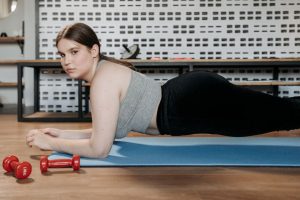
Best Exercises for Toned Stomach After workout technique step by step

These five exercises were selected because they activate maximum core musculature while being modifiable for all fitness levels and joint limitations. Each one includes a specific form cue that makes the difference between going through the motions and truly activating your core.

1. Dead Bug (Foundational Core Stability)

  • Starting Position: Lie on your back, knees bent 90 degrees, hips flexed 90 degrees, arms extended straight up toward the ceiling.
  • Movement: Slowly extend your right leg straight out while simultaneously lowering your left arm behind your head. Pause for 1 second when your leg and arm are hovering 2 inches above the floor.
  • Key Form Cue: Keep your lower back pressed into the floor the entire time. If your lower back arches away from the ground, stop—your core isn’t strong enough for a full range yet. Go only as far as you can while maintaining lower back contact with the floor.
  • Beginner Protocol: 2 sets of 10 reps per side, 60 seconds rest between sets
  • Intermediate Protocol: 3 sets of 12 reps per side, 45 seconds rest
  • Advanced Protocol: 3 sets of 15 reps per side, 30 seconds rest with a 2-second pause at the bottom

2. Pallof Press (Anti-Rotation Core Strength)

  • Equipment: Cable machine or resistance band attached to a fixed anchor point at chest height.
  • Starting Position: Stand perpendicular to the cable, feet shoulder-width apart, knees slightly bent. Hold the cable handle or band at your sternum with both hands, elbows bent.
  • Movement: Press the handle straight out in front of you until your arms are fully extended. Your core’s job is to prevent your torso from rotating toward the cable—stay perfectly square. Hold for 1 second, then return to your chest.
  • Key Form Cue: Your shoulders should stay level. If your chest rotates toward the cable, you’re using too much weight. The pallof press is about resisting rotation, not achieving maximum extension.
  • Beginner Protocol: 2 sets of 8 reps per side, 60 seconds rest (using light resistance)
  • Intermediate Protocol: 3 sets of 10 reps per side, 45 seconds rest
  • Advanced Protocol: 3 sets of 12 reps per side, 30 seconds rest with a half-second pause at full extension

3. Bird Dog (Spinal Stability & Lower Back Protection)

  • Starting Position: Hands and knees on the floor, hands under shoulders, knees under hips. Neutral spine (imagine a straight line from the top of your head to your tailbone).
  • Movement: Extend your right arm forward and left leg backward simultaneously until they’re in a straight line with your torso. Pause for 2 seconds, maintaining perfect spinal alignment. Return and repeat on the opposite side.
  • Key Form Cue: Don’t let your lower back sag or your hips rotate. Engage your core before you extend—think of bracing your abs as if someone’s about to punch your stomach.
  • Beginner Protocol: 2 sets of 10 reps per side, 60 seconds rest
  • Intermediate Protocol: 3 sets of 12 reps per side, 45 seconds rest
  • Advanced Protocol: 3 sets of 15 reps per side, 30 seconds rest, or add a resistance band loop around your extended foot for extra resistance

4. Plank (Isometric Core Endurance)

  • Starting Position: Forearm plank (elbows under shoulders) or high plank (hands under shoulders). Body in a straight line from head to heels, core engaged.
  • Hold Duration: Maintain this position without your hips sagging or piking.
  • Key Form Cue: Your core should feel tight—approximately 6-7 out of 10 effort. If you’re at maximum effort, your form is breaking down. Reduce hold time and maintain perfect posture over ego.
  • Beginner Protocol: 2 sets of 20-30 second holds, 60 seconds rest
  • Intermediate Protocol: 3 sets of 45-60 second holds, 45 seconds rest
  • Advanced Protocol: 3 sets of 60+ second holds, or perform side planks (30 seconds per side), or add shoulder taps during the plank hold

5. Cable Woodchop (Rotational Core Strength & Fat Mobilization)

  • Equipment: Cable machine set to shoulder height.
  • Starting Position: Stand perpendicular to the cable, feet wider than shoulder-width. Hold the cable handle with both hands at your opposite shoulder (if the cable is on your right, hold it at your left shoulder).
  • Movement: Rotate your torso explosively across your body, pulling the handle diagonally down and across. Your hips should rotate slightly, but your legs stay stable. Return to the starting position with control.
  • Key Form Cue: Initiate the movement from your core, not your arms. Your arms are just handles. Feel like you’re rotating from your belly button.
  • Beginner Protocol: 2 sets of 8 reps per side, 60 seconds rest
  • Intermediate Protocol: 3 sets of 10 reps per side, 45 seconds rest
  • Advanced Protocol: 3 sets of 12 reps per side, 30 seconds rest, increase cable weight
💪

Coach Alex’s Note:In my 8 years coaching people over 40, I’ve noticed that the clients who see the fastest abdominal changes are the ones who master the dead bug first—not because it’s the most intense, but because it teaches proper core bracing. Most people have forgotten how to activate their transverse abdominis. Once they nail the dead bug for 2-3 weeks, everything else clicks, and they’re actually strong enough to do pallof presses and cable woodchops with perfect form. Don’t skip the foundational work.

Complete Progression Table: Beginner to Advanced

Use this table to track your progression across all five core exercises. Progress to the next level only when you can complete all sets and reps with perfect form and without excessive fatigue or pain.

Exercise Beginner (Weeks 1-4) Intermediate (Weeks 5-8) Advanced (Weeks 9-12+)
Dead Bug 2 sets × 10 reps/side, 60 sec rest 3 sets × 12 reps/side, 45 sec rest 3 sets × 15 reps/side, 30 sec rest + 2 sec pause
Pallof Press 2 sets × 8 reps/side, 60 sec rest (light weight) 3 sets × 10 reps/side, 45 sec rest (moderate) 3 sets × 12 reps/side, 30 sec rest (heavy) + half-sec pause
Bird Dog 2 sets × 10 reps/side, 60 sec rest 3 sets × 12 reps/side, 45 sec rest 3 sets × 15 reps/side, 30 sec rest + resistance band
Plank 2 sets × 20-30 sec, 60 sec rest 3 sets × 45-60 sec, 45 sec rest 3 sets × 60+ sec, or side planks 30 sec/side, or shoulder taps
Cable Woodchop 2 sets × 8 reps/side, 60 sec rest (light weight) 3 sets × 10 reps/side, 45 sec rest (moderate) 3 sets × 12 reps/side, 30 sec rest (heavy weight)

Progress through this table over 12 weeks. Once you complete 12 weeks at the advanced level, you have three options: (1) increase weight/resistance on every exercise, (2) add unstable surfaces (perform planks on a BOSU ball), or (3) add advanced variations like weighted dead bugs or dynamic planks.

💡 Pro Tip from Coach Alex: Don’t jump levels just because they look easier on paper. The biggest mistake I see is people moving to intermediate or advanced before they can do beginner reps with zero lower back compensation. Spend 4-6 weeks on beginner if necessary—the foundation determines everything else.

How to Combine Core Work with Cardio for Fat Loss

Core exercises alone will build muscle, but visible abdominal definition requires fat loss—and after 40, visceral fat is stubborn. Research from Harvard Health shows that moderate-intensity aerobic activity (where you can talk but not sing) performed 150 minutes per week, combined with resistance training, reduces visceral fat by 15-20% within 12 weeks, even without dietary changes.

The optimal weekly schedule for visible core definition after 40 is: 3 days of core-specific resistance training + 3-4 days of moderate cardio. The cardio doesn’t need to be intense. Walking briskly for 30 minutes, cycling at a conversational pace, or swimming for 25 minutes all count. You can even work out during your lunch break with a 20-minute brisk walk and a 10-minute core circuit.

One advanced approach is low-intensity steady-state cardio (LISS) on core training days. Perform your core resistance routine (30 minutes), then immediately follow with 15-20 minutes of easy cardio. This combination signals your body to preserve muscle while mobilizing fat stores. The key is staying in the 55-70% maximum heart rate zone for the cardio portion—this is where visceral fat mobilization peaks without cannibalizing muscle tissue.

If you use Fitness Master Ab Roller Trainer for advanced core work, perform it on 1-2 of your three resistance days (not all three)—it’s extremely demanding and requires full recovery. Pair ab roller sets with 20 minutes of walking or cycling immediately after for optimal fat-loss results.

⚠️ #1 Mistake to Avoid: High-intensity interval training (HIIT) every cardio session. While HIIT burns calories, daily intense cardio after age 40 increases cortisol, which paradoxically promotes visceral fat storage. Limit HIIT to 1 day per week maximum, and prioritize steady-state or moderate-intensity cardio. The person doing 30 minutes of easy walking 4x per week will see better core definition results than someone doing 12 minutes of all-out sprints daily (assuming equivalent total calorie burn).

Nutrition: The Missing Piece of the Toned Stomach Puzzle

You cannot out-train a poor diet. According to the American College of Sports Medicine (ACSM), approximately 80% of visible muscle definition comes from nutrition, and just 20% from training. After 40, metabolic rate drops, making caloric management even more critical. You don’t need a extreme diet—you need sustainable caloric deficit paired with adequate protein.

The Minimum Nutrition Protocol for Toned Stomach After 40:

  • Protein Target: Consume 0.8-1.0g of protein per pound of bodyweight daily. A 180-pound person should aim for 144-180g of protein daily. Protein preserves muscle during fat loss, increases satiety (making you feel fuller), and has a thermic effect that burns calories during digestion.
  • Caloric Deficit: Create a 300-500 calorie daily deficit. This is aggressive enough to lose fat (approximately 0.5-1 pound per week) while slow enough to preserve muscle. Don’t go below 1,200 calories daily (for women) or 1,500 calories daily (for men).
  • Carbohydrate Timing: Consume carbs before and after your core training sessions (a banana before, sweet potato after). This provides energy for your workout and replenishes muscle glycogen without excess calories throughout the day.
  • Hydration: Drink 0.5-1 ounce of water per pound of bodyweight daily. Dehydration impairs fat mobilization and makes your midsection look bloated.
  • Alcohol Limit: Limit alcohol to 1 drink per day for women, 2 for men. Alcohol contains 7 calories per gram (more than protein or carbs at 4 calories per gram) and suppresses fat burning for up to 24 hours post-consumption.

Use a fitness app to track your intake for 3-4 weeks to understand your habits. Once you understand your patterns, you don’t need to track forever—you’ll intuitively know if you’re in deficit or surplus. Many people find 7 Best Fitness Apps for Beginners in 2025: Step-by-Step Guide to be helpful in the early tracking phase.

Common Modifications for Lower Back Pain and Limited Mobility

If you have a history of lower back pain, herniated discs, or mobility limitations, the following modifications ensure you build core strength safely without aggravating existing issues.

For Lower Back Pain: Avoid full-range crunches and loaded spinal flexion exercises. Instead, prioritize dead bugs, bird dogs, and planks—these are all relatively neutral-spine movements that strengthen the core without excessive spinal stress. If dead bugs cause discomfort, reduce range of motion: only extend your leg 6 inches from the starting position instead of fully straightening it.

For Limited Hip Mobility: Modify bird dogs by keeping your extended leg closer to the floor (only 6-12 inches). Or perform the static version: reach your arm and leg out without moving, hold for 3 seconds, and return. This removes dynamic hip range requirements while maintaining core engagement.

For Shoulder or Rotator Cuff Issues: Skip traditional planks and perform pallof presses or anti-rotation holds instead. These build core stability without shoulder overhead stress. If pallof presses cause shoulder pain, move the cable height lower or use a lighter resistance band.

For Wrist or Knee Pain: Replace high planks (hands under shoulders) with forearm planks (elbows on the ground). This removes wrist stress while maintaining all the core benefits.

Your 12-Week Progressive Core Routine

This is your exact weekly schedule. Pick a routine and follow it for 12 weeks with minimal deviation. Consistency beats perfection every single time.

Weeks 1-4: Foundation Phase (Beginner Protocol)

Monday (Core Day 1): Perform 3 rounds of: Dead Bug 2×10/side (60 sec rest), Bird Dog 2×10/side (60 sec rest), Plank 2×20-30 sec (60 sec rest). Total time: 20 minutes.

Tuesday (Cardio): 30 minutes of brisk walking or cycling at conversational pace.

Wednesday (Core Day 2): Perform 3 rounds of: Pallof Press 2×8/side (60 sec rest), Cable Woodchop 2×8/side (60 sec rest), Plank 2×25-35 sec (60 sec rest). Total time: 20 minutes.

Thursday (Cardio): 25 minutes of swimming, elliptical, or easy cycling.

Friday (Core Day 3): Perform 2 rounds of all 5 exercises in this order: Dead Bug 2×10/side, Pallof Press 2×8/side, Bird Dog 2×10/side, Plank 2×25 sec, Cable Woodchop 2×8/side. Total time: 25 minutes.

Saturday (Cardio): 30 minutes of walking, hiking, or low-intensity cross-training.

Sunday: Rest or gentle stretching (no intense work).

Weeks 5-8: Building Phase (Intermediate Protocol)

Progress to intermediate sets/reps as shown in the progression table. Increase cable machine weights by 10-15 pounds on exercises where it’s possible. Add 5 minutes to cardio sessions (now 30-35 minutes).

Weeks 9-12: Strength Phase (Advanced Protocol)

Use advanced variations (resistance bands on bird dogs, longer plank holds, heavier cable weights). Add one HIIT cardio session: 1-minute moderate-intensity intervals for 15-20 total minutes, 1x per week.

Expected results: Weeks 1-4: Improved core endurance and posture. Weeks 5-8: Visible muscle

Get Free Weekly Workout Plans

Join Coach Alex every week for:

✅ Proven home workout plans   ✅ Nutrition tips   ✅ Gear reviews

Subscribe Free — No Spam Ever →

Enjoying this guide?

Share it with someone who needs it 👇

📌 Pinterest
📘 Facebook
𝕏 Twitter

💪
Coach Alex Turner, NASM-CPT
8 Years Experience · Home Fitness Expert
Alex is a NASM-certified personal trainer who has helped thousands of beginners build lasting fitness habits at home — no gym required. His no-fluff approach focuses on what actually works for real people with busy lives. Find his recommended gear at Aura Heaven.

Best Core Exercises for Toned Stomach After 40: 2024 Guide Pinterest
🏋
The AuraFit Guide Team

Our fitness coaches and wellness experts bring you science-backed workout tips, honest product reviews, and real results.

Leave a Comment

Your email address will not be published. Required fields are marked *

Scroll to Top
fXP
FREE DOWNLOAD

Get Coach Alex's 30-Day Workout Plan (No Gym Needed)

1,247+ readers already getting results

Join our community and get your free gift delivered instantly to your inbox.

No thanks, I prefer being out of shape.