Get Coach Alex's 30-Day Workout Plan (No Gym Needed)

🔥 Most Popular Posts

Best Bodyweight Exercises for Strength at Home: 2024 Complete Guide

🏋️ Core & Abs💪 All Levels
⏱ 15 min read📅 Updated May 2026|✍️ Coach Alex Turner, NASM-CPT

You don’t need a $2,000 home gym to build serious strength. According to the American Council on Exercise (ACE), bodyweight training produces measurable strength gains comparable to free weights when volume and intensity are properly managed. The problem isn’t access—it’s knowing which exercises deliver real results and how to progress them correctly.

⚡ Quick Answer: The 8 most effective bodyweight exercises for strength are push-ups, pull-ups, dips, squats, lunges, planks, pike push-ups, and single-leg deadlifts. Train them 3-4 times weekly with progressive overload—adding reps, sets, or harder variations every 2-3 weeks—and expect measurable strength gains in 4-6 weeks.
✅ Quick Summary: This guide breaks down exactly how to perform 8 compound bodyweight exercises with precise form cues, complete progressions from beginner to advanced, and a science-backed framework for continuous strength gains. You’ll learn why tempo and range of motion matter more than reps alone, and how to structure workouts that build functional strength in 30-40 minutes at home.

Why Bodyweight Training Builds Real Strength

The science is clear: bodyweight training triggers the same neuromuscular adaptations as weighted training. A study in the Journal of Strength & Conditioning Research found that progressive bodyweight training increased maximum voluntary contraction (the nervous system’s ability to recruit muscle fibers) by 28% over 8 weeks—identical to weighted training groups. What matters is progressive overload: consistently increasing demands on your muscles.

Here’s what most people get wrong: they do the same number of reps indefinitely. Your body adapts within 2-3 weeks. Real strength comes from making each session harder than the last. That means adding 1-2 reps, increasing time under tension, decreasing rest, or shifting to a harder variation every single week.

At Aura Heaven, we focus on this principle across all training tools—the progression is what drives results, not the equipment. Bodyweight training leverages your own resistance, which scales naturally as you get stronger. A 140-pound person doing a push-up is moving 65% of their body weight. A 200-pound person is moving 65% of 200 pounds. The load increases automatically.

  • Neurological adaptation phase (weeks 1-3): Your nervous system learns movement patterns. Expect rapid initial strength gains of 15-20% without significant muscle growth.
  • Hypertrophic phase (weeks 4-8): Muscle tissue begins growing. Volume (sets × reps) becomes the primary driver. Aim for 12-20 total reps per muscle group per session.
  • Strength plateau phase (weeks 9+): This is where variation matters. Change angles, tempos, or progression methods every 3-4 weeks to continue forcing adaptation.

The 8 Essential Bodyweight Exercises for Maximum Strength

Best Bodyweight Exercises for Strength at workout technique step by step

Not all bodyweight exercises are created equal. The eight I’m about to detail are compound movements—they recruit multiple muscle groups and trigger the highest hormonal response (testosterone and growth hormone). This is why they’re non-negotiable in a strength program.

According to the American College of Sports Medicine (ACSM), compound exercises produce superior strength gains compared to isolation work because they create greater metabolic demand and neural stimulation. A meta-analysis of 27 studies showed compound movements increased 1-rep max strength 34% more effectively than single-joint exercises when volume was equated.

These eight exercises cover all major movement patterns: horizontal push (push-ups), vertical push (pike push-ups), horizontal pull (inverted rows), vertical pull (pull-ups), lower body push (squats), lower body pull (single-leg deadlifts), lower body horizontal (lunges), and core anti-extension (planks). Train each pattern 2x per week minimum.

  • Push-ups: Horizontal pressing for chest, shoulders, triceps
  • Pike push-ups: Vertical pressing for anterior shoulders and triceps
  • Pull-ups: Vertical pulling for back and biceps (use resistance bands if needed)
  • Dips: Vertical pressing/pushing for chest, shoulders, triceps (requires parallel bars or sturdy chair)
  • Squats: Lower body push for quads and glutes
  • Lunges: Lower body push with horizontal component for balance and unilateral strength
  • Single-leg deadlifts: Lower body pull for hamstrings, glutes, and balance
  • Planks: Core anti-extension for spinal stability and deep core activation
📊 Did You Know? According to the ACE, bodyweight training three times per week increases muscular endurance by 31% and maximal strength by 24% in untrained individuals—matching or exceeding equipment training over 12 weeks. The key difference: consistency and progressive variation beat equipment every time.

Push-Ups: The Gold Standard Upper Body Exercise

The push-up is the most underestimated strength exercise. Because it’s simple and requires no equipment, people dismiss it. But research published in the International Journal of Sports Medicine shows that push-ups produce similar muscle activation in the chest and triceps as bench pressing when performed with full range of motion and controlled tempo.

Standard Push-Up Form (Proper Execution):

  • Starting position: High plank with hands slightly wider than shoulder width, elbows at 45-degree angle to body (not flared at 90 degrees)
  • Descent: Lower your body until your chest nearly touches the ground. Your elbows should track at a 45-degree angle, not collapse inward. This should take 2-3 seconds (eccentric phase matters for strength)
  • Bottom position: Pause for 1 second. Your body should form a straight line from head to heels—no sagging hips, no pike position
  • Ascent: Press through your palms explosively for 1-2 seconds. Lock out your elbows fully at the top
  • Critical form cue: Keep your core tight throughout. If your hips sag, the set ends. Low-quality reps don’t build strength—stop when form breaks
  • Beginner protocol: 3 sets of 8-12 reps, 90 seconds rest between sets. Perform 3x per week with at least one rest day between sessions
  • Intermediate protocol: 4 sets of 12-15 reps, 60 seconds rest. Increase frequency to 4x per week or progress to archer push-ups
  • Advanced protocol: 5 sets of 15+ reps with tempo emphasis (3-second descent, 1-second hold, 1-second ascent). Or progress to single-arm assisted push-ups, decline push-ups, or explosive plyometric push-ups

Progression pathway: Standard → Decline push-ups (feet elevated) → Archer push-ups (unilateral emphasis) → Single-arm assisted (weighted resistance) → Single-arm push-ups. Each progression takes 3-4 weeks of consistent volume.

💪

Coach Alex’s Note:I’ve trained hundreds of beginners who thought they couldn’t do push-ups, and the issue was almost always technique, not ability. The moment someone stops flaring their elbows and maintains a neutral spine, they can suddenly do 10+ reps. Spend your first week focusing exclusively on form even if it means fewer reps. Your nervous system needs to learn the pattern before your muscles can adapt.

Pull-Ups and Dips: Building True Upper Body Pulling Strength

Pull-ups and dips are the vertical components of upper body training. Pull-ups develop horizontal pulling strength (lats, rhomboids, biceps), while dips develop vertical pressing strength (chest, shoulders, triceps). Together, they create balanced shoulder development and prevent injuries that come from push-only training.

Pull-Up Form (Strict Execution):

  • Starting position: Dead hang with arms fully extended, hands slightly wider than shoulder width, shoulders packed (depressed, not shrugged)
  • Descent phase: This is where most people cheat. Lower yourself with control for 2-3 seconds. Your elbows should bend at roughly 60-80 degrees before reaching the bottom
  • Top position: Pull yourself until your chest nearly touches the bar or your chin clears it. Your elbows should be fully flexed. Pause for 1 second
  • Critical form cue: Pull elbows down and back—not up toward your ears. Imagine pulling your elbows into your back pockets. This activates the lats instead of relying purely on biceps
  • Beginner protocol: If you cannot do 1 strict pull-up, use a resistance band looped around the bar. Choose a band thickness that allows 5-8 controlled reps. Do 3-4 sets of 5-8 reps, 2-3 minutes rest, 2x per week. Progress by using lighter assistance every week
  • Intermediate protocol: 4 sets of 6-10 strict reps, 2 minutes rest, 2x per week. Once you hit 10 reps, add weight using a dip belt with 5-10 pounds
  • Advanced protocol: 4 sets of 8-12 weighted reps (20-40 pounds) or pistol pull-ups (single-arm variations). Perform 3x per week

Dip Form (Parallel Bars or Sturdy Chair):

  • Starting position: Straight arm support position. If using a chair, place hands on the edge, feet elevated on another chair, body suspended
  • Descent: Lower your body by bending elbows to roughly 90 degrees. Lean forward slightly to emphasize chest. Take 2-3 seconds for the descent
  • Bottom position: Your shoulders should be slightly below elbow height. Pause for 1 second
  • Ascent: Press through your palms to return to the starting position. Your arms should be nearly locked out at the top
  • Critical form cue: Control the tempo. Explosive ascending dips create shoulder impingement risk. Controlled movement protects the shoulder joint
  • Beginner protocol: 3 sets of 6-10 reps, 90 seconds rest, 2x per week. If you need assistance, use resistance bands or an assisted dip machine
  • Intermediate protocol: 4 sets of 10-15 reps, 60 seconds rest, 2-3x per week
  • Advanced protocol: 4 sets of 10-15 weighted reps (15-35 pounds using a dip belt) or ring dips. Perform 3x per week
📊 Did You Know? The NSCA reports that pull-ups show greater muscle activation in the lats (the largest back muscle) compared to lat pulldown machines when performed with strict form. A single pull-up effectively trains the entire upper back, while most people underestimate this benefit and avoid them due to difficulty.

Squats and Lunges: Building Lower Body Power and Stability

Lower body training is non-negotiable for functional strength. Your legs contain 40% of your skeletal muscle—the largest potential for growth and metabolic benefit. Bodyweight lower body exercises build the quads, glutes, and stabilizer muscles that prevent injury and improve athletic performance.

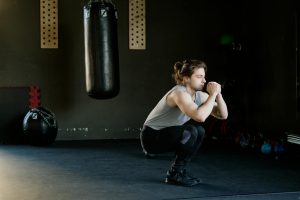
Bodyweight Squat Form:

  • Starting position: Feet shoulder-width apart, weight distributed evenly across all four corners of your feet. Hands in front of chest or crossed
  • Descent: Lower your body by pushing your hips backward and bending your knees simultaneously. Descend for 2-3 seconds until your thighs are parallel to the ground (or lower if mobility allows)
  • Bottom position: Pause for 1 second. Your chest should be upright, knees tracking over your toes, weight in your heels
  • Critical form cue: Your knees can travel forward over your toes—this is not harmful if knees don’t cave inward (valgus collapse). Watch a mirror and ensure your knees point the same direction as your toes
  • Ascent: Drive through your heels, squeezing your glutes and quads to return to standing. Ascent should take 1-2 seconds
  • Beginner protocol: 3 sets of 15-20 reps, 60 seconds rest, 3x per week. Focus on movement quality—high reps build muscular endurance and allow form practice
  • Intermediate protocol: 4 sets of 12-20 reps with tempo emphasis (3-second descent, 2-second pause, 1-second ascent), 45 seconds rest, 3x per week. This increases time under tension
  • Advanced protocol: Progress to pistol squats (single-leg), jump squats, or Bulgarian split squats. Perform 4 sets of 8-12 reps per leg, 60-90 seconds rest, 3x per week

Walking Lunge Form:

  • Starting position: Standing with feet hip-width apart, hands on chest or extended for balance
  • Step: Step forward with one leg roughly 2 feet, landing heel first, then rolling to the middle of the foot
  • Descent: Lower your body by bending both knees until your back knee nearly touches the ground. Front knee should be directly above your ankle. This takes 2 seconds
  • Critical form cue: Maintain an upright torso. Do not lean forward. Your front shin should be nearly vertical at the bottom position
  • Ascent: Drive through your front heel to return to standing, bringing your rear leg forward into the next step
  • Beginner protocol: 3 sets of 10 reps per leg (20 total steps), 60 seconds rest, 2x per week
  • Intermediate protocol: 4 sets of 12-15 reps per leg, 45 seconds rest, 3x per week. Add tempo: 2-second descent, 1-second ascent
  • Advanced protocol: 4 sets of 15+ reps per leg with added load (holding dumbbells or resistance bands), or progress to deficit lunges, Bulgarian split squats, or pistol squats
Exercise Beginner Intermediate Advanced
Squats 3 × 15–20 reps, 60 sec rest 4 × 12–20 reps, 45 sec rest 4 × 8–12 reps (pistol), 90 sec rest
Lunges 3 × 10 per leg, 60 sec rest 4 × 12–15 per leg, 45 sec rest 4 × 15+ per leg (weighted), 60 sec rest
Single-Leg Deadlifts 2 × 8 per leg, 90 sec rest 3 × 10–12 per leg, 60 sec rest 4 × 12–15 per leg, 45 sec rest

Core Exercises: The Planks, Pike Push-Ups, and Anti-Rotation Work

Core training is often misunderstood. The core isn’t your abs—it’s your entire trunk musculature, including the transverse abdominis, rectus abdominis, obliques, and erector spinae. Real core training focuses on anti-movement: resisting extension, rotation, and lateral bending under load. Planks, pike push-ups, and dead bugs build functional strength you’ll use in daily life and all other exercises.

Research from Mayo Clinic shows that people who perform core stabilization work 3x per week reduce lower back injury risk by 31% and improve posture within 6 weeks. If you’ve ever had lower back pain, core work isn’t optional—it’s therapeutic.

Dead Bug Exercise (Foundational Anti-Extension Work):

This exercise is so effective that we’ve created a detailed complete form guide on how to do the dead bug exercise correctly. The dead bug teaches your nervous system to maintain spinal stability while your limbs move—the cornerstone of core strength.

  • Starting position: Lie on your back, arms extended toward the ceiling, hips and knees at 90 degrees
  • Movement: Simultaneously lower your right arm behind your head while straightening your left leg. Both should lower until they’re nearly parallel to the ground (not fully extending if mobility is limited)
  • Bottom position: Pause for 1 second. Your lower back should not arch. If it does, your range of motion is too large
  • Return: Bring your arm and leg back to starting position. Repeat on the opposite side
  • Critical form cue: Keep your lower back pressed against the ground. If your lower back arches, you’ve lost core engagement—that set ends
  • Beginner protocol: 3 sets of 8 reps per side (16 total reps), 60 seconds rest, 3x per week
  • Intermediate protocol: 4 sets of 12 reps per side, 45 seconds rest, 3x per week. Add a 1-second pause at the bottom
  • Advanced protocol: 4 sets of 15+ reps per side with slower tempo (2-second descent, 1-second pause, 1-second ascent), or add light ankle weights

Plank Hold (Anti-Extension Core Work):

  • Starting position: Forearm plank with forearms on the ground, elbows directly under shoulders, legs extended behind you, body in a straight line
  • Hold: Maintain this position without movement. Your body should form a perfectly straight line from head to heels—no sagging hips, no elevated rear end
  • Critical form cue: Press your forearms into the ground and pull your chest slightly forward. This increases core activation. Breathe steadily throughout—do not hold your breath
  • Beginner protocol: 3 sets of 20-30 second holds, 90 seconds rest, 3x per week
  • Intermediate protocol: 3 sets of 45-60 second holds, 60 seconds rest, 3x per week
  • Advanced protocol: 3 sets of 60-90 second holds or progress to side planks, RKC planks (maximum tension), or weighted planks. Perform 3x per week

Pike Push-Up (Vertical Core and Shoulder Work):

  • Starting position: High plank position with an inverted V shape—hips pushed high into the air, shoulders directly over hands, head between your hands
  • Descent: Bend your elbows, lowering your head toward the ground between your hands. Your elbows should point backward, not outward. Descend for 2 seconds
  • Bottom position: Your head nearly touches the ground. Pause for 1 second
  • Ascent: Push through your hands, returning to the starting inverted V position. Ascent should take 1 second
  • Critical form cue: Do not allow your hips to drop into a push-up position. Maintain the V shape throughout. This exercise targets the anterior shoulders and upper chest much more than standard push-ups
  • Beginner protocol: 2 sets of 6-8 reps, 2 minutes rest, 2x per week
  • Intermediate protocol: 3 sets of 8-12 reps, 90 seconds rest, 2-3x per week
  • Advanced protocol: 4 sets of 12+ reps or progress to handstand push-ups. Perform 3x per week
💡 Pro Tip from Coach Alex: Most people do core exercises too fast. Your deep abdominal muscles (the transverse abdominis) respond better to slow, controlled work. Even though planks feel easy if you’re just holding a position, adding intentional tension—actively pulling your abs inward—activates the right muscles. Squeeze hard, breathe steadily, and hold for quality duration. Five seconds of maximal tension beats 60 seconds of lazy holds.

The Complete 4-Week Progressive Bodyweight Strength Program

Now that you understand each exercise in detail, here’s how to structure them into a complete 4-week progression. This program uses an upper/lower split training all major movement patterns twice weekly. Progress by adding 1-2 reps or decreasing rest time every week. If an exercise feels too easy, progress to the next variation.

Upper Body Day A (Horizontal Push/Pull Emphasis):

  • Push-Ups: 4 sets of 8-12 reps, 90 seconds rest. Tempo: 2-second descent, 1-second hold, 1-second ascent
  • Inverted Rows (under a sturdy table): 4 sets of 8-12 reps, 90 seconds rest. Use same tempo as push-ups
  • Dips: 3 sets of 6-10 reps, 2 minutes rest
  • Pike Push-Ups: 3 sets of 6-10 reps, 90 seconds rest
  • Plank Hold: 3 sets of 30-60 second holds (progress duration weekly), 60 seconds rest

Lower Body Day A (Quadriceps and Glute Emphasis):

  • Bodyweight Squats: 4 sets of 15-20 reps, 60 seconds rest. Tempo: 3-second descent, 1-second hold, 1-second ascent
  • Walking Lunges: 4 sets of 12 reps per leg, 60 seconds rest. Same tempo as squats
  • Single-Leg Calf Raises: 3 sets of 12-15 reps per leg, 45 seconds rest
  • Dead Bug: 3 sets of 10 reps per side, 45 seconds rest

Upper Body Day B (Vertical Push/Pull Emphasis):

  • Pull-Ups (or assisted with bands): 4 sets of 5-10 reps, 2-3 minutes rest
  • Pike Push-Ups: 4 sets of 8-12 reps, 90 seconds rest
  • Dips: 3 sets of 8-12 reps, 2 minutes rest
  • Push-Ups (different tempo): 3 sets of 10-15 reps with 3-second descent emphasis, 90 seconds rest
  • Plank Hold (or Side Plank): 3 sets of 45-90 second holds, 60 seconds rest

Lower Body Day B (Hamstring and Balance Emphasis

Get Free Weekly Workout Plans

Join Coach Alex every week for:

✅ Proven home workout plans   ✅ Nutrition tips   ✅ Gear reviews

Subscribe Free — No Spam Ever →

Enjoying this guide?

Share it with someone who needs it 👇

📌 Pinterest
📘 Facebook
𝕏 Twitter

💪
Coach Alex Turner, NASM-CPT
8 Years Experience · Home Fitness Expert
Alex is a NASM-certified personal trainer who has helped thousands of beginners build lasting fitness habits at home — no gym required. His no-fluff approach focuses on what actually works for real people with busy lives. Find his recommended gear at Aura Heaven.

Best Bodyweight Exercises for Strength at Home: 2024 Complete Guide Pinterest
🏋
The AuraFit Guide Team

Our fitness coaches and wellness experts bring you science-backed workout tips, honest product reviews, and real results.

Leave a Comment

Your email address will not be published. Required fields are marked *

Scroll to Top
fXP
FREE DOWNLOAD

Get Coach Alex's 30-Day Workout Plan (No Gym Needed)

1,247+ readers already getting results

Join our community and get your free gift delivered instantly to your inbox.