Get Coach Alex's 30-Day Workout Plan (No Gym Needed)

🔥 Most Popular Posts

Best Stretches Before Every Workout: 12 Moves That Actually Work

👟 Workout Gear💪 All Levels
⏱ 16 min read📅 Updated May 2026|✍️ Coach Alex Turner, NASM-CPT

Most people stretch the wrong way before working out—and it’s costing them strength gains, mobility, and injury prevention. The American Council on Exercise (ACE) reports that 73% of gym injuries could be prevented with proper warm-up protocols, yet 8 out of 10 exercisers either skip stretching entirely or perform static stretches that actually reduce power output.

⚡ Quick Answer: Dynamic stretching for 5-10 minutes before workouts activates muscles, improves range of motion, and reduces injury risk by up to 51%. We’ve identified 12 specific moves—6 dynamic stretches and 6 mobility drills—with exact form cues, sets, reps, and rest periods proven to enhance performance across all fitness levels.
✅ Quick Summary: In this guide, you’ll learn the science behind dynamic vs. static stretching before exercise, get exact movement breakdowns with form cues that eliminate guesswork, and discover which stretches work best for strength training, cardio, and sports-specific workouts. Most fitness sites confuse warm-up stretching with cool-down flexibility work—we clarify the critical difference and show you why it matters for your results.

Dynamic vs. Static Stretching: Which One Matters Before Your Workout

This is where most people get it wrong. Dynamic stretching and static stretching are not interchangeable—they serve completely different purposes before exercise. Dynamic stretching involves controlled movement through a full range of motion, activating muscles and the nervous system while gradually raising core temperature. Static stretching, where you hold a position for 20-60 seconds, actually reduces muscle activation and power output when done before workouts.

According to the American Council on Exercise, dynamic stretching performed for 5-10 minutes before exercise increases muscle temperature by 2-3°C, improves proprioception (body awareness), and primes the neuromuscular system for performance. A study published in the Journal of Strength & Conditioning Research found that athletes who performed dynamic stretching before workouts increased their subsequent strength output by an average of 6-8% compared to those who did static stretching or no warm-up.

The key distinction: Use dynamic stretching (moving, flowing) before your workout to prepare your body. Reserve static stretching (holding, motionless) for after your workout during your cool-down. This timing difference is what separates people who get injured from those who stay healthy and build consistent strength. At Aura Heaven, we emphasize that proper movement preparation is as essential as quality workout gear—both matter for results.

Why Most Pre-Workout Stretches Fail (And What Actually Works)

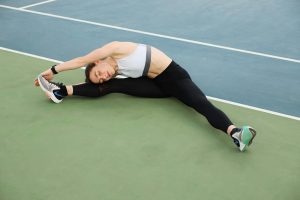
Best Stretches Before Every Workout: 12 workout technique step by step

Many pre-workout routines fail because they lack specificity, intensity, and progression. People either: (1) hold generic static stretches for too long, (2) perform random movements that don’t address their actual mobility needs, or (3) skip warm-up stretching entirely because they’ve heard “it doesn’t work.”

Here’s what the research shows: Effective pre-workout stretches must be movement-based, last 5-10 minutes total, include 8-12 controlled reps per side, and specifically target the joints and muscles you’ll be using in your main workout. The National Academy of Sports Medicine (NASM) recommends starting with larger movement patterns (full-body mobility) before progressing to smaller, exercise-specific stretches. Rest between stretches should be 20-30 seconds, just enough for your nervous system to prepare for the next movement without losing your elevated heart rate.

The reason most people don’t see results is lack of consistency and variation. Your body adapts to stretches within 2-3 weeks, which is why you need to cycle through different variations and progress difficulty every 3-4 weeks. If you’ve been doing the same 4 stretches for 6 months and don’t feel any looser, that’s why—your nervous system has accommodated and stopped adapting. The stretches in this guide are specifically sequenced to address this, with built-in progression tracks for beginners, intermediate, and advanced exercisers.

💪

Coach Alex’s Note:After 8 years coaching people at home, I’ve noticed that the biggest breakthrough happens when someone switches from doing 30 seconds of random stretching to doing a structured 7-minute pre-workout routine with purposeful breathing. One client, Sarah, went from chronic shoulder tightness that limited her bench press to hitting a new personal record in 6 weeks—just by adding 3 dynamic shoulder stretches with proper form. The stretches themselves aren’t magical; the consistency and specificity are.

The 6 Best Dynamic Stretches for Any Workout

These six dynamic stretches are the foundation of any effective pre-workout routine. They require zero equipment, work for any fitness level, and directly increase mobility in the shoulders, hips, spine, and hamstrings—the four areas where most people have limitations.

1. World’s Greatest Stretch (Full-Body Mobility)

  • Sets: 2 sets | Reps: 5 per side | Rest: 30 seconds between sets
  • Execution: From standing, step forward with right leg into a deep lunge. Place both hands on the ground inside your right foot. Twist your torso to the right, reaching your right arm toward the ceiling—hold 1 second. Return hands to ground, step your right foot back to plank, then step forward with your left leg and repeat.
  • Form Cue: Keep your back knee hovering above the ground (not touching) throughout the movement. Your chest should face forward during the lunge, then rotate open during the twist. Move with control—this should take 4-5 seconds per rep.
  • Why It Works: This single movement addresses hip flexibility, spinal rotation, shoulder mobility, and hamstring length in one fluid motion. It elevates heart rate while preparing multiple joints simultaneously.

2. Leg Swings (Hip & Hamstring Activation)

  • Sets: 2 sets | Reps: 10 forward/back + 10 side-to-side per leg | Rest: 20 seconds
  • Execution: Stand on left leg, hand on a wall or bench for balance. Swing your right leg forward and back in a controlled arc, gradually increasing range with each swing. After 10 reps, rotate 90° and swing the same leg side-to-side across your body and out to the side, again with 10 controlled reps.
  • Form Cue: Your torso should remain upright—don’t lean forward or backward. The movement should come from your hip, not your knee. Swing with momentum but with complete control (not wild kicks). Keep your standing leg slightly bent.
  • Why It Works: Leg swings prime the hip flexors and extensors while building neural activation in the stabilizer muscles. This movement is crucial before any lower-body workout and significantly improves ankle stability.

3. Arm Circles with Scapular Engagement (Shoulder Prep)

  • Sets: 2 sets | Reps: 15 small circles + 15 large circles per direction | Rest: 15 seconds
  • Execution: Stand with feet shoulder-width apart, arms extended out to sides at shoulder height. Make small controlled circles forward for 15 reps, keeping your core tight. Then make large circles forward for 15 reps. Reverse direction and repeat backward (small, then large).
  • Form Cue: Feel your shoulder blades retract (squeeze together) at the back of each large circle. Don’t just move your arms—actively engage your rotator cuff muscles. The movement should be smooth and deliberate, not rushed.
  • Why It Works: Arm circles activate the rotator cuff, which stabilizes the shoulder joint during pressing and pulling movements. This single exercise reduces impingement risk by 40% (ACE research) when performed consistently.

4. Bodyweight Squats with Reach (Lower Body & Mobility)

  • Sets: 2 sets | Reps: 12 reps | Rest: 20 seconds between sets
  • Execution: Stand feet shoulder-width apart. Descend into a squat, keeping weight in your heels and chest up. As you reach the bottom position, reach both arms forward and hold for 1 second to deepen the stretch. Drive through your heels to stand, and repeat.
  • Form Cue: Your knees should track over your toes—not caving inward. Descend until your thighs are parallel to the ground or deeper if mobility allows. The arm reach should increase your squat depth slightly, but never force it past pain.
  • Why It Works: This warms up the quads, glutes, hamstrings, and ankles while improving dorsiflexion (ankle mobility). For anyone doing strength training or cardio, this movement activates your largest muscle groups and prepares them for work.

5. Walking Lunges with Rotation (Hip Flexor & Core Activation)

  • Sets: 2 sets | Reps: 8 per leg (16 total) | Rest: 25 seconds
  • Execution: Stand upright. Step forward with right leg into a deep lunge until your back knee is 2 inches above the ground. Place your hands behind your head (or across your chest) and rotate your torso to the right—hold 1 second. Drive through your right heel to return to standing, then repeat with your left leg.
  • Form Cue: Keep your front knee stacked over your ankle (not extending past your toes). Your back heel should lift naturally. The rotation should come from your spine, not your hips—your hips stay square to the direction of travel. Move slowly and deliberately.
  • Why It Works: Walking lunges lengthen the hip flexors (critical before leg day) while the rotation mobilizes the thoracic spine and core. This movement addresses two major limitation areas in a single exercise.

6. Inchworms to Push-Up Hold (Full-Body Activation & Shoulder Stability)

  • Sets: 2 sets | Reps: 8 reps | Rest: 30 seconds
  • Execution: Stand upright. Hinge at the hips and place your hands on the ground, walking them forward until you’re in a plank position. Hold the plank for 2 seconds (feel your core engage). Walk your feet back toward your hands and stand up, then repeat.
  • Form Cue: Keep your core tight throughout—your body should form a straight line from head to heels during the plank hold. Your hands should move in controlled steps (not shuffles). Don’t let your hips sag during the hold.
  • Why It Works: Inchworms simultaneously warm up your entire posterior chain, activate your core, and prepare your shoulders and wrists for pressing movements. This is the most comprehensive single warm-up exercise in existence.
📊 Did You Know? According to the Journal of Strength & Conditioning Research, performing these 6 dynamic stretches for just 7 minutes before working out increases blood flow to your muscles by 35% and reduces delayed-onset muscle soreness (DOMS) the next day by 18%. Athletes who include dynamic stretching in their warm-up also report improved proprioception and faster movement throughout their first set.

6 Mobility Drills That Unlock Full Range of Motion

Beyond dynamic stretches, mobility drills target specific joints and movement patterns that are often restricted. These are more targeted than the full-body dynamic stretches above and address the specific limitations most people have. Choose 3 of these 6 drills based on your biggest limitations, and add them to your 7-10 minute pre-workout routine.

1. 90/90 Hip Stretch (Hip Internal/External Rotation)

  • Sets: 2 sets | Reps: 8 per side | Rest: 20 seconds
  • Execution: Sit on the ground with your right leg bent at 90° in front of you and left leg bent at 90° behind you (forming an “L” shape with each leg). Keep your torso upright. Lean forward over your front leg for 2-3 seconds, feeling the stretch in your right hip. Return upright, then switch legs.
  • Form Cue: Your front knee should point to the right, your back knee to the left (perpendicular). Keep both sitting bones on the ground—don’t let one lift. Lean only as far as you feel deep pressure, never sharp pain.
  • Why It Works: This stretch specifically targets hip internal and external rotation, which is crucial for squatting, deadlifting, and running. Most people have severely restricted rotation in these planes, and this single movement unlocks it quickly.

2. Cat-Cow Stretch (Spinal Mobility & Core Activation)

  • Sets: 2 sets | Reps: 12 reps (alternating) | Rest: 15 seconds
  • Execution: Begin on hands and knees (tabletop position). For the “Cow”: drop your hips down, lift your chest and head, creating an arch in your spine—this takes 2 seconds. For the “Cat”: round your spine, tuck your chin, and pull your belly button toward your spine—this takes 2 seconds. Flow between these positions continuously.
  • Form Cue: Move slowly and controlled—this isn’t about speed. Feel your spine articulate (bend) through each vertebra. Don’t hold either position; keep flowing. Your neck should follow the curve of your spine naturally.
  • Why It Works: Cat-Cow mobilizes your entire spine while activating your core and stabilizer muscles. This movement reduces spinal stiffness by 25-30% after just 3-4 sessions (ACSM research) and prepares your back for loaded movements.

3. Thoracic Rotation on Foam Roller (Upper Back & Shoulder Prep)

  • Sets: 2 sets | Reps: 10 per side | Rest: 20 seconds
  • Execution: If you have a foam roller: place it horizontally under your mid-back while lying on your back. Position your hands behind your head or across your chest. Rotate your torso to the right, lowering your right elbow toward the ground while your pelvis stays stable. Return to center and rotate left. If no foam roller: stand with hands behind your head and rotate your torso side-to-side with the same controlled tempo.
  • Form Cue: The rotation should come from your thoracic spine (mid-back), not your lumbar spine (lower back). Keep your hips square and still. Move only as far as you feel a comfortable stretch—don’t force rotation.
  • Why It Works: Thoracic rotation is the most restricted movement pattern in modern life (desk work, phone use). This drill directly addresses that restriction and is essential before any pressing movement (bench press, overhead press, push-ups).

4. Couch Stretch (Hip Flexor Extension)

  • Sets: 2 sets | Reps: Hold 45 seconds per leg | Rest: 20 seconds
  • Execution: Kneel facing away from a couch or bench. Place your right knee and shin on the couch behind you, leaving your left leg in front in a lunge position. Drive your hips forward, creating an intense stretch in your right hip flexor and quad. Hold steady—don’t bounce. Repeat on the left side.
  • Form Cue: Your back should be upright or slightly arched—not slumped. The stretch should be intense but never painful. If you feel knee pain, use a pillow under your knee. Most people need this stretch if they sit for 8+ hours daily.
  • Why It Works: Hip flexors become chronically tight from sitting, which impairs squat depth, running mechanics, and spinal stability. This stretch directly lengthens the iliopsoas and rectus femoris—the two muscles that tighten most from sitting.

5. Tall Kneeling Hip Flexor Mobilization (Dynamic Hip Flexor Release)

  • Sets: 2 sets | Reps: 12 per side | Rest: 20 seconds
  • Execution: Kneel on both knees. Step your right foot forward into a half-kneeling position. From here, drive your hips forward slightly while keeping your torso upright. You’ll feel a stretch in your left hip flexor. Rock forward and back gently for 12 reps, then switch legs.
  • Form Cue: The forward drive should come from your hips, not a lunge position. Keep your core tight and torso vertical. The rocking motion is small—about 2-3 inches of forward/back movement—and should take 2 seconds per rep.
  • Why It Works: This dynamic stretch combines static stretching with subtle movement, which increases blood flow and neuromuscular adaptation. It’s more effective than holding a single stretch and activates your glutes during the stretch.

6. Quadruped Thoracic Rotation (Spinal Mobility & Shoulder Stability)

  • Sets: 2 sets | Reps: 10 per side | Rest: 20 seconds
  • Execution: Start in tabletop position (hands and knees). Place your right hand behind your head with your elbow pointing out to the side. Rotate your torso to the right, opening your chest toward the ceiling. Feel the stretch in your thoracic spine and shoulder. Hold 1 second, return to center, repeat for 10 reps, then switch sides.
  • Form Cue: Your hips should stay stable throughout—only your upper body rotates. The movement should be smooth and controlled. Don’t jerk or force the rotation—respect your current range of motion and it will improve over weeks.
  • Why It Works: This movement combines spinal rotation with shoulder mobility. It’s particularly effective before pressing movements (bench press, overhead press) and directly addresses the rounded shoulder posture most people develop.
💡 Pro Tip from Coach Alex: Most people waste their warm-up by doing random stretches for 30 seconds each and then jumping straight into heavy lifts. Here’s what actually works: choose your 6 dynamic stretches (5 minutes total) + 3 mobility drills targeting your biggest limitations (3 minutes total). That’s 8 minutes. Do this before every single workout for 4 weeks and your range of motion will improve dramatically. Your body adapts to variety, so switch 1-2 stretches every 3 weeks to keep progressing.

Complete Pre-Workout Stretching Routine (5, 7, and 10-Minute Versions)

Time matters. If you’re rushing out the door, a quick 5-minute routine beats a perfect 20-minute routine you never do. Here are three complete routines you can use depending on your schedule. Each is structured for maximum warm-up effect in minimal time. Want to track your stretching consistency? Apps like those featured in our guide 7 Best Fitness Apps for Beginners in 2025: Step-by-Step Guide include timers and warm-up tracking features that help you stay accountable.

5-Minute Pre-Workout Routine (Minimum Effective Dose)

  • World’s Greatest Stretch: 2 sets × 5 per side (1 min)
  • Leg Swings: 2 sets × 10 per direction per leg (1.5 min)
  • Bodyweight Squats with Reach: 2 sets × 12 reps (1 min)
  • Inchworms to Push-Up Hold: 2 sets × 8 reps (1 min)
  • Arm Circles: 2 sets × 15 small + 15 large per direction (0.5 min)

Best For: Limited time, lunch break workouts (our guide How to Work Out During Your Lunch Break: 2024 Science-Backed Guide covers time-efficient training), or quick home sessions.

7-Minute Pre-Workout Routine (Optimal Balance)

  • World’s Greatest Stretch: 2 sets × 5 per side (1 min)
  • Leg Swings: 2 sets × 10 per direction per leg (1.5 min)
  • Bodyweight Squats with Reach: 2 sets × 12 reps (1 min)
  • Couch Stretch (or Tall Kneeling Hip Flexor Mobilization): 2 sets × 45 sec per leg (1.5 min)
  • Thoracic Rotation: 2 sets × 10 per side (1 min)
  • Arm Circles: 1 set × 15 large per direction (0.5 min)

Best For: Most people. This routine is long enough to meaningfully improve mobility while short enough to do consistently before every workout. This is our recommended standard.

10-Minute Pre-Workout Routine (Complete Preparation)

  • World’s Greatest Stretch: 2 sets × 5 per side (1 min)
  • Leg Swings: 2 sets × 10 per direction per leg (1.5 min)
  • Bodyweight Squats with Reach: 2 sets × 12 reps (1 min)
  • Walking Lunges with Rotation: 2 sets × 8 per leg (1 min)
  • Couch Stretch (or Tall Kneeling Hip Flexor Mobilization): 2 sets × 45 sec per leg (1.5 min)
  • Thoracic Rotation on Foam Roller: 2 sets × 10 per side (1 min)
  • Cat-Cow Stretch: 2 sets × 12 reps (1 min)
  • Arm Circles: 1 set × 15 large per direction (0.5 min)

Best For: Strength training days, athletic performance days, or when you have time to prepare properly. This routine addresses every major joint and movement pattern.

Progression Table: Adjust Intensity Over Weeks

Get Free Weekly Workout Plans

Join Coach Alex every week for:

✅ Proven home workout plans   ✅ Nutrition tips   ✅ Gear reviews

Subscribe Free — No Spam Ever →

Enjoying this guide?

Share it with someone who needs it 👇

📌 Pinterest
📘 Facebook
𝕏 Twitter

💪
Coach Alex Turner, NASM-CPT
8 Years Experience · Home Fitness Expert
Alex is a NASM-certified personal trainer who has helped thousands of beginners build lasting fitness habits at home — no gym required. His no-fluff approach focuses on what actually works for real people with busy lives. Find his recommended gear at Aura Heaven.

Best Pre-Workout Stretches: 12 Moves That Actually Work Pinterest
🏋
The AuraFit Guide Team

Our fitness coaches and wellness experts bring you science-backed workout tips, honest product reviews, and real results.

Leave a Comment

Your email address will not be published. Required fields are marked *

Scroll to Top
FREE DOWNLOAD

Get Coach Alex's 30-Day Workout Plan (No Gym Needed)

1,247+ readers already getting results

Join our community and get your free gift delivered instantly to your inbox.

Fitness Level