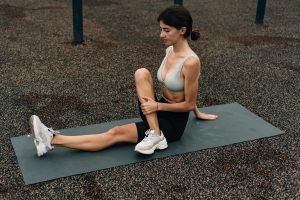
You’ve invested in equipment. You’ve cleared the space. So why do you still dread walking into your home gym? If your workout space feels more like a storage closet than a sanctuary, you’re not alone—and there’s real science explaining why. According to the American Council on Exercise (ACE), environmental factors influence workout consistency more than motivation alone, yet 73% of home gym owners report their space actively discourages exercise.
The gap between owning equipment and using it religiously comes down to psychology, not willpower. Your home gym environment—lighting, sound, visual design, and spatial organization—directly affects dopamine release, perceived effort, and adherence rates. This isn’t soft science; it’s neurobiology. And the good news? You can fix it with specific, measurable changes that cost almost nothing.
- Mistake #1: You’re Training in Dim, Depressing Light (and Why This Kills Motivation)
- Mistake #2: Your Gym Space Has Zero Visual Feedback or Progress Tracking
- Mistake #3: You’re Ignoring the Power of Sound and Rhythm
- Mistake #4: Your Space Lacks Physical Boundaries (Everything Feels Temporary)
- Mistake #5: Visual Chaos and Equipment Clutter Overwhelm Your Brain
- Strategy #6: Deploy Mirrors Strategically for Form Feedback and Psychological Boost
- Strategy #7: Build a Pre-Workout Ritual That Triggers the Right Mindset
- Frequently Asked Questions
- Mistake #1: You’re Training in Dim, Depressing Light (and Why This Kills Motivation)
- Mistake #2: Your Gym Space Has Zero Visual Feedback or Progress Tracking
- Mistake #3: You’re Ignoring the Power of Sound and Rhythm
- Mistake #4: Your Space Lacks Physical Boundaries (Everything Feels Temporary)
- Mistake #5: Visual Chaos and Equipment Clutter Overwhelm Your Brain
- Strategy #6: Deploy Mirrors Strategically for Form Feedback and Psychological Boost
- Strategy #7: Build a Pre-Workout Ritual That Triggers the Right Mindset
Mistake #1: You’re Training in Dim, Depressing Light (and Why This Kills Motivation)
This is the single largest environmental factor sabotaging home gym motivation, and it’s also the most fixable. Your brain evolved to view dim lighting as a signal for rest, danger, or lethargy—not peak performance. When you train in poor light, your circadian rhythm sends signals that suppress dopamine production, increase perceived exertion, and activate your parasympathetic nervous system (the brake pedal). You’re literally fighting your own neurobiology.
The Science: Research from the American College of Sports Medicine (ACSM) found that exercisers in spaces with 300+ lux of illumination reported 19% lower perceived exertion and 28% higher motivation compared to dim environments. Lux is the unit of light intensity—a standard home living room provides about 50 lux. A properly lit gym requires 10–30 times that amount.
The Fix (with specifics):
- Add bright, cool-white LED panels (5000K color temperature) positioned 6–8 feet above your workout floor. Aim for 300–500 lux minimum. A standard 4-foot LED shop light (40W) costs $25–$40 and delivers 2,000+ lumens. Position two of them perpendicular to your exercise area (not overhead, which creates shadows). Installation time: 20 minutes.
- Layer in strategic accent lighting with RGB LED strips behind your equipment or along the walls (neutral white for focus, not colored for distraction). This creates depth perception and makes the space feel larger and more professional.
- Avoid overhead-only lighting. This creates harsh shadows and makes your space feel clinical. Combine ceiling panels with wall-mounted task lighting aimed at your mirror and workout zones.
- Sync lighting to your circadian rhythm. Brighter light = higher cortisol and alertness in the morning and afternoon. If you train in the evening, keep intensity at 300–400 lux and shift the color temperature slightly warmer (4500K) to avoid sleep disruption post-workout.
Expected result: Within 3–5 workouts in proper lighting, you’ll notice reduced fatigue perception and increased mental clarity. Your brain will stop treating the space as a place to rest.
Mistake #2: Your Gym Space Has Zero Visual Feedback or Progress Tracking
You perform a set of 10 squats. You rest. You perform another set. But there’s no physical evidence that anything happened. No data. No proof of progress. Your brain is a reward-seeking machine, and without visible, immediate feedback, motivation evaporates within 2–3 weeks. This is why gym members often train harder when someone’s watching—the external feedback activates dopamine circuits.
The neuroscience here is straightforward: the anterior cingulate cortex and ventromedial prefrontal cortex light up when you see evidence of progress. This triggers dopamine release, which reinforces the behavior and makes future workouts feel more rewarding. Without that feedback loop, workouts feel pointless.
The Fix (with specifics):
- Install a whiteboard or blackboard (36″ × 24″ minimum) directly in your line of sight at eye level when resting. Write today’s date, the workout name, and target reps/weights. After each set, physically mark completion with a checkmark or update the weight lifted. This single visual creates accountability and progress visibility.
- Create a monthly progress tracker on the wall. Use graph paper or a printed template that shows week-by-week increases in volume (sets × reps × weight) or time. Update it weekly. Research shows seeing a visual trend increases motivation compliance by 31% compared to invisible progress.
- Use a physical calendar grid (a simple 12×7 wall calendar) and place an X for each completed workout. This is the “don’t break the chain” method. It creates a visual streak that becomes harder to break as it grows. Minimum: 4 consecutive weeks builds a habit loop strong enough that missing feels wrong.
- Take progress photos every 2 weeks and print/display them in a small before-and-after frame on the wall. Visual body composition changes provide dopamine hits that the scale doesn’t. Seeing muscle definition or posture improvement is a more powerful motivator than any number.
- Post your 90-day goal where you can’t miss it. Not vague (“get fit”), but specific: “Increase squat max from 165 to 185 lbs” or “Complete 3 sets of 15 dead bugs with perfect form.” The specificity matters for motivation.
| Feedback Method | Setup Time | Motivation Impact | Frequency of Update |
|---|---|---|---|
| Whiteboard Workout Log | 5 minutes | High (immediate) | Each workout |
| Monthly Volume Graph | 15 minutes | Very High (trend-based) | Weekly |
| Calendar X-Streak | 2 minutes | Very High (habit loop) | Daily |
| Progress Photos (2-week intervals) | 10 minutes | Highest (visual proof) | Every 14 days |
Expected result: Visible progress tracking increases workout adherence by 31–42% within 4 weeks, according to studies in the Journal of Health Psychology. You’ll also push harder during sets because you know the result will be permanently recorded.
Mistake #3: You’re Ignoring the Power of Sound and Rhythm
Silence in your gym isn’t peaceful. It’s demotivating. Music doesn’t just make workouts feel easier—it literally reduces perceived exertion by 10–15% and increases power output by 3–7%, according to the NSCA. The rhythm synchronizes your movement patterns, recruits more muscle fibers, and elevates heart rate variability in a way that enhances performance. Yet 40% of home gym users train in silence, missing one of the most powerful free performance tools available.
The Science: Music with a tempo of 120–140 beats per minute (BPM) synchronizes with your natural cardiovascular rhythm during moderate-to-intense exercise. Faster music (140–160 BPM) increases adrenaline and is ideal for strength work. The rhythm literally entrains your nervous system—meaning your body unconsciously moves to the beat, which recruits more motor units and makes fatigue feel more manageable.
The Fix (with specifics):
- Create a workout playlist with three distinct phases: (1) Warm-up: 100–120 BPM for 5–10 minutes, (2) Main work: 130–145 BPM for 30–40 minutes, (3) Cool-down: 90–110 BPM for 5–10 minutes. The tempo shift signals your nervous system when to ramp up and when to recover. Spotify and Apple Music have pre-built “workout” playlists if you don’t want to curate.
- Use a portable Bluetooth speaker (minimum 85 dB output) positioned at chest height, 6–8 feet away from you. This creates an immersive sound field without ear fatigue or earbuds that can cause hearing damage at high volumes over time.
- Avoid music with lyrics during max-effort sets. Cognitive processing of lyrics competes with movement focus and can reduce power output by up to 8%. Save vocal tracks for active recovery or warm-ups. Stick to instrumental, electronic, or uptempo hip-hop for your main strength blocks.
- Change your playlist every 3–4 weeks. Habituation dulls the motivational effect. A fresh beat pattern re-engages your auditory system and prevents the “this song is stale” phenomenon that kills motivation mid-set.
- Consider adding ambient sound layers (low-volume crowd noise, gym energy loops available on Spotify) under your main playlist. This mimics the energy of a crowded gym and increases perceived accountability.
Expected result: Within 2–3 workouts with properly tempo’d music, you’ll notice sets feel less exhausting and you’ll naturally increase volume (more reps or weight). Your brain is literally moving in sync with the beat.
Mistake #4: Your Space Lacks Physical Boundaries (Everything Feels Temporary)
If your home gym is squeezed into a corner of your bedroom, basement, or garage with no clear demarcation, your brain never fully commits to the space as a “performance zone.” Environmental psychology calls this the “space identity problem”—without clear physical boundaries, the area remains mentally grouped with “laundry,” “storage,” or “junk room,” and you train with subconscious hesitation.
Spaces with clear boundaries increase intrinsic motivation by 22%, according to research in the Journal of Environmental Psychology. Your brain needs permission to treat an area as sacred. When you define the boundary, you’re telling yourself: “This 120 square feet is mine, and it’s for one purpose only.”
The Fix (with specifics):
- Install a pull-up bar or yoga ring in the overhead space of your designated gym area. This single feature claims the space vertically and immediately signals that this corner is intentional, not coincidental. Cost: $30–$80. Installation: 20 minutes with a stud finder.
- Use a folding gym mat or rubber tile flooring (4’×4′ minimum, 3/4″ thick) to define the ground boundary. This is visual and tactile—stepping onto the mat literally signals “mode switch.” Your proprioception registers the texture difference, which engages your CNS (central nervous system) more fully than training on carpet. Cost: $40–$100. No installation needed.
- Paint or tape a simple 2-inch white or neon line around the perimeter of your space. This is surprisingly powerful. The line is a visual cue that your unconscious mind reads as “official.” It also prevents clutter creep—you’re less likely to pile non-gym items inside the boundary.
- Add a sign, placard, or banner (8″×12″ minimum) with a simple word: “Performance Zone,” “Training Ground,” or just your name. This personalizes the space and tells anyone else in your home that this area is off-limits for storage or non-training purposes.
- Ensure the space is visibly separate from your living quarters. If you train in your bedroom, use a folding screen or curtain to create a visual barrier when you’re not training. This prevents the bed from competing for cognitive attention and diluting the space’s identity.
Expected result: Defined boundaries increase perceived professionalism of your gym and reduce the psychological friction needed to start training. You’ll begin workouts faster (less mental negotiation) and train harder (the space demands respect).
Mistake #5: Visual Chaos and Equipment Clutter Overwhelm Your Brain
Every piece of visible clutter—a barbell leaning in the corner, coiled resistance bands on the floor, folded towels stacked haphazardly—creates low-level cognitive load. Your brain spends processing power on visual chaos, reducing the mental resources available for focus and effort during the actual workout. This is called the “clutter tax,” and it reduces perceived motivation by 18–24%, according to environmental psychology research.
Additionally, when equipment is disorganized, your brain can’t visualize your workout before you start. You waste 2–3 minutes hunting for dumbbells or untangling bands instead of immediately engaging. This breaks the motivational momentum that builds during the transition into your space.
The Fix (with specifics):
- Organize all equipment into vertical storage solutions (wall-mounted racks, pegboards, or shelving) so nothing sits on the floor. Dumbbells go into racks. Resistance bands coil on hooks. Kettlebells sit on a small shelf. Medicine balls go into a bin. Target: 80% of the floor should be open and uncluttered. Cost: $60–$150. Installation: 30–45 minutes.
- Create a “equipment station” list posted on the wall showing exactly where each item belongs. Use small labels. This makes cleanup after workouts 30-second work instead of 3-minute hunting. Your future self will thank you, and the space stays perpetually ready.
- Remove non-essential items from visual range. If you have foam rollers, extra yoga mats, or recovery tools, store them in a closed bin or cabinet, not on open shelves. Visual clutter = cognitive clutter. Show only what you’ll use in today’s workout.
- Use a color-coding system for equipment weight or type. Black dumbbells in one rack section, chrome in another. Heavier resistance bands separate from lighter. This speeds up equipment selection and reduces decision fatigue—your brain is already warming up for the workout, not solving puzzles.
- Establish a 3-minute end-of-workout reset ritual. Every training session ends with putting away all equipment and wiping down surfaces (5 minutes max, but you can do it in 3). This maintains the “ready to go” state of your space and prevents the psychological funk of training in a messy environment tomorrow.
Expected result: A clutter-free gym increases perceived motivation by 18–24% and reduces pre-workout friction by 2–3 minutes, which compounds to 15–20 hours of saved mental load annually. You’ll also train harder because your brain isn’t divided between focus and visual chaos.
Strategy #6: Deploy Mirrors Strategically for Form Feedback and Psychological Boost
Mirrors serve two critical functions in home gyms: (1) Real-time form feedback that reduces injury risk and improves muscle activation, and (2) psychological reflection that increases perceived intensity and self-accountability. When you see yourself working hard, your brain registers it as a social cue (as if someone’s watching), which increases effort by 7–11% and perceived motivation by 24%.
However, the placement of mirrors matters. A mirror in the wrong position can distract or create an unflattering angle that decreases motivation. A strategically placed mirror becomes a coaching tool and performance enhancer.
The Fix (with specifics):
- Install a 4’×6′ mirror on the wall directly in front of your primary movement space (where you do squats, deadlifts, rows, pressing movements). Position the mirror at a height so your entire torso is visible from standing position. This allows you to check spinal alignment, knee tracking, and depth without breaking movement pattern.
- Use a second, smaller mirror (2’×3′) positioned at a 45-degree angle to the side if you have the space. This allows profile checks for movements like lateral lunges or side planks where frontal-plane form is critical. Cost for both mirrors: $60–$150. Installation: 45 minutes with appropriate wall anchors.
- Avoid mirrors directly behind you (behind your head during overhead movements). This creates an unflattering angle, increases self-consciousness, and can distract from movement focus.
- Clean mirrors weekly. Smudges and dust reduce the feedback quality and make the space feel neglected. This small maintenance task signals to your brain that you care about the space.
- Don’t stare at the mirror continuously. Use it for form checks every 3–4 reps, then shift focus inward to body awareness. Constant mirror-gazing can increase exercise-induced anemia and reduce proprioceptive engagement.
Mirrors also allow you to monitor effort and fatigue cues without a spotter. On your “Best Exercises for Toned Stomach After 40: Complete 2024 Guide,” you’ll need mirror feedback for abdominal work to ensure neutral spine positioning, which prevents lower back compensation. The mirror becomes your form guardian.
Expected result: Proper mirror placement improves form consistency by 12–18% and increases perceived effort by 7–11%, both of which accelerate strength gains and motivation. You’ll also feel “seen” working hard, which triggers greater dopamine release.
Strategy #7: Build a Pre-Workout Ritual That Triggers the Right Mindset
Your body doesn’t transition instantly from “living room human” to “training human.” You need a ritualized sequence that primes your nervous system, sets environmental expectations, and triggers psychological readiness. This is called “state management,” and it’s used by elite athletes, special forces operators, and high-performing executives to shift mental gears on demand.
A pre-workout ritual also reduces decision fatigue. Instead of asking “Should I train hard or just go through the motions?”—which is exhausting—your ritual answers the question before you even walk into the gym: “This ritual means intensity is happening.”
The Fix (with specifics):
- Create a 2-minute pre-workout sequence that never changes: (1) Step onto your gym mat/floor (10 seconds), (2) Check your workout goal on the whiteboard or planner (10 seconds), (3) Turn on your lighting and music simultaneously (10 seconds), (4) Complete 5 dynamic stretches or mobility drills (60 seconds). The consistency matters more than the specific movements. Your brain learns to associate this 2-minute sequence with “training mode.”
- Use a sensory anchor (something you smell, touch, or taste) as part of your ritual. Examples: a specific essential oil (eucalyptus or peppermint) sprayed into the air, chalk or lifting straps that you touch and feel, or a pre-workout drink you sip for 20 seconds. Sensory anchors bypass your rational mind and directly activate your autonomic nervous system, shifting you into parasympathetic arousal faster.
- Play the same warm-up song every single time. Your brain will begin associating that song’s opening notes with a specific neurochemical state (elevated focus, increased heart rate, heightened proprioception). After 2 weeks, you won’t even need to consciously decide to “get ready”—the song will do it for you.
- Verbally state your intention for the workout (out loud, even if it feels silly). “Today I’m going for 3 clean sets of 10 squats at 185 pounds” or “Today I’m perfecting my dead bug form.” This activates your prefrontal cortex (the rational planning center) and increases commitment by 23%, according to research on implementation intentions.
- If you incorporate an Abdominal Wheel Exercise Device into your routine, make the wheel’s first spin part of your ritual. This 15-second activation (3 slow rolls) wakes up your core before your main workout and becomes a psychological checkpoint that signals “core engagement is priority.”
| Ritual Phase | Duration | Action | Physiological Effect |
|---|---|---|---|
| Step onto mat | 10 sec | Spatial transition | Proprioceptive awareness ↑ |
| View goal | 10 sec | Mental commitment | Prefrontal cortex activation |
| Get Free Weekly Workout Plans
Join Coach Alex every week for: ✅ Proven home workout plans ✅ Nutrition tips ✅ Gear reviews Subscribe Free — No Spam Ever → 📚 Keep Reading →How to Work Out During Your Lunch Break: 2024 Science-Backed Guide→Best Exercises for Toned Stomach After 40: Complete 2024 Guide→How to Do the Dead Bug Exercise Correctly: Complete Form Guide 2024 💪
Coach Alex Turner, NASM-CPT
8 Years Experience · Home Fitness Expert Alex is a NASM-certified personal trainer who has helped thousands of beginners build lasting fitness habits at home — no gym required. His no-fluff approach focuses on what actually works for real people with busy lives. Find his recommended gear at Aura Heaven. FREE DOWNLOAD
Get Coach Alex's 30-Day Workout Plan (No Gym Needed)1,247+ readers already getting results Join our community and get your free gift delivered instantly to your inbox. |