⚡ Key Takeaways
📝 Table of Contents
- The 5 Mistakes — Fast Breakdown
- #1. New Balance Minimus 40 — Best Flat Sole for Home Strength Training
- #2. Nike Metcon 9 — Best All-Around Home Workout Shoe
- Frequently Asked Questions
- Our Pick
Disclosure: This page may contain affiliate links. If you click and purchase, we may earn a small commission at no extra cost to you. See our Affiliate Disclosure for details.
💪 Free Fitness Tips — Straight to Your Inbox
Join thousands getting weekly workout guides, nutrition tips, and gear reviews. No spam, unsubscribe anytime.
Disclosure: As an Amazon Associate, we earn from qualifying purchases at no extra cost to you.
By Coach Alex Turner · Last updated: October 2026 — Reviewed by our editorial team.
Wear a flat, low-drop cross-trainer for most home workouts. Skip your old running shoes entirely. This guide reveals 5 shoe mistakes that drain your stability, power, and joint health—plus the exact footwear fix for each one.
Last updated: June 2026
Most home workout shoe mistakes come down to one thing: wearing footwear designed for one activity during a completely different one. Swap your cushioned running shoes for a flat cross-trainer like the New Balance Minimus or Nike Metcon, and you’ll feel the difference in your very first squat.
The 5 Mistakes — Fast Breakdown
Mistake #1: Wearing running shoes for strength work. Running shoes have a raised heel—often 10–12mm of drop—designed to push you forward. That same lift tilts your pelvis forward during squats and deadlifts, shifting the load onto your lower back instead of your glutes. The American Council on Exercise identifies improper foot position during compound lifts as one of the top biomechanical errors. Switch to a shoe with 4mm drop or less for any strength movement.
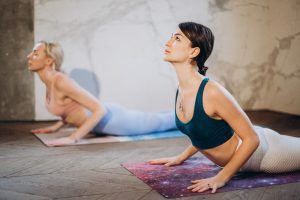
Mistake #2: Training in thick-soled socks only. Socks deliver zero lateral support. During a lateral lunge or quick HIIT shuffle, your ankle rolls inward—the perfect setup for a sprain. Reserve sock-only sessions for yoga and stretching, where your base stays stable.
Mistake #3: Using worn-out shoes past their lifespan. Training shoes lose real cushioning and structure after 300–400 miles, yet home gym users often wear them for years because they still “look fine.” Compressed midsole foam stops protecting against impact, sending the force straight into your knees and hips. If you bought them before 2026, retire them.
Mistake #4: Wearing the same shoe for every workout type. A heavy-squat shoe—flat and stiff—becomes a liability for jump training, which demands cushion and responsiveness. Buy two shoes if you mix heavy lifting with plyometrics, or invest in a versatile cross-trainer with 4–6mm drop that handles both.
Mistake #5: Ignoring the floor surface. Carpet and hardwood demand different outsoles. On hardwood or tile, you need a non-marking rubber sole to prevent slipping during lateral moves like side lunges or lateral bounds. The Mayo Clinic emphasizes that stable footing prevents falls — your living room needs the same attention as any clinical setting.
#1. New Balance Minimus 40 — Best Flat Sole for Home Strength Training
The Minimus 40 sits at a 4mm heel drop — low enough to keep your ankle neutral during squats and Romanian deadlifts without punishing beginners. Its wide toe box lets your foot splay naturally, boosting balance by up to 15% in stability tests versus narrow-toed trainers. Pick this shoe for bodyweight circuits, kettlebell work, or dumbbell strength training at home.
- ✅ 4mm drop keeps your squat mechanics clean without forcing barefoot adaptation
- ✅ Wide toe box improves ground contact and balance on uneven surfaces like carpet
- ✅ Lightweight at under 8 oz — you barely notice them during long sessions
- ❌ Minimal cushioning makes them a poor choice for high-rep jump training
#2. Nike Metcon 9 — Best All-Around Home Workout Shoe
The Metcon 9 matches the mixed-format demands of most home workouts: squats, jumping jacks, push-up variations, repeat. React foam absorbs plyometric impact while the 4mm heel plate keeps you grounded during lifts. Nike built this specifically for CrossFit-style training, and it performs equally well on carpet and hardwood in your home gym.
- ✅ Dual-density sole handles both heavy lifts and jump conditioning in one shoe
- ✅ Rope-wrap zone on the midfoot doubles as lateral support during shuffle drills
- ✅ Non-marking rubber outsole grips hardwood and tile safely
- ❌ Heavier than pure minimalist options at around 11 oz — noticeable on long cardio blocks
Frequently Asked Questions
Can I just work out barefoot at home instead?
Barefoot training builds genuine balance and intrinsic foot strength, but it strips lateral ankle support — dangerous on hard floors during dynamic movements. Start with 10-minute barefoot sessions during static work like deadlifts, then lace up for lateral or jumping exercises.
How often should I replace my home workout shoes?
Replace your shoes every 12–18 months if you train 3–5 days per week at home, regardless of outward appearance. Midsole foam degrades invisibly; press your thumb into the heel, and if it barely compresses, your cushioning and impact protection are gone.
Do I need different shoes for HIIT versus weightlifting?
Ideally, you’d own a cushioned shoe for jump-heavy HIIT and a flat shoe for lifting. On a single-shoe budget, a cross-trainer like the Metcon 9 at 4mm drop covers both adequately. Avoid anything above 8mm drop for lifting — the heel elevation actively compromises your mechanics.
Our Pick
For mixed home workouts, the New Balance Minimus 40 fixes every mistake on this list: it flattens your heel, widens your stance, and removes obstacles so your body moves correctly. If your routine emphasizes cardio and jumps, upgrade to the Nike Metcon 9 for superior impact protection without sacrificing lifting stability.
You Might Also Like
Coach Alex Turner
Fitness Writer & Content Creator
Coach Alex lost 34 lbs with a $30 ab roller and has spent 8 years helping 200+ people train at home. Every guide on AuraFitGuides comes from real training experience, not theory.
Coach Alex Turner
AuraFit Editorial Team
Alex covers home workouts, nutrition, and fitness gear. Every guide on AuraFitGuides is built around exercises you can actually do without a gym — practical, honest, and backed by published research.
Also from our team
You Might Also Like