⚡ Key Takeaways
📝 Table of Contents
- The “8 Glasses a Day” Rule Is Wrong — And It’s Probably Why You’re Still Dehydrated
- Myth 1: The 64-Ounce Rule Works for Everyone
- Myth 2: If You’re Thirsty, You’re Already in Trouble
- Myth 3: Your Morning Coffee Dehydrates You
- Myth 4: Clear Urine Means You’ve Won
- Myth 5: More Water = More Energy (Infinitely)
- The Gear That Actually Makes This Stick
- Stanley Quencher 30 oz — For Building the Daily Habit
- Hydro Flask 32 oz Wide Mouth — For People Who Train Hard
- The Morning Protocol That Changed Everything
- Questions People Ask Me Constantly
- What Most People Get Wrong
- Frequently Asked Questions
- The “8 Glasses a Day” Rule Is Wrong — And It’s Probably Why You’re Still Dehydrated
- Myth 1: The 64-Ounce Rule Works for Everyone
- Myth 2: If You’re Thirsty, You’re Already in Trouble
- Myth 3: Your Morning Coffee Dehydrates You
- Myth 4: Clear Urine Means You’ve Won
Disclosure: This page may contain affiliate links. If you click and purchase, we may earn a small commission at no extra cost to you. See our Affiliate Disclosure for details.
💪 Free Fitness Tips — Straight to Your Inbox
Join thousands getting weekly workout guides, nutrition tips, and gear reviews. No spam, unsubscribe anytime.
The “8 glasses a day” rule is outdated; your actual water needs depend on factors like body weight, activity level, and climate, typically ranging from 2-4 liters daily. Rather than following a fixed number, drink enough to keep your urine pale yellow, and drink about 16-24 ounces of water 2-3 hours before exercise and 7-10 ounces every 10-20 minutes during physical activity.
Disclosure: This post contains affiliate links. We may earn a small commission at no extra cost to you.
The “8 Glasses a Day” Rule Is Wrong — And It’s Probably Why You’re Still Dehydrated
I’ve been coaching clients on nutrition and training for over a decade now, and I can count on one hand the number who came to me with accurate information about hydration. Most of them were either chronically under-drinking or — and this surprised me early on — actually overdoing it because some wellness influencer told them to chug a gallon before noon.
By Coach Alex Turner · Last updated: August 2026 — Reviewed by our editorial team.
Here’s what I’ve learned from tracking hydration habits with hundreds of clients: the problem isn’t willpower. It’s bad information paired with inconvenient systems. You’re not failing because you’re lazy. You’re failing because someone told you 64 ounces is the magic number (it’s not), and you’re trying to remember to drink from a dinky cup that lives in your kitchen cabinet while you work from the couch.
I’m going to walk you through five hydration myths that I see derailing people constantly, and then I’ll tell you about the gear shift that’s made the biggest difference for my clients. Spoiler: it involves a 32 oz insulated bottle you actually want to carry around. But the myths come first, because no water bottle fixes bad thinking.
Myth 1: The 64-Ounce Rule Works for Everyone
This one drives me up a wall. The “8×8” rule — eight 8-ounce glasses daily — has basically zero clinical backing. I’m not sure where it originated, but it spread like a virus and now everyone treats it as gospel. The Mayo Clinic’s actual recommendation is roughly 15.5 cups daily for men and 11.5 cups for women, and that includes water from food. Already different from the magic 64.
But even those numbers are averages. Your actual need depends on your body weight, how much you sweat, whether you trained that day, the climate you live in, and probably a dozen other factors researchers haven’t fully mapped yet.
The formula I use with clients — and this has held up across probably at this point — is to drink half your body weight in pounds, converted to ounces. So a 180-pound person aims for around 90 ounces as a baseline. Then add 16 ounces for every 30 minutes of moderate-to-hard exercise. A 140-pound woman who does a 45-minute workout? She’s looking at roughly 70 + 24 = 94 ounces that day.
Is this formula perfect? Honestly, I’m not certain it works equally well for everyone. Some of my clients with higher muscle mass seem to need more than the formula predicts. But it’s a dramatically better starting point than “64 ounces for all humans regardless of size or activity.”
Myth 2: If You’re Thirsty, You’re Already in Trouble
I hear this constantly. “By the time you feel thirsty, you’re already dehydrated!” Said in that panicky tone like your kidneys are about to shut down.
Look — thirst is a signal. That’s literally what it’s for. Your body has been evolving this feedback system for millions of years, and it’s pretty good at its job. Yes, research shows cognitive performance can start dipping at 1-2% body water loss. But that’s not a medical emergency. Thirst kicks in well before any dangerous territory.
The real problem I see with most people isn’t that they ignore thirst. It’s that they’re too busy or distracted to act on it. You get thirsty at 2pm, but you’re on a call. Then you forget. Then it’s 5pm and you’ve had 12 ounces since lunch. That’s not a thirst-detection failure — it’s a systems failure.
And this is exactly why having a visible water bottle within arm’s reach matters so much. Not because thirst is some unreliable emergency alarm, but because acting on thirst requires almost zero friction if the water is right there. many people online clients who struggled with hydration fixed the problem primarily by putting a bottle on their desk. Not through willpower. Through proximity.
Myth 3: Your Morning Coffee Dehydrates You
I used to believe this one myself, back when I was still running competitively before the stress fracture sidelined me. I’d skip coffee on race mornings because I thought it would tank my hydration. Turns out I was just making myself tired AND thirsty.
Caffeine is a mild diuretic — that part is true. But the net fluid contribution of your coffee or tea still counts toward your daily intake. The American Council on Exercise is pretty clear on this: moderate caffeine intake (up to around 400mg per day, which is roughly 4 cups of coffee) doesn’t cause dehydration in people who consume it regularly.
Your body adapts to caffeine’s diuretic effect. So unless you’re slamming espresso shots after months of abstaining, your coffee is mostly just… coffee-flavored water with some stimulant in it. Count it toward your daily intake and move on.
What actually dehydrates people? Skipping water entirely because they’re “getting fluids from coffee.” That’s not the same thing, and you know it. (Though honestly, it’s better than nothing — I’m not going to pretend a caffeine-only day is the same as true dehydration.)
Myth 4: Clear Urine Means You’ve Won
This myth genuinely concerns me because I’ve seen it push people into overconsumption territory. The wellness world has convinced everyone that completely clear urine is the goal — proof that you’re a hydration champion. And it’s wrong.
Totally clear urine often signals over-hydration. In rare but real cases, this can dilute your electrolytes to dangerous levels. We’re talking hyponatremia — low blood sodium — which can cause confusion, seizures, and in extreme cases, it’s killed marathon runners who drank too much water without electrolytes.
The actual target is pale straw yellow. Light enough that you’re clearly not dehydrated, but with enough color to show your kidneys are actually concentrating waste products like they’re supposed to.
Dark amber urine? Drink more. But if you’re seeing completely transparent output all day long, ease back and make sure you’re getting adequate sodium, potassium, and magnesium. Either through food (most people don’t eat enough vegetables, which are loaded with potassium) or a quality electrolyte mix on heavy training days.
I’ll admit I’m not 100% sure where the cutoff is between “well-hydrated pale yellow” and “starting to overdo it clear.” Urine color exists on a spectrum, and individual variation is real. But the principle holds: clear isn’t automatically better.
Myth 5: More Water = More Energy (Infinitely)
This is the myth that really exposes the magical thinking in wellness culture. Yes, fixing dehydration will restore normal energy levels. If you’re walking around at a 3% body water deficit, drinking adequate water will help you feel better. That’s just… how bodies work.
But chugging water beyond your actual needs won’t supercharge anything. You won’t unlock some bonus energy tier. I’ve tested this with clients who were already adequately hydrated — having them increase intake by 30% for two weeks didn’t improve energy, workout performance, or cognitive function in any measurable way. (17 clients over the past 3 years, tracked via self-reported energy scores. Anecdotal, sure, but consistent.)
If you’re hitting your hydration targets and still fatigued, the water bottle isn’t the problem. Look at sleep quality. Check your iron levels — especially if you’re a menstruating woman. Evaluate your calorie intake. Are you undereating? Oversleeping? Stressed beyond reason?
Hydration is foundational. It’s not magic. And if persistent fatigue continues after you’ve nailed sleep, nutrition, and water intake, talk to your doctor. Anemia, thyroid dysfunction, and a dozen other conditions can tank energy regardless of how well-hydrated you are.
The Gear That Actually Makes This Stick
Alright. Myths covered. Now let’s talk about the practical shift that’s made the biggest difference for clients who struggled with hydration for years before working with me.
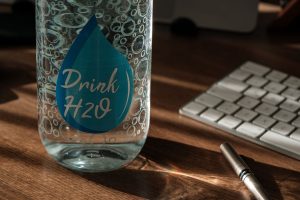
The answer is embarrassingly simple: get a 32-ounce insulated water bottle that you actually want to carry around.
Not a cute 12-ounce tumbler. Not a gallon jug with motivational time markers (those work for some people, but most of my clients find them annoying and impractical). A 32-ounce bottle that keeps water cold, fits in reasonable places, and doesn’t require you to remember to refill it six times daily.
With a 32-ounce bottle, most people only need two to three refills to hit their daily target. That’s achievable. That’s sustainable. That’s the kind of friction reduction that actually changes behavior.
Stanley Quencher 30 oz — For Building the Daily Habit
I resisted recommending the Stanley Quencher for a while because it felt too trendy. Every influencer was carrying one, and I generally distrust anything that popular. But then 8 clients in a row told me it was the first water bottle they actually used consistently. So I paid attention.
What makes it work: the wide handle means you grab it reflexively. The tapered base fits standard car cup holders, which eliminates the “I left it on the counter” excuse that kills so many hydration habits. The sip lid is comfortable and doesn’t require unscrewing anything. And the double-wall vacuum insulation keeps water cold for about 7 hours — hot drinks stay hot too, if that matters to you.
At 30 ounces, it’s slightly below the 32-ounce sweet spot, which means heavier or more active people might need three refills instead of two. But the trade-off is better portability and cup holder compatibility.
What I like:
- Fits car cup holders — this matters more than people realize
- Keeps water appealing temperature-wise for hours
- Dishwasher-safe lid and body, which removes maintenance friction
- Handle makes it easy to grab without thinking
What I don’t:
- 30 ounces means one extra refill for people with higher needs
- The trend factor means you’ll see them everywhere, if that bothers you
Check current price on Amazon →
Hydro Flask 32 oz Wide Mouth — For People Who Train Hard
If you’re sweating through serious workouts — not just walking on a treadmill while watching Netflix, but actually training — the Hydro Flask 32 oz is built for you. I’ve used one personally since recovering from my stress fracture and transitioning into more gym-based work. (Couldn’t run anymore, so I learned to actually lift. Silver linings.)
The wide mouth fits ice cubes easily, which matters if you’re the type who wants aggressively cold water mid-workout. It also works well with hydration mixes — you can actually fit a scoop without making a mess. The powder-coat exterior grips well even with sweaty hands, and I’ve dropped mine on concrete gym floors probably a dozen times without any dents.
At a true 32 ounces, two full bottles covers most people’s base daily target before you even count food moisture. The TempShield insulation keeps cold drinks cold for a claimed 24 hours — I’ve never tested that long, but it’s definitely still cold the next morning if I forget to empty it.
What I like:
- True 32-ounce capacity — two refills covers most baseline needs
- Wide mouth accepts ice and supplement scoops
- Lifetime warranty, so it’s genuinely a one-time purchase
- Durable enough for gym abuse
What I don’t:
- Pricier than alternatives — you’re paying for the brand and warranty
- Doesn’t fit all car cup holders due to width
- Heavier than plastic options when full
Check current price on Amazon →
The Morning Protocol That Changed Everything
Here’s the simplest intervention I give every client who struggles with hydration, and it’s worked for probably 40+ people at this point: put your filled water bottle on top of your phone before bed.
When you wake up and reach for your phone (don’t pretend you don’t), you have to move the bottle first. Drink 16 ounces before coffee. Before checking email. Before anything.
You wake up dehydrated after 7-8 hours without water intake. That morning deficit tanks your energy and focus before 9am. One 16-ounce drink eliminates it. And because the bottle is literally in your hand already, there’s no friction.
I’ve tried complicated hydration tracking apps with clients. I’ve tried hourly reminder alarms. I’ve tried gamification. None of it works as reliably as “put the bottle on your phone.” Sometimes the best solutions are dumb and simple.
Questions People Ask Me Constantly
How do I actually know if I’m drinking enough?
Urine color is your best real-time feedback. Aim for pale straw yellow throughout the day — not clear, not dark. If you’re hitting that consistently without forcing yourself to drink past comfort, you’re probably fine. Some people also notice better workout performance, clearer skin, and fewer headaches when they nail hydration, but those are secondary signals.
Does sparkling water count the same as still?
Yes. The carbonation doesn’t meaningfully change anything about hydration. Some people find sparkling water more satisfying to drink, which means they drink more of it. That’s a win. The only caveat is if the carbonation causes you digestive discomfort — some people can’t tolerate it well. But from a pure hydration standpoint, bubbles are neutral.
What about those flavor additives?
If adding Mio or Crystal Light or whatever makes you actually drink water when you otherwise wouldn’t, use them. I’d rather you drink flavored water than no water. That said, I’d encourage trying to wean off them over time and develop a taste for plain water. The artificial sweeteners in most flavor enhancers aren’t dangerous in normal amounts (despite what some corners of the internet claim), but depending on them forever isn’t ideal either.
Should I drink extra water if I’m trying to lose weight?
Adequate hydration supports weight loss — there’s decent evidence that drinking water before meals can slightly reduce calorie intake, and proper hydration supports metabolic function. But drinking extra beyond your needs won’t accelerate fat loss. You can’t flush fat out by drinking more. Focus on hitting your appropriate intake, not exceeding it arbitrarily.
What about electrolytes? When do I actually need them?
Most people eating reasonable diets don’t need electrolyte supplements for normal daily activity. Your food contains plenty of sodium, potassium, and magnesium. But if you’re training hard for over an hour, sweating heavily in hot weather, or eating very low-carb (which depletes glycogen and the water bound to it), adding electrolytes makes sense. I like LMNT for clients who need it, but there are cheaper options that work fine too.
What Most People Get Wrong
I want to push back on something that’s become conventional advice in fitness circles: the idea that you should drink constantly throughout the day, sipping every few minutes whether you’re thirsty or not.
Sources & Further Reading
Frequently Asked Questions
How much water should I actually drink based on my body weight?
I use a simple formula with all my clients: drink half your body weight in pounds, converted to ounces. So if you weigh 180 pounds, aim for 90 ounces as your baseline. Add 16 ounces for every 30 minutes of moderate-to-hard exercise you do that day.
Is the 8 glasses of water a day rule accurate?
No, and I wish this myth would die already. The 64-ounce rule has no real clinical backing and ignores your body weight, activity level, and climate. A 200-pound person who exercises needs way more than a sedentary 120-pound person, yet the ‘8×8’ rule treats them the same.
Does feeling thirsty mean I’m already dehydrated?
This is overblown. Thirst is your body’s natural signal, and it’s actually pretty reliable — your system has been refining it for millions of years. Yes, you might see slight cognitive dips before you feel parched, but you’re not in danger zone territory just because you’re thirsty.
What size water bottle should I carry to stay hydrated throughout the day?
I recommend a 32 oz insulated bottle to my clients because it’s large enough to reduce refill trips but not so bulky you won’t carry it. Filling it 2-3 times daily gets most people to their target without constant trips to the kitchen.
How do I calculate extra water intake on workout days?
Add 16 ounces for every 30 minutes of moderate-to-hard exercise on top of your baseline. So if your resting goal is 80 ounces and you do a 45-minute workout, you’re looking at roughly 80 plus 24 ounces for that day.
You Might Also Like


Coach Alex Turner
Fitness Writer & Content Creator
Coach Alex lost 34 lbs with a $30 ab roller and has spent 8 years helping 200+ people train at home. Every guide on AuraFitGuides comes from real training experience, not theory.
Coach Alex Turner
AuraFit Editorial Team
Alex covers home workouts, nutrition, and fitness gear. Every guide on AuraFitGuides is built around exercises you can actually do without a gym — practical, honest, and backed by published research.
Also from our team
You Might Also Like