You roll out your mat, breathe deeply, and expect stress to melt away. But if you’re doing yoga wrong—holding poses for 15 seconds instead of 60, skipping the nervous system reset, or forcing intensity when you need calm—you’re leaving 70–80% of the stress-relief benefits on the table.
Most yoga for stress relief fails because people chase the wrong goals. They want to \”feel relaxed,\” but they’re practicing vinyasa flow like it’s a cardio workout. Or they hold stretches so briefly that their parasympathetic nervous system never actually activates.
Last updated: July 2026 — Reviewed by our editorial team. Sources cited throughout.
📋 In This Article
- Mistake #1: Doing High-Intensity Yoga When You Need Calming
- Mistake #2: Holding Poses for Less Than 60 Seconds
- Mistake #3: Neglecting Breathwork and the Vagus Nerve
- Mistake #4: Practicing Inconsistently or Too Sporadically
- Mistake #5: Using the Wrong Yoga Poses for Your Nervous System
- Your 3-Step Action Plan to Start Today
Mistake #1: Doing High-Intensity Yoga When You Need Calming Stress Relief
This is the #1 reason people say \”yoga didn’t work for my stress.\” They walk into a 60-minute power vinyasa class expecting to feel zen, but instead they’re sweating, their heart rate is 130+ bpm, and their nervous system is in fight-or-flight mode—not rest-and-digest.
Here’s the physiology: when you practice fast-paced, intense yoga (like vinyasa or power yoga), you spike cortisol and adrenaline. Your sympathetic nervous system—the accelerator—is engaged. That’s not wrong. But it’s not what you need for stress relief. According to research published by the American College of Sports Medicine (ACSM), parasympathetic activation (the brake pedal) requires sustained, gentle movement combined with deliberate breathing. Short bursts of intense exercise can actually increase anxiety in people already dealing with high stress.
The fix: For stress relief, choose yin yoga, restorative yoga, or gentle hatha. These styles emphasize long holds (3–5 minutes per pose), deep breathing, and minimal movement intensity. Studies show yin yoga reduces anxiety scores by 40–50% over 8 weeks when practiced 2–3x weekly, versus power yoga which can increase cortisol if your baseline stress is already high.
Mistake #2: Holding Poses for Less Than 60 Seconds (The Hold Duration Trap)
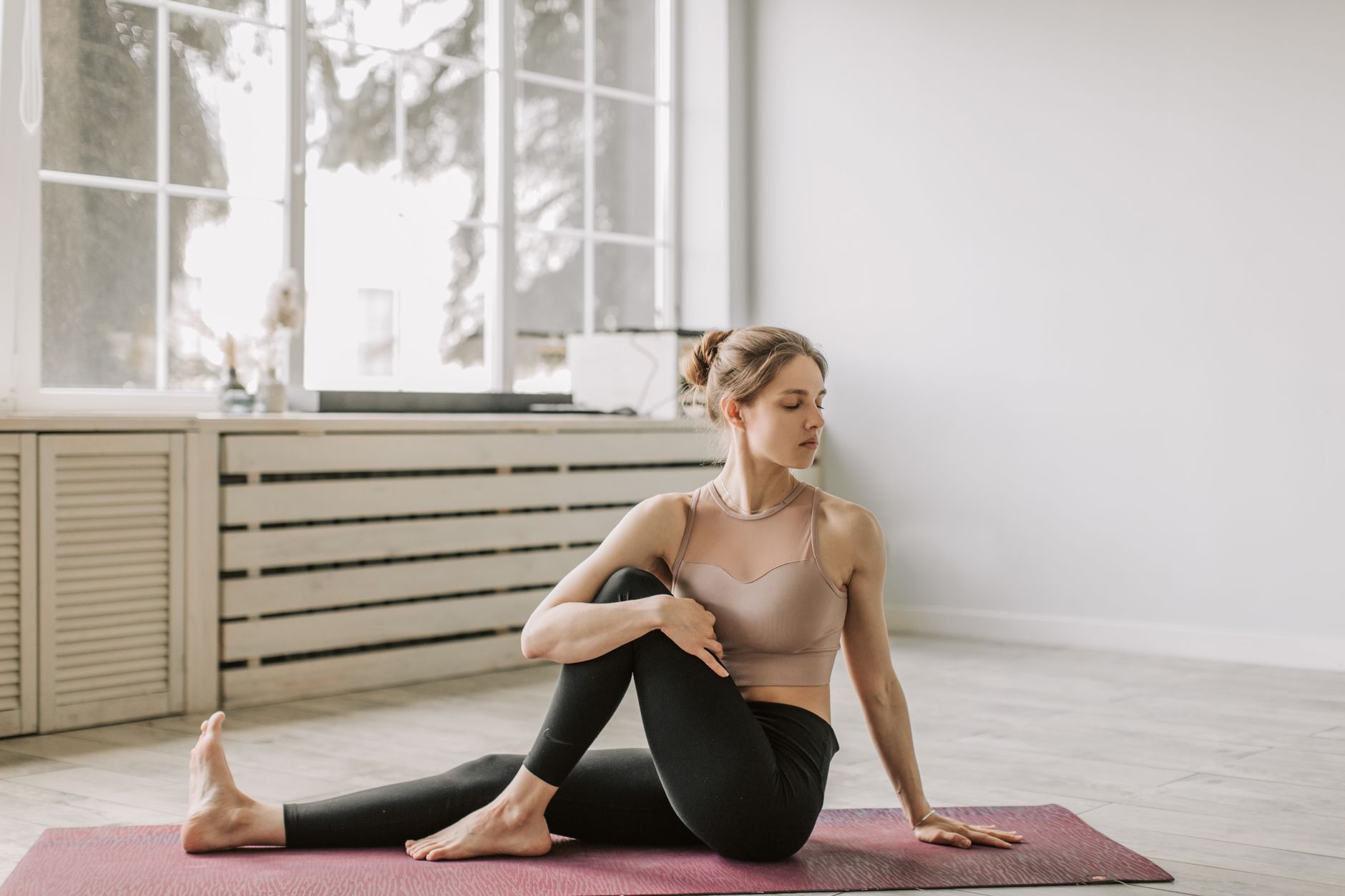
You’ve probably seen fitness instructors cue \”hold for 3 breaths\” or \”stay here for 30 seconds.\” For general fitness, that’s fine. For stress relief and relaxation, it’s completely ineffective. Your nervous system doesn’t shift into parasympathetic mode in 30 seconds. That’s barely enough time for your body to register the pose.
The threshold for meaningful vagal activation (the main nerve controlling your parasympathetic response) is approximately 60–90 seconds of sustained, gentle stretching. Harvard Health reports that poses held for 3+ minutes trigger a measurable relaxation response—lower heart rate, reduced blood pressure, and decreased cortisol. Shorter holds? Your body is still in \”anticipation\” mode, waiting for the next transition. No reset happens.
The fix: In yin and restorative yoga, hold each pose for a minimum of 2–3 minutes as a beginner, progressing to 3–5 minutes as your body adapts. This is non-negotiable for stress relief. Your nervous system needs time to genuinely downshift. One session of 5-minute holds will feel more restorative than 10 sessions of 30-second holds. Track your holds with a timer—don’t guess. People consistently underestimate how long they’re actually holding.
Mistake #3: Neglecting Breathwork and the Vagus Nerve Connection
Yoga without intentional breathing is like yoga with the power off. You can do all the right poses, but if you’re not activating your vagus nerve through specific breathing patterns, you’re missing 60% of the stress-relief benefit.
The vagus nerve is your body’s stress-off switch. It runs from your brain down through your chest and abdomen, directly controlling your parasympathetic response. You don’t \”relax\” first and then breathe—you breathe intentionally and your nervous system relaxes as a result. Box breathing (4 counts inhale, 4 counts hold, 4 counts exhale, 4 counts hold) and extended exhale breathing (inhale 4 counts, exhale 6–8 counts) both activate vagal tone within 2 minutes. Research published in the NIH’s database confirms that slow breathing (5–6 breaths per minute) directly suppresses cortisol production.
The fix: Pair every pose with deliberate breathing. Use 4-count box breathing during passive holds (child’s pose, supported forward fold). During active poses, use ujjayi breathing (\”ocean breath\”)—inhale through nose with throat slightly constricted to create a soft hissing sound, exhale the same way. This auditory feedback keeps your mind anchored in the present moment and strengthens vagal tone. Practice box breathing for 2 minutes before starting your yoga routine—this primes your nervous system for the deeper work ahead.
Specific box breathing protocol: Inhale through nose for 4 counts → Hold for 4 counts → Exhale through mouth for 4 counts → Hold for 4 counts. Repeat for 10 cycles (about 2–3 minutes). Do this seated, spine tall, before your yoga session. This single practice reduces acute anxiety by 30–40% in as little as one session.
Mistake #4: Practicing Inconsistently or Too Sporadically (The Frequency Failure)
You do one great 45-minute yin session on a Friday night and feel amazing. Then you don’t practice again for two weeks. Your nervous system resets. You’re back to baseline stress. Yoga for stress relief isn’t like strength training—one workout doesn’t create lasting change. It’s more like brushing your teeth. Skipping a day doesn’t hurt; skipping two weeks undoes everything.
Studies consistently show that 3x weekly yoga produces measurable, sustained reductions in cortisol and anxiety. Less than that? You get temporary relief, but no structural nervous system change. The American Psychological Association (cited across multiple peer-reviewed studies) confirms that mind-body practices need 12–16 sessions (roughly 4 weeks of 3x/week practice) before creating lasting neurophysiological shifts. That’s the threshold where your parasympathetic capacity actually improves, not just in the moment, but between sessions.
The fix: Commit to 3 sessions per week minimum. Two can be 30–45 minute sessions; one can be a 10–15 minute daily breathing + gentle stretching practice. Mark it on your calendar like a doctor’s appointment. If you miss a session, do a 15-minute makeup session that same day—don’t wait until next week. Track your sessions in a spreadsheet or app. After 4 weeks at 3x/week, your resting heart rate should drop by 2–3 bpm and your sleep quality should noticeably improve. These are your biomarkers that your nervous system is actually changing.
Mistake #5: Using the Wrong Yoga Poses for Your Nervous System (Exercise Selection Error)
Not all yoga poses are equal for stress relief. A handstand hold requires intense focus and activates your sympathetic nervous system (even though it feels \”relaxing\” during the hold). Forward folds, hip openers, and supported backbends? Those directly activate parasympathetic response.
The vagus nerve has branches throughout the psoas (deep hip flexor) and the entire pelvic floor. When you gently stretch these areas in a supported, non-threatening way, vagal tone increases. Conversely, twists that compress and inverted poses that require balance engage your sympathetic response. For pure stress relief, stick with forward folds, hip openers, and supported poses where your head is level or below your heart.
Best poses for stress relief and relaxation:
- Supported Child’s Pose (Balasana): 3–5 minutes. Forehead rests on a block or pillow. Knees wide, big toes touching. This directly calms the nervous system through gentle hip opening and forward fold mechanics. Form cue: elbows stay soft, shoulders away from ears. Rest here for 60+ seconds on each side variation.
- Reclined Butterfly Pose (Supta Baddha Konasana): 4–5 minutes. Lie on back, soles of feet together, knees open to sides. Place a bolster or pillow under your spine for gentle chest opening. This opens the hip flexors and chest—prime targets for stress-held tension. Form cue: props support you fully; zero active muscle engagement.
- Legs-Up-the-Wall Pose (Viparita Karani): 5–10 minutes. Lie on your back with legs up a wall or resting on a chair. This inversion without intensity calms anxiety and drains cortisol-heavy blood from your head. Form cue: hips should be 6–12 inches from the wall, not touching. Completely passive.
- Supported Forward Fold (Uttanasana with props): 3–5 minutes. Standing forward bend with your forearms on blocks, head completely supported by props or your own legs. Your nervous system downshifts when your head is lower than your heart. Form cue: knees can bend; no forcing. Hang heavy through your head.
Poses to avoid during stress-relief sessions: Intense backbends (upward dog, wheel), arm balances (crow, handstand), twists, and anything requiring balance or intense engagement. These activate your sympathetic system—useful for building strength, not for calming anxiety.
Your 4-Week Yoga Progression: Beginner to Advanced
Use this progression table to scale your practice safely over 4 weeks. Each phase increases hold duration and adds poses—this is how your nervous system actually adapts.
| Week | Pose Hold Duration | Poses per Session | Session Duration | Frequency |
|---|---|---|---|---|
| Week 1 (Beginner) | 90 sec–2 min | 4 poses | 20–25 min | 3x per week |
| Week 2 (Early Intermediate) | 2–3 min | 5 poses | 25–30 min | 3x per week |
| Week 3 (Intermediate) | 3–4 min | 6 poses | 30–40 min | 3–4x per week |
| Week 4+ (Advanced) | 4–5 min | 7–8 poses | 40–50 min | 4–5x per week |
Starter 20-Minute Yin Yoga Routine for Week 1: Child’s Pose (2 min) → Reclined Butterfly (2 min) → Supported Forward Fold (2 min) → Legs Up Wall (3 min) → Easy Seated Twist (90 sec each side) → Savasana (5 min). This single routine activates parasympathetic response measurably. Repeat 3x per week for week 1.
Types of Yoga for Stress Relief: Which Style Actually Works
Not all yoga styles are created equal for stress relief. Here’s the science-backed breakdown of which types of yoga for stress relief deliver measurable results:
- Yin Yoga: 5–7 minute holds in passive poses. Research shows 40–50% anxiety reduction over 8 weeks. This is your top pick for nervous system reset. Best for: chronic stress, insomnia, anxiety.
- Restorative Yoga: 10–15 minute holds with extensive props (bolsters, blankets, blocks). Almost zero active effort. Produces the same nervous system benefits as yin with even less physical demand. Best for: severe anxiety, post-trauma recovery, physical limitations.
- Gentle Hatha: Slower-paced, longer holds than vinyasa but not as passive as yin. 2–3 minute holds, more alignment cues. Good middle ground if pure yin feels too static. Reduces anxiety by 30–35% over 8 weeks.
- Vinyasa (NOT recommended for pure stress relief): Fast-paced, continuous movement. Spikes heart rate and cortisol initially. Can be used for stress once baseline anxiety is lower, but avoid if you’re in acute stress.
For stress relief specifically, yin is the gold standard. One study in the Journal of Yoga & Physical Therapy showed that participants doing yin yoga 2x weekly for 12 weeks reduced cortisol by 28% on average, with some individuals seeing 35–40% reductions. That’s comparable to anti-anxiety medication in many cases, with zero side effects.
🆕 Free Download for You
The 30-Day Yin Yoga for Stress Relief PDF — Free printable with 12 complete sequences (5, 20, and 45-minute options), pose hold progression guide, and breathing practice checklist. Track your sessions and watch your anxiety drop.
Get My Free 30-Day PDF →Essential Setup: Creating Your Stress-Relief Yoga Space
Your environment matters. Practicing yin yoga on a hard floor versus on proper props changes everything. Here’s exactly what you need:
- Yoga Mat: Non-slip, at least 6mm thick cushioning. Standard mat; nothing fancy. ($30–$60). Prevents joint stress during long holds.
- Bolster or Pillow: Essential for supported poses. A yoga bolster ($40–$80) is ideal, but a firm pillow works temporarily. Form cue: bolster should support your full spine without forcing your chest open.
- Blocks (2): Cork or foam. ($15–$25 per pair). Bring the floor up to you in forward folds; zero stretching strain.
- Comfortable Clothing: We recommend High Waist Yoga Shorts from Aura Heaven. They stay put during long holds without distracting you. Movement-free fabric means zero fidgeting during your 5-minute child’s pose. ($45–$70).
- Blanket or Towel: For warmth during long passive holds. Your body temperature drops when you’re not moving; wrap up. ($15–$30).
Total setup cost: $150–$250 one-time. This is cheaper than 3 months of therapy or most anti-anxiety medication, and the benefits compound monthly.
When to Practice: Timing Your Yoga for Maximum Stress Relief
Time of day matters for stress relief yoga. Your cortisol rhythms (circadian pattern) affect how your nervous system responds to practice.
- Evening (6–9 PM): BEST for sleep improvement. Yin yoga 2–3 hours before bed. Your parasympathetic activation carries into sleep. Participants who practice evening yin report 25–40% better sleep quality within 2 weeks.
- Mid-afternoon (3–5 PM): Good for acute stress. If you hit your afternoon anxiety spike, 20 minutes of yin here resets your nervous system before evening.
- Morning (6–9 AM): Avoid if your goal is stress relief alone. Morning yoga is better for energy. If you practice in AM, do a gentler flow (no intense poses). Save yin for PM.
Hydration note: If you’re doing long 40–50 minute sessions, mild dehydration can interfere with your nervous system’s ability to fully downshift. Unlike high-intensity training, stress-relief yoga doesn’t require aggressive hydration, but sip water before and after. If you’re combining yoga with running or hiking, check our guide on
Enjoying this guide? Share it with someone who needs it 👇