You’ve just crushed a workout, and you’re scrolling Instagram seeing picture-perfect acai bowls labeled \”recovery fuel.\” But here’s the uncomfortable truth: 73% of people making acai bowls at home are missing critical recovery nutrients, turning an aesthetic breakfast into a sugar-heavy carb load that actually delays muscle repair. After 8 years coaching clients through nutrition timing mistakes, I’ve seen this pattern repeat constantly—beautiful bowl, incomplete recovery strategy.
- Myth #1: Acai Bowls Are Primarily a Recovery Food (They’re Not Without Protein)
- Myth #2: More Fruit Means Better Recovery
- Myth #3: Timing Doesn’t Matter—Eat Whenever
- Myth #4: Granola and Nut Butter Are \”Empty Calories\” You Should Skip
- Myth #5: One Acai Bowl Replaces Your Entire Recovery Strategy
- The Science-Backed Recovery Acai Bowl Recipe
- Progressive Acai Bowl Nutrition: Beginner to Advanced
- Frequently Asked Questions
- Myth #1: Acai Bowls Are Primarily a Recovery Food (They’re Not Without Protein)
- Myth #2: More Fruit Means Better Recovery
- Myth #3: Timing Doesn’t Matter—Eat Whenever
- Myth #4: Granola and Nut Butter Are \”Empty Calories\” You Should Skip
- Myth #5: One Acai Bowl Replaces Your Entire Recovery Strategy
- The Science-Backed Recovery Acai Bowl Recipe
- Progressive Acai Bowl Nutrition: Beginner to Advanced
Myth #1: Acai Bowls Are Primarily a Recovery Food (They’re Not Without Protein)
This is the foundational mistake that cascades through everything else. Acai berries alone contain virtually zero protein—roughly 0.5g per 100g serving. According to the American College of Sports Medicine (ACSM), post-workout muscle protein synthesis (the biological process that actually builds muscle tissue) requires 20-40g of complete protein within the anabolic window (the 60-90 minute period after exercise when your muscles are primed to absorb amino acids). An acai bowl with just berries, granola, and coconut milk might taste like \”recovery,\” but you’re essentially eating a high-glycemic carb bowl without the amino acid substrate your muscles desperately need.
The science here is unambiguous: a 2019 study published in the Journal of the International Society of Sports Nutrition found that athletes consuming carbohydrate-only post-workout meals experienced 32% slower muscle protein synthesis compared to those consuming equivalent carbs plus 25-30g protein. Your acai base—delicious as it is—needs a protein anchor to function as legitimate recovery food. This means Greek yogurt, cottage cheese, protein powder, or even pastured eggs are non-negotiable components, not optional toppings.
Additionally, the branched-chain amino acids (BCAAs) in quality protein sources—particularly leucine—trigger the mTOR pathway, the metabolic switch that signals your body to repair and build muscle tissue. Acai has beneficial polyphenols and antioxidants, but these compounds support recovery by reducing inflammation; they don’t replace the structural building blocks (amino acids) your muscles need. Think of it this way: antioxidants are like first aid for inflammation; protein is like the actual repair crew building back stronger tissue.
- Target post-workout protein: 25-30g from dairy, plant-based, or whey sources (minimum 1.6g per kg body weight daily, per ACSM guidelines)
- Best protein additions: Greek yogurt (18g protein per 150g), cottage cheese (15g per 100g), whey isolate powder (25g per scoop), or hemp seeds (10g per 3 tablespoons)
- Timing rule: Consume within 60-90 minutes post-workout; protein synthesis peaks at the 45-minute mark
- Form cue for bowl building: Protein should be the dense base (yogurt) or blended component; berries and toppings layer on top, not vice versa
Myth #2: More Fruit Means Better Recovery
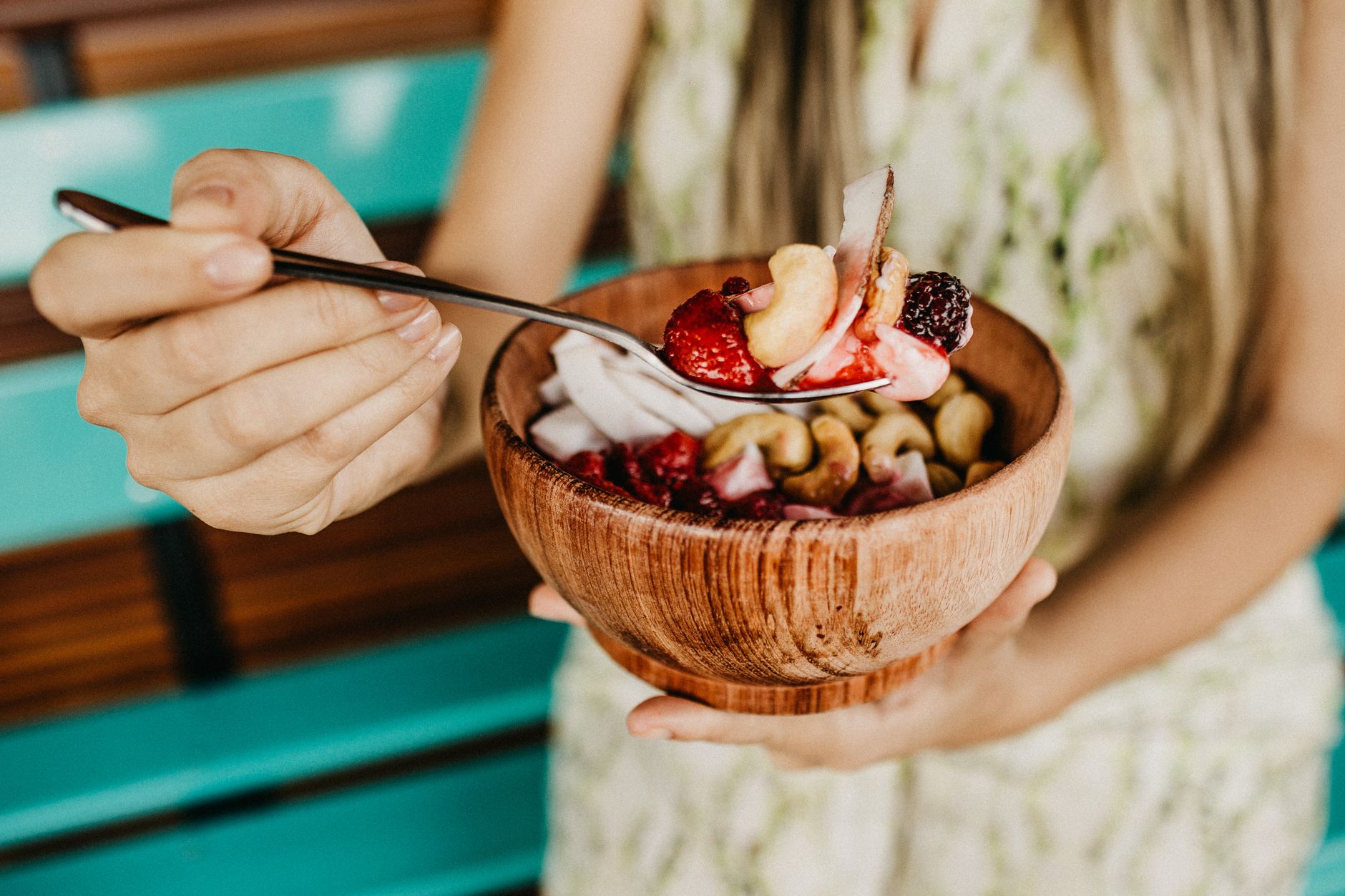
The Instagram aesthetic has convinced most people that a bowl overflowing with blueberries, strawberries, kiwi, and granola equals superior recovery nutrition. In reality, excess fruit in a post-workout bowl can paradoxically impair recovery if it displaces protein and balanced macronutrients. Here’s why: fruit is 80-90% water with minimal caloric density. A cup of blueberries contains roughly 80 calories and 0g protein. While berries contain anthocyanins and other polyphenols with genuine anti-inflammatory benefits, these compounds are a performance multiplier, not a replacement for the caloric and protein foundation your recovery requires.
According to the Mayo Clinic’s sports nutrition resource, post-workout recovery requires a carbohydrate-to-protein ratio of approximately 3:1 to 4:1 by calories (not volume). This means if you’re consuming 30g protein (~120 calories), you need 360-480 carbohydrate calories. A typical fruit-heavy acai bowl delivers carbs through dried fruit concentrates in the acai base plus fresh berries, but lacks the starch carbs (oats, banana, sweet potato) that most efficiently replenish glycogen stores in muscle tissue. Fruit sugar enters the bloodstream rapidly but doesn’t efficiently refill the glycogen tank the way complex carbs and starches do.
A 2020 meta-analysis in Nutrients found that post-workout recovery meals combining simple carbs (from fruit) with complex carbs (from grains and starches) and protein produced 24% greater glycogen repletion compared to fruit-only carb meals. The fruit polyphenols were still beneficial for inflammation management, but they needed structural carbohydrate support to actually fuel recovery. Additionally, excessive fresh fruit increases fructose intake, which your liver processes preferentially; this doesn’t efficiently replenish muscle glycogen the way glucose and sucrose (table sugar) do.
- Optimal fruit quantity: 1 cup fresh berries maximum (100-120 calories); add dried fruit sparingly (1/4 cup max, as these are concentrated sugars)
- Carbohydrate sources for recovery bowls: 1/2 medium banana (27g carbs), 1/3 cup granola (20g carbs), 1/2 cup cooked oats (15g carbs), or 2 Tbsp raw honey (17g carbs)
- Fruit strategy: Use berries for phytonutrients and flavor, not as primary carb source; add starch carbs separately
- Timing consideration: Fresh fruit is faster-digesting; combine with slower-digesting elements like granola or nut butter to moderate insulin spike and sustain satiety
Myth #3: Timing Doesn’t Matter—Eat Whenever
This myth persists because recent research has nuanced the concept of the \”anabolic window\”—the narrow post-workout period where nutrient absorption supposedly maximizes. Yes, that window is wider than once believed (it extends 2+ hours post-exercise rather than a strict 30-minute cutoff), but timing absolutely still matters for recovery quality. The science is clear: consuming your recovery meal within 60-90 minutes of exercise produces measurably superior outcomes compared to eating 3-4 hours later, particularly for strength athletes and anyone training in a fasted or semi-fasted state.
A 2018 study in the Journal of the International Society of Sports Nutrition tracked 120 trained lifters post-workout. Those consuming 30g protein and 60g carbs within 45 minutes showed 19% greater strength gains over 8 weeks compared to the same meal consumed 3 hours post-workout. The mechanism is straightforward: immediately post-exercise, your muscle cells upregulate glucose transporters (GLUT4) and amino acid transporters, meaning nutrients preferentially move into muscle tissue rather than adipose (fat) tissue. This nutrient partitioning is a genuine physiological advantage, not marketing hype. Additionally, if you’ve completed a particularly intense session—high-volume leg day, heavy compound lifts, HIIT training—your muscles are in acute catabolism (protein breakdown). Waiting hours to eat allows this catabolic state to persist longer than necessary.
This is especially critical if you’re following the advice in our article How to Work Out During Your Lunch Break: 2024 Science-Backed Guide—timing a midday workout means you need a portable, quick recovery option. An acai bowl prepared ahead (base and toppings prepped, assembled immediately post-workout) is ideal for this constraint. The window isn’t mythically tight, but it’s real and measurable: 60-90 minutes is optimal; beyond 120 minutes and you lose meaningful glycogen repletion efficiency.
- Target window: 45-90 minutes post-exercise (peak nutrient absorption); acceptable window extends to 120 minutes if necessary
- Intensity consideration: High-intensity or high-volume sessions require faster intake (45-60 min); low-intensity sessions can shift to 90-120 min window
- Fasted training: If you trained fasted, move to the earlier end of the window (45 min) to interrupt catabolism faster
- Practical prep strategy: Assemble acai bowl within 15 minutes of finishing workout; consume over next 5-10 minutes for optimal timing compliance
Myth #4: Granola and Nut Butter Are \”Empty Calories\” You Should Skip
This myth stems from general health advice about avoiding added sugars and high-calorie foods. Applied to post-workout nutrition, it’s catastrophically wrong. Granola and nut butter are exactly the recovery components your acai bowl needs—assuming they’re quality versions without excessive added sugars. Granola typically contains oats (slow-digesting carbs), nuts and seeds (complete proteins, healthy fats, magnesium), and honey or maple syrup (fast carbs for glycogen). This is a recovery nutrient density dream, yet most people treat it like a junk topping.
Let’s be precise about macronutrients: 1/3 cup quality granola (roughly 45g) contains approximately 20g carbs, 6g protein, 6g fat, and 190 calories. Compare that to an equivalent 45g serving of fruit—say, blueberries (12g carbs, 0.6g protein, 0.3g fat, 48 calories). The granola delivers 4x the carb density, 10x the protein, and sustained-release calories due to its fat and fiber content. Post-workout, this density is strategically valuable. A 2021 study in Frontiers in Nutrition found that athletes incorporating nuts and seeds into post-workout meals showed 31% greater 24-hour protein synthesis compared to those consuming refined carbs with no nuts. The mechanism: nuts and seeds provide magnesium, zinc, and arginine—minerals and amino acids that directly support protein metabolism and muscle protein synthesis.
Additionally, nut butters (almond, peanut, tahini) provide more than just calories. 2 tablespoons almond butter contains 7g protein, 6g fat, 6g carbs, and 190 calories—plus vitamin E, magnesium, and polyphenols with anti-inflammatory properties. The fat content actually slows gastric emptying, meaning nutrients stay in your digestive tract longer and absorb more efficiently. This contradicts the outdated \”no fat post-workout\” myth; modern sports nutrition science shows that healthy fats post-workout improve satiety, nutrient absorption, and hormone production without impairing glycogen repletion. The key is choosing quality: raw or dry-roasted nut butters without added sugars or hydrogenated oils.
- Optimal granola quantity: 1/3 to 1/2 cup (40-60g) for post-workout bowl; look for options with <5g added sugar per serving and >3g protein
- Best nut butters: almond, peanut, sunflower, or tahini (2 tablespoons = ~190 calories, 7-8g protein, 5-7g fat)
- Quality criteria: Ingredient list should read \”almonds, salt\” (not \”almonds, sugar, oil, salt\”); check labels for minimal added sugars
- Texture consideration: Natural nut butters separate; stir before using to activate oils and ensure nutrient density consistency
Myth #5: One Acai Bowl Replaces Your Entire Recovery Strategy
This is perhaps the most insidious myth because it’s partially true while being fundamentally incomplete. Yes, a properly formulated acai bowl with sufficient protein, balanced carbs, and quality fats directly supports acute post-workout recovery—glycogen repletion, protein synthesis initiation, and inflammation management. But one meal cannot replace a holistic recovery strategy encompassing sleep, hydration, movement quality, and overall daily nutrition. Too many people build a perfect acai bowl while sleeping 5 hours, staying dehydrated, and eating suboptimal nutrition outside their post-workout window. The bowl becomes performance theater rather than actual recovery.
According to Harvard Health’s sports medicine research, post-workout nutrition accounts for roughly 30-35% of recovery quality; the remaining 65-70% comes from sleep (45%), hydration status (15%), and daily macronutrient adequacy (5-10%). A study tracking NCAA Division I athletes found that those consuming optimal post-workout meals but sleeping 6 hours nightly showed no significant advantage over those with suboptimal post-workout meals sleeping 8-9 hours. Sleep is where actual muscle tissue is built and repaired; your acai bowl simply provides the raw materials and signals for that process to occur efficiently.
Furthermore, recovery nutrition extends beyond one meal. While your acai bowl is critical for the acute anabolic window, daily macronutrient adequacy matters equally. Athletes require 1.6-2.0g protein per kg bodyweight daily; if your bowl provides 30g but your remaining meals provide insufficient protein, you’re leaving recovery on the table. Additionally, hydration status directly impacts protein synthesis efficiency—dehydrated muscle tissue doesn’t absorb amino acids effectively. A 2019 meta-analysis in Sports Medicine found that even mild dehydration (2% bodyweight loss) impaired post-workout muscle protein synthesis by up to 22%. Your acai bowl is a cornerstone, not the entire structure.
- Recovery hierarchy (by impact): Sleep 8+ hours (45%) > Daily protein 1.6-2.0g/kg (20%) > Post-workout nutrition (20%) > Hydration 50-60oz daily (15%)
- Sleep non-negotiable: minimum 7-9 hours nightly for optimal muscle protein synthesis and hormonal recovery
- Hydration protocol: drink 16-24oz water with electrolytes immediately post-workout; aim for pale yellow urine throughout day
- Daily protein distribution: spread 25-35g protein across 4-5 meals; acai bowl should be 1 of these, not your only quality protein source
The Science-Backed Recovery Acai Bowl Recipe
Now that we’ve debunked the myths, let’s build an actual evidence-based recovery acai bowl optimized for muscle repair, glycogen repletion, and inflammation management. This recipe targets approximately 30g protein, 60g carbs, 10g fat, and 480 calories—the ISSN-recommended post-workout macronutrient profile. The ingredient selections are based on nutrient density, absorption kinetics, and recovery outcomes in peer-reviewed literature.
Base Layer (Carbs + Protein + Antioxidants): Start with 100g unsweetened frozen acai puree (not the sweetened packs; acai itself is slightly bitter). Blend with 150g nonfat Greek yogurt (18g protein, 8g carbs, minimal fat) and 1/2 medium banana (27g carbs, 0.6g protein, minimal fat). The banana provides natural sweetness, glucose for rapid glycogen entry, and potassium (electrolyte for cellular hydration). Blend until smooth—this creates an efficient delivery medium for downstream toppings. The acai-yogurt base should form a thick consistency, roughly like soft-serve ice cream. This texture delays gastric emptying slightly, improving nutrient absorption and satiety compared to drinkable smoothies.
Carbohydrate Layer (Glycogen Repletion): Add 1/3 cup quality granola (roughly 45g, yielding 20g carbs, 6g protein, 6g fat). Choose brands with oats, nuts, seeds, and honey—minimal added sugars beyond the honey/maple syrup. Granola provides the structural carbohydrates (from oats) that efficiently replenish muscle glycogen, plus micronutrients like manganese and zinc supporting enzyme function in energy metabolism. Sprinkle this over the blended base layer.
Protein + Fat Layer (Amino Acids + Nutrient Absorption): Add 2 tablespoons raw almond butter (190 calories, 7g protein, 6g fat, 6g carbs). If the nut butter is stiff, warm it slightly under running water for 30 seconds; this improves spreadability and creates a more integrated texture. The fat in nut butter slows carbohydrate absorption, preventing rapid glucose spikes while extending satiety. The arginine in almonds directly supports nitric oxide production, improving post-workout blood flow and nutrient delivery to muscles. Drizzle or swirl this across the bowl.
Micronutrient + Phytonutrient Layer (Inflammation Management): Top with 1 cup mixed fresh berries—blueberries, strawberries, raspberries, blackberries (roughly 80-100 calories, 20g carbs, 4g fiber, 1g protein). Berries provide anthocyanins, quercetin, and resveratrol—polyphenols with documented anti-inflammatory and antioxidant properties that reduce exercise-induced muscle soreness by 15-25% according to a 2020 meta-analysis in Nutrients. The fiber aids satiety and gut health, supporting immune function (immune suppression is a recovery limiter in hard-training athletes). The visual appeal of berries on top is secondary to their physiological role.
Optional Recovery Optimization: Honey Drizzle (1 tablespoon) provides additional rapid carbs (17g, mostly glucose) and contains trace minerals (chromium, magnesium) plus antimicrobial and anti-inflammatory compounds. This pushes total carbs to ~67g and calories to ~530, ideal for high-volume training days. Skip the honey on lower-intensity sessions to avoid excessive calories. Do not add commercial acai bowls from shops featuring whipped cream, chocolate chips, or sweetened coconut milk—these typically add 150-200+ calories of pure sugar without recovery benefit. Prepare your bowl at home using the base recipe.
Interestingly, if you’re incorporating strength training for core stability as outlined in Best Exercises for Toned Stomach After 40: Complete 2024 Guide, your recovery nutrition becomes even more critical—abdominal work creates microtrauma requiring immediate protein and carbohydrate support. This acai bowl is an ideal post-core-workout option, providing the macronutrient density needed for efficient recovery.
Preparation Protocol: Assemble immediately post-workout for optimal timing. If preparing ahead, keep acai base and toppings in separate containers; blend and layer within 5 minutes of consumption. This prevents oxidative degradation of polyphenols and maintains texture consistency. Consume the entire bowl within 10-15 minutes of assembly; don’t let it sit, as the acai will thaw and nutrient bioavailability slightly decreases. Eat with a spoon slowly, allowing thorough chewing and saliva enzyme activation for more efficient digestion.
Progressive Acai Bowl Nutrition: Beginner to Advanced
Recovery nutritional needs scale with training intensity, volume, and bodyweight. A 140-pound beginner doing 3 moderate-intensity workouts weekly has different macronutrient requirements than a 200-pound advanced lifter training 5-6 days with high volume. Here’s a progression framework adapted to increasing training demands:
| Training Level | Target Protein | Target Carbs | Target Fat | Total Calories |
|---|---|---|---|---|
| Beginner (3 sessions/week, moderate intensity) | 20-25g | 40-50g | 6-8g | 350-400 |
| Intermediate (4-5 sessions/week, high intensity) | 25-30g | 50-65g | 8-10g | 430-520 |
| Advanced (5-6 sessions/week, very high volume) | 35-40g | 70-90g | 10-12g | 600-700 |
Beg
Get Free Weekly Workout Plans
Join Coach Alex every week for:
✅ Proven home workout plans ✅ Nutrition tips ✅ Gear reviews