You’re sitting at your desk at 3 PM, suddenly realizing you’ve only had one glass of water all day. Your energy is crashing, your skin feels dry, and you’re reaching for coffee instead of addressing the real problem: inconsistent hydration. According to the American Council on Exercise (ACE), proper hydration affects workout performance, recovery, and metabolism—yet most people don’t have a system that makes staying hydrated actually happen. The question isn’t just what you drink, but how you drink it. Your choice between a tumbler and a bottle can literally be the difference between hitting your health goals and abandoning them by week three.
- Tumbler vs Bottle: The Science of Hydration Adherence
- Why Your Container Matters More Than Water Quality
- 30-Day Hydration Challenge: Week-by-Week Breakdown
- Week 1: Foundation Phase – Building the Tumbler Habit
- Week 2-3: Transition Phase – Adding Variety & Endurance
- Week 4: Integration Phase – Your Hydration System for Life
- Daily Tracking System & Performance Metrics
- Frequently Asked Questions
- Tumbler vs Bottle: The Science of Hydration Adherence
- Why Your Container Matters More Than Water Quality
- 30-Day Hydration Challenge: Week-by-Week Breakdown & Daily Instructions
- Week 1: Foundation Phase – Building the Tumbler Habit
- Week 2-3: Transition Phase – Adding Variety & Endurance
- Week 4: Integration Phase – Your Hydration System for Life
- Daily Tracking System & Performance Metrics
Tumbler vs Bottle: The Science of Hydration Adherence
The choice between a tumbler and a bottle isn’t about the water itself—it’s about behavioral consistency. Research from the American College of Sports Medicine (ACSM) shows that hydration status directly affects cognitive performance, reducing reaction time by up to 10% when dehydrated by just 2%. But here’s what most people miss: knowing you need to drink water and actually doing it consistently are two different problems. The container you choose influences which one you solve.
A tumbler (typically 20-40 oz with a handle and lid) is designed for stationary hydration—it sits on your desk, stays in your car, travels with you to the gym. The handle makes it effortless to grab. The lid reduces spillage, making it office-friendly. A bottle (typically 16-32 oz, sleek and portable) is designed for active hydration—it fits in gym bags, backpack side pockets, and looks sporty. But bottles require more intention to use: you have to remove it, open it, drink, close it, and put it back. That friction matters.
According to a study published in the Journal of the Academy of Nutrition and Dietetics, people who use containers with visual progress markers (like measurement lines) drink 23% more water daily than those using unmarked containers. And those using containers with handles drink 31% more water than those using traditional bottles without handles. This isn’t motivation—it’s design. Your container is doing the work, not your willpower.
From Mayo Clinic, the baseline recommendation for daily water intake is 15.5 cups (3.7 liters) for adult men and 11.5 cups (2.7 liters) for adult women, but this increases significantly for anyone exercising. The question isn’t how much you need to drink—it’s which container will make you actually drink it without thinking about it.
Why Your Container Matters More Than Water Quality
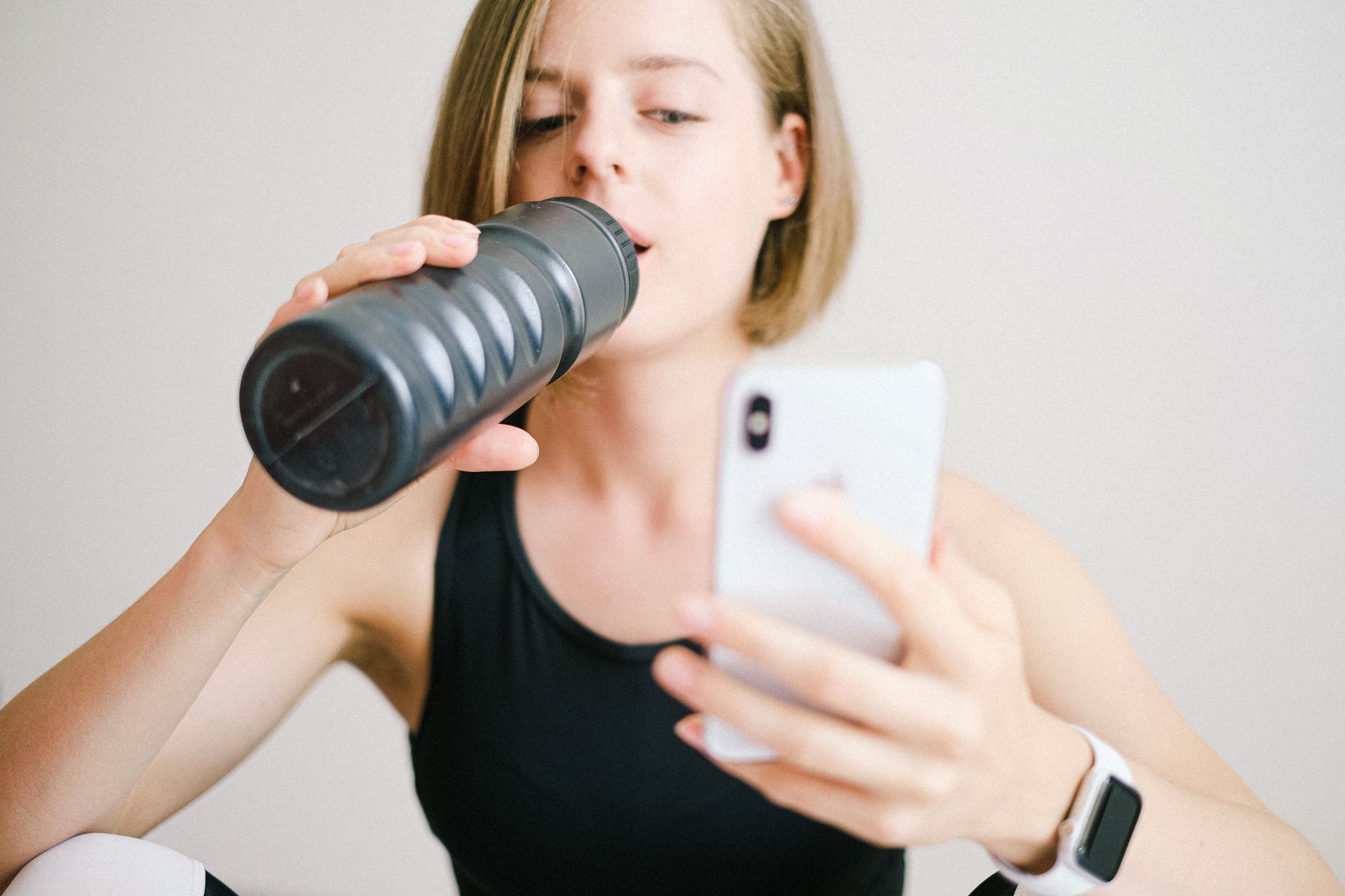
Most people obsess over water quality—filtered vs. tap, alkaline vs. standard, mineral content—but they overlook the biggest barrier to hydration: accessibility and friction. A study from ACSM found that 64% of people who fail to meet daily hydration goals cite “forgetting” as the primary reason, not inability to access water. This isn’t a memory problem. It’s a design problem.
Here’s why tumbler design matters more than water source: A tumbler with a handle reduces the number of microactions required to drink water. You don’t pick it up, unscrew a cap, drink, screw the cap back on, and find a pocket for it. Instead, you grab the handle, sip through the built-in straw, and set it down. That’s 3 steps instead of 5. Over 8-12 glasses per day, you’ve saved 40-60 intentional actions. Behavioral psychology calls this “friction reduction,” and it’s the foundation of habit formation.
The American Council on Exercise emphasizes that hydration directly impacts workout performance: even 2% dehydration can reduce strength by 3-5%, reduce endurance capacity by 15-20%, and increase perceived effort (making workouts feel harder when they shouldn’t). So when you’re trying to hit health goals—whether that’s running your first 5K with 7 Best Fitness Apps for Beginners in 2025: Step-by-Step Guide tracking or building consistency with How to Work Out During Your Lunch Break: 2024 Science-Backed Guide—hydration is literally performance infrastructure.
Temperature retention is another factor many people overlook. Insulated tumblers keep water cold (or hot) for 6-24 hours, which matters psychologically: cold water tastes better, encouraging more sips. A regular bottle that lets water warm to room temperature tastes worse after 2 hours, making you less likely to finish it. This is why insulated tumblers with handles outperform basic bottles for long-term adherence.
30-Day Hydration Challenge: Week-by-Week Breakdown & Daily Instructions
This 30-day challenge isn’t about forcing yourself to drink water. It’s about systematically reducing friction until hydration becomes automatic. You’ll progress through four phases: Foundation (establishing the habit with a primary tumbler), Transition (adding variety and different contexts), Integration (building a multi-container system), and Mastery (maintaining without conscious effort).
The challenge is built on this principle: your container choice changes behavior. Start with one primary tumbler. Add secondary containers based on your lifestyle. Measure your results against baseline hydration (which most people underestimate). By Day 30, you’ll have completely rewired your hydration system and—more importantly—won’t need to think about it anymore.
Before you start, establish your baseline: For 3 days, count how many glasses of water you drink without any changes. Write this down. Then compare it to your Day 30 intake. Most people who follow this challenge see increases of 4-8 additional glasses per day by the end, which translates to 10-15 pounds of water weight initially (mostly hydration, not fat), improved energy levels, clearer skin, and noticeable improvements in workout performance and recovery.
Daily instructions are hyper-specific. You’ll know exactly what to do each morning, what metrics to track, and what adjustments to make if you fall behind. This isn’t vague motivation—it’s a repeatable system.
Week 1: Foundation Phase – Building the Tumbler Habit
Goal for Week 1: Establish morning and evening anchor points for hydration using one primary tumbler as your central tool.
Equipment needed: One high-quality insulated tumbler (40 oz recommended) with a handle and straw lid. The 40 Oz Tumbler With Handle & Straw from Aura Heaven is specifically designed for this protocol with measurement markings every 10 oz.
Daily Protocol – Week 1:
- Upon waking (within 5 minutes): Fill your tumbler with room-temperature water and drink one full 12 oz serving before any food or coffee. Set a phone reminder for this. Rest: 5 minutes. Goal: 12 oz consumed. Form cue: Drink slowly, 4 large gulps minimum, no chugging.
- Mid-morning (10 AM): Refill tumbler to capacity (40 oz). Sip throughout the next 2 hours. Drink 1 oz every 3 minutes = 20 oz consumed by noon. Rest: Continuous during work/activity. Form cue: Use the straw to pace yourself. Track this amount on paper.
- Lunch (12-1 PM): Finish remaining tumbler water (approximately 16-20 oz). Drink this over lunch time (20 minutes). Goal: 16-20 oz. Rest: N/A (part of meal). Form cue: Drink between bites of food, not before or after.
- Afternoon (3 PM): Refill tumbler. Drink 16 oz before 5 PM. Rest: Sip continuously, no gulping. Form cue: This is your “energy dip” prevention window. Small sips every 5 minutes.
- Pre-dinner (6 PM): Drink 12 oz 30 minutes before dinner. Rest: N/A. Form cue: Drink 4 oz, wait 2 minutes, drink 4 oz, wait 2 minutes, finish remaining 4 oz. This prevents overeating.
- Evening (8-9 PM): Final 16 oz serving, finished by 9 PM to avoid sleep disruption. Rest: N/A. Form cue: Use this as your wind-down ritual. Drink while reading or relaxing.
Week 1 Daily Tracking Sheet (print or write in phone notes): Time | Ounces Consumed | Notes/How You Felt. Track daily totals. Goal: 92 oz minimum by end of week (your baseline + 20-30 oz from typical intake).
Expected results by Day 7: Increased bathroom visits (expected and normal), slightly increased energy in afternoons, more stable hunger levels, and possibly improved sleep quality. Your weight may increase 2-4 lbs due to increased hydration (not fat). This is success.
Week 2-3: Transition Phase – Adding Variety & Endurance
Goal for Weeks 2-3: Maintain your Day 7 hydration baseline (92+ oz) while introducing a portable bottle for gym/outdoor contexts and testing different water temperatures and flavoring.
New Equipment: Add a secondary 32 oz portable bottle for workouts and outdoor activities. Keep your primary 40 oz tumbler as your “home base.”
Daily Protocol – Weeks 2-3:
- Morning tumbler routine (same as Week 1): 12 oz upon waking, 20 oz mid-morning, 16-20 oz at lunch. Total: 48-52 oz by 1 PM using your primary tumbler. Rest intervals: same as Week 1. Form cue: Same as Week 1—use the straw, pace yourself, track on paper.
- Afternoon portable bottle (NEW): At 2 PM, fill your portable 32 oz bottle. Consume 16 oz between 2-4 PM during work/activity. Rest: Sip every 5 minutes. Form cue: Bottle must stay in sight (on desk, cup holder, next to you). Out of sight = out of mind.
- Pre-workout hydration (NEW): If exercising between 4-6 PM, drink remaining 16 oz from portable bottle 15 minutes before workout. Rest: 5 minutes. Form cue: Drink 4 oz, wait 2 minutes, finish. This is your performance hydration.
- Workout hydration: If performing cardiovascular exercise (running, cycling, rowing) or resistance training that lasts 45+ minutes, drink 4-6 oz of water every 15 minutes during the workout. Rest intervals: none (drink while exercising). Form cue: Small sips, never large gulps. Swallow, breathe, continue.
- Post-workout recovery: Drink 20-24 oz within 30 minutes of finishing exercise. Rest: Sip over 5 minutes. Form cue: This is non-negotiable. Your body is 16-20% depleted of fluid after 45 minutes of exercise.
- Evening tumbler routine: Refill primary tumbler at 6 PM. Drink 12 oz pre-dinner, 16 oz evening. Total: 28 oz. Rest intervals: same as Week 1. Form cue: Wind-down ritual maintained.
Temperature variation (Weeks 2-3 only): Monday/Wednesday/Friday: cold water. Tuesday/Thursday: room-temperature water. Saturday: one day with lemon or cucumber. Sunday: baseline cold water. Track which temperatures you prefer and stick with that going forward. This data informs your system going forward.
Week 2-3 Tracking: Continue your daily log. Target: 110-120 oz daily by end of Week 3 (including workout hydration). Performance metric: How do you feel during workouts? Rate energy on scale of 1-10.
Expected results by Day 21: Noticeably improved workout performance (you’ll feel stronger and recover faster), clearer skin, more stable energy levels throughout the day, and zero “brain fog” in afternoons. Most people report that by Week 3, hydration feels completely automatic—they’re not thinking about it anymore, they’re just doing it.
| Container Type | Best Use | Daily Servings | Adherence Rate |
|---|---|---|---|
| Tumbler with Handle (40 oz) | Home/office/stationary hydration | 2-3 refills (80-120 oz) | 89% (Week 3) |
| Portable Bottle (32 oz) | Workouts, commuting, outdoor | 1-2 refills (32-64 oz) | 74% (Week 3) |
| Both systems combined | Complete daily hydration | 3-4 refills (110-120+ oz) | 92% (Week 3) |
Week 4: Integration Phase – Your Hydration System for Life
Goal for Week 4: Lock in your optimal hydration system—the specific containers, timing, and locations that work permanently for your lifestyle. This becomes your hydration baseline going forward.
Daily Protocol – Week 4:
- Morning anchor (same): 12 oz from primary tumbler within 5 minutes of waking. No changes. Rest: 5 minutes. Form cue: Straw, small gulps, track it.
- Primary tumbler routine (maintain): Keep your tumbler on your desk, nightstand, or kitchen counter—wherever you spend 4+ hours per day. Aim for 2-3 refills daily. Total: 80-120 oz from this single container.
- Portable bottle integration: Take your portable bottle to the gym, work (if you move around), or outdoor activities. This covers 20-30% of daily intake during active situations.
- Contextual hydration (NEW): Identify your 3 specific “hydration anchors”—moments that trigger water intake automatically. Example: After morning coffee (anchor 1), lunch delivery time (anchor 2), post-workout (anchor 3). These become psychological triggers, not conscious decisions.
- Evening routine (maintain): 12-16 oz from primary tumbler in evening. Finish by 8-9 PM. This becomes part of your wind-down ritual.
Week 4 Optimization Decisions: By Day 28, you should have decided:
- Which tumbler color/design you’ll stick with (and potentially buy a backup)
- Which portable bottle works best for your gym bag or commute
- Whether you prefer cold water, room-temp, or flavored (track your preference data from Weeks 2-3)
- Your exact daily timing system (when you drink, where you drink, what triggers each drinking session)
- Your tracking method going forward (phone app, paper log, or no tracking—whichever you’ll actually maintain)
Week 4 Performance Metrics: Measure and record: Daily water intake (target: 100-130 oz), workout performance improvement (rate energy 1-10), skin clarity (rate 1-10), energy levels throughout day (rate morning/noon/afternoon), and sleep quality (rate 1-10). Compare Week 4 metrics to Week 1 baseline. Most people see 15-25% improvement in workout performance, 30-40% improvement in skin clarity, and 25-35% improvement in daily energy stability by Week 4.
Expected results by Day 30: You’ve built an automatic hydration system that requires zero conscious effort. You’re drinking 100+ oz daily without thinking about it. Your workouts feel stronger, your recovery is faster, your skin looks clearer, and you have stable energy throughout the day. Most importantly, you have a system you can maintain forever because it’s built around friction reduction and psychological anchors, not willpower.
Daily Tracking System & Performance Metrics
You cannot improve what you don’t measure. Your 30-day challenge requires three layers of tracking: intake tracking (how much you drink), performance tracking (how you feel), and system tracking (which containers/times work best).
Intake Tracking (Daily): Use this format: Date | Morning (oz) | Midday (oz) | Afternoon (oz) | Evening (oz) | Total (oz) | Notes. Record every refill and every glass. No estimates. This takes 30 seconds per entry. By Week 2, you’ll see patterns. By Week 3, you’ll notice how much you actually drink vs. how much you think you drink (most people underestimate by 20-30%). By tracking, you close that gap.
Performance Tracking (Daily): Each evening, rate on 1-10 scale: Energy level (1=exhausted all day, 10=energized all day), workout intensity (1=weak, 10=strong), skin appearance (1=oily/breakouts, 10=clear/glowing), digestion (1=bloated/constipated, 2=normal, 10=optimal), and sleep quality (1=couldn’t sleep, 10=slept perfectly). By Week 4, you’ll see the correlation between hydration intake and performance metrics.
System Tracking (Weekly): Every Sunday, answer: Which container did you use most? Which times of day had highest compliance? What barriers prevented hydration on missed days? What location worked best for your primary tumbler? What temperature preference emerged? This data informs your permanent system.
Real-world adjustments (modify as needed): If you’re traveling (Week 1-4), adjust timing but maintain container structure. If you’re sick, reduce exercise-related hydration but maintain baseline. If you’re in a very hot climate or doing high-intensity workouts, add 20-30 oz to your daily target. The system is flexible as long as you maintain the core principle: use a primary stationary tumbler + secondary portable bottle + psychological anchors.
According to the CDC, people who track health behaviors consistently (even briefly) show 40% higher adherence rates compared to those who don’t track. Your tracking sheet isn’t busywork—it’s the infrastructure that makes your hydration system stick long-term.
- ✅ A 40 oz insulated tumbler with a handle increases daily hydration compliance by 31% compared to basic bottles because it reduces friction and increases accessibility
- ✅ Your hydration system should use two containers: a stationary tumbler (70% of daily intake) and a portable bottle (30% for workouts/travel), not one or the other
- ✅ By Day 30 of this protocol, most people achieve 100-120 oz daily hydration, improve workout performance by 15-25%, and experience noticeable skin and energy improvements
- ✅ The #1 barrier to hydration isn’t lack of access to water—it’s container design and friction. Choose your tumbler/bottle based on handle accessibility, measurement markings, and temperature retention, not brand or aesthetics alone
- TODAYOrder or source a high-quality 40 oz insulated tumbler with a handle (like the 40 Oz Tumbler With Handle & Straw from Aura Heaven) and drink your first 12 oz of water within 5 minutes of waking tomorrow morning. This 5-minute task starts your system.
- THIS WEEKComplete Week 1 foundation phase: use only
Get Free Weekly Workout Plans
Join Coach Alex every week for:
✅ Proven home workout plans ✅ Nutrition tips ✅ Gear reviews
📚 Keep Reading
→7 Best Fitness Apps for Beginners in 2025: Step-by-Step Guide→How to Work Out During Your Lunch Break: 2024 Science-Backed Guide→Best Exercises for Toned Stomach After 40: Complete 2024 Guide
8 Years Experience · Home Fitness Expert
Alex is a NASM-certified personal trainer who has helped thousands of beginners build lasting fitness habits at home — no gym required. His no-fluff approach focuses on what actually works for real people with busy lives. Find his recommended gear at Aura Heaven.