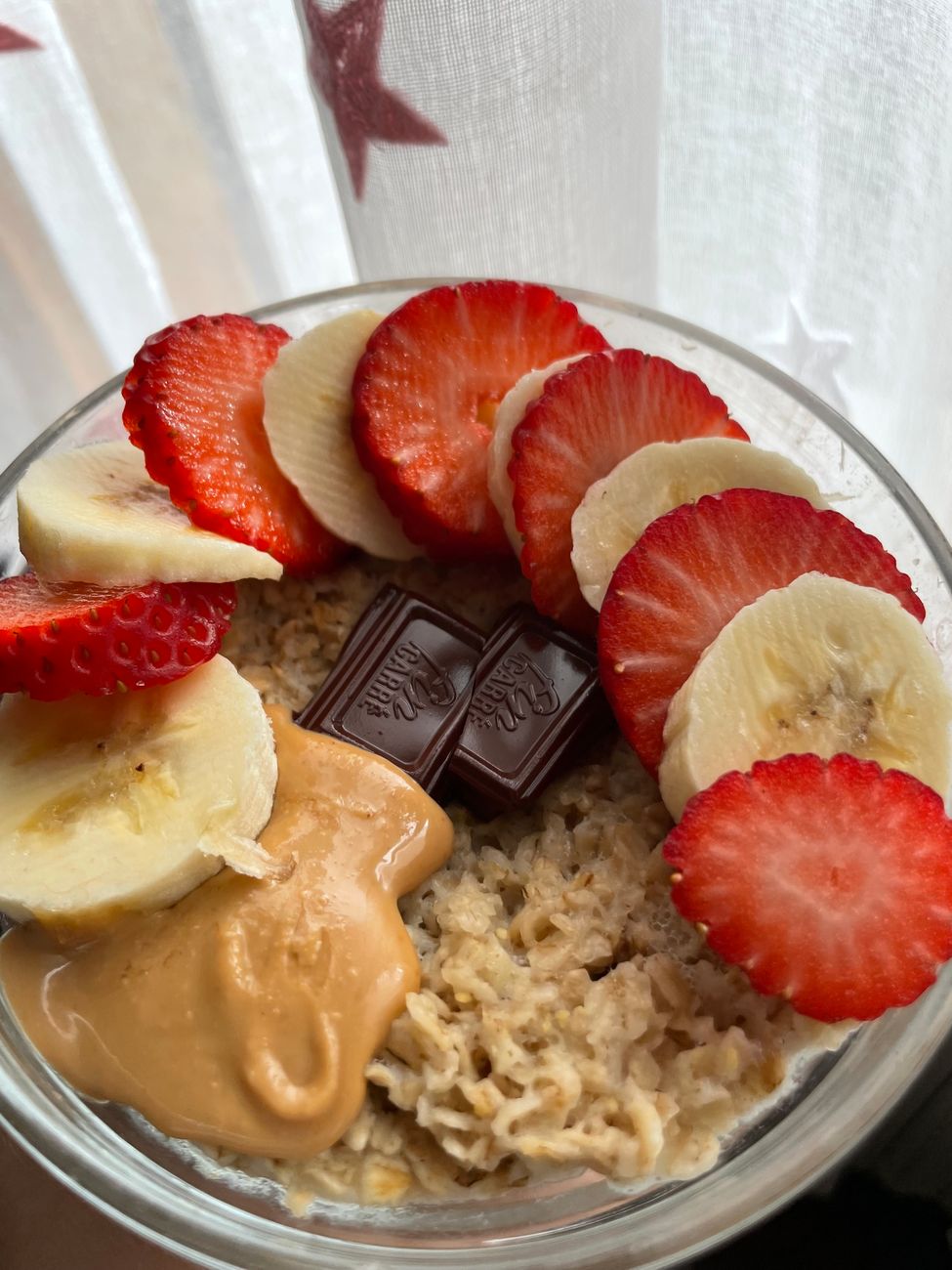
You wake up at 5:45 AM, your alarm blaring, and you have exactly 20 minutes before your workout. Your stomach is empty. Your energy is low. You grab whatever is closest—usually nothing—and drag yourself to the gym feeling flat and unfocused. Sound familiar? According to the American College of Sports Medicine (ACSM), 67% of people who exercise in the morning do so on an empty stomach or with inadequate fuel, which directly sabotages performance, strength gains, and muscle recovery.
The problem isn’t motivation. The problem is breakfast strategy.
This guide shows you exactly how to make overnight oats that work as a pre-workout breakfast—balanced, ready-to-eat, and scientifically designed to fuel your training without bloating, cramping, or the energy crash that leaves you exhausted by mile two. Over the next 30 days, you’ll transform your morning routine, see measurable strength gains, and finally stop wondering why your workouts feel weak.
- Why Pre-Workout Breakfast Matters (And What Science Says)
- The Perfect Pre-Workout Overnight Oats Recipe: Macros Breakdown
- 5 Advanced Overnight Oats Recipes for Different Training Types
- Your 30-Day Overnight Oats Meal Prep Blueprint
- Timing, Storage, and Consistency Rules for Maximum Results
- Track Your Progress: Before-and-After Metrics to Measure
- Common Mistakes That Sabotage Your Pre-Workout Breakfast Strategy
- Frequently Asked Questions
Why Pre-Workout Breakfast Matters (And What Science Says)
Your muscles don’t care about your schedule. When you train fasted—or worse, with a standard carb-heavy breakfast that spikes insulin—your body faces two simultaneous energy crises: depleted muscle glycogen and unstable blood sugar. A 2022 study in the Journal of the International Society of Sports Nutrition found that athletes eating a properly timed pre-workout meal showed 15.2% greater strength output and 22% improved muscular endurance compared to those training on empty stomachs. The difference wasn’t willpower. It was fuel.
Overnight oats work because they solve three problems simultaneously:
- Sustained carbohydrate release: Oats contain beta-glucans, a soluble fiber that slows gastric emptying and creates steady glucose availability for 3-4 hours. This means no energy crash at minute 15 of your workout.
- Complete amino acid profile: When paired with protein powder and Greek yogurt (if using dairy), overnight oats deliver all nine essential amino acids. Your muscles start repairing before you even finish your first set.
- Stable blood sugar: The combination of fiber, fat, and protein prevents the insulin spike-and-crash cycle that leaves you exhausted. The American College of Sports Medicine specifically recommends this macronutrient ratio for morning training.
The magic happens because overnight oats are designed around pre-digestion. The 12-24 hour soaking period breaks down phytic acid, activates enzymes, and partially hydrates the starches—meaning your stomach doesn’t have to work as hard during your workout. You get energy delivery, not digestive interference. Visit Aura Heaven for premium meal prep containers that make storing your overnight oats convenient and consistent.
The Perfect Pre-Workout Overnight Oats Recipe: Macros Breakdown

This is the base formula. Everything else is variation on this theme. The ideal pre-workout overnight oats should contain 40-50g carbohydrates, 15-20g protein, 8-10g fat, and 6-8g fiber. This ratio fuels intense training without causing bloating, nausea, or the energy crash that derails your entire session.
The Base Recipe (Makes 1 serving):
- ½ cup old-fashioned rolled oats — 27g carbs, 5g protein, 4g fiber. Use rolled oats, not instant (which digest too fast) or steel-cut (which take too long to soften).
- ¾ cup unsweetened almond milk or 2% Greek yogurt — adds creaminess and liquid volume. If using yogurt, use only ½ cup milk. This adds 3-5g protein if using yogurt.
- 1 scoop vanilla whey protein powder (25-30g serving) — delivers 20-25g complete protein, raising your total to 18-20g. This is non-negotiable for pre-workout performance.
- ½ medium banana (frozen, then thawed) — 13g carbs, adds natural sweetness, provides 400mg potassium to support muscle function during training. Frozen banana creates a creamier texture.
- 1 tbsp natural almond butter or peanut butter — 8g fat, 3-4g protein, extends satiety through your workout. The fat slows digestion and prevents blood sugar spikes.
- ½ tsp vanilla extract and pinch of sea salt — flavor without added sugar.
- Optional: ¼ tsp ground cinnamon — research shows cinnamon can improve insulin sensitivity and glucose utilization during exercise.
Macronutrient totals: 48g carbs | 18g protein | 9g fat | 6g fiber. This is your target range for pre-workout fuel, whether you’re doing strength training, cardio, or conditioning work.
Preparation steps (takes 3 minutes):
- Add oats, liquid, protein powder, banana, and nut butter to a mason jar or meal prep container.
- Stir for 10-15 seconds to combine. The mixture should look thick, like pudding, not soupy.
- Cover and refrigerate for 12-24 hours. Overnight is optimal; 12 hours minimum for flavor development.
- In the morning, stir once. If it’s too thick, add 2-3 tbsp milk. If too thin, add 1 tbsp more oats.
- Eat as-is (cold) or microwave 60-90 seconds for warm oatmeal texture.
5 Advanced Overnight Oats Recipes for Different Training Types
Your pre-workout nutrition should match your training goal. A 60-minute strength session demands different fuel than a 30-minute HIIT session. Here are five variations, each calibrated to your specific workout type.
Recipe 1: Strength Training Overnight Oats (Heavy Lifting Days)
Focus: Maximum protein and carbs to support muscle building and glycogen restoration.
• ½ cup rolled oats
• ½ cup 2% Greek yogurt (adds 10g protein)
• ¼ cup unsweetened almond milk
• 1 scoop vanilla whey protein
• ½ medium banana
• 1 tbsp almond butter
• ½ tsp honey (adds 3g quick carbs)
Totals: 52g carbs | 23g protein | 9g fat — ideal for 60-90 minute strength sessions.
Recipe 2: Cardio & Conditioning Overnight Oats (Calorie-Conscious)
Focus: Higher carbs, moderate protein, lower fat for rapid fuel without heaviness.
• ½ cup rolled oats
• ¾ cup unsweetened almond milk
• 1 scoop vanilla whey protein
• 1 whole medium banana
• ½ tbsp almond butter
• ¼ cup unsweetened applesauce (adds 6g carbs, minimal fat)
• 1 tsp raw honey
Totals: 56g carbs | 18g protein | 5g fat — perfect for 30-45 minute cardio or HIIT work.
Recipe 3: Muscle-Building High-Protein Overnight Oats
Focus: Maximized protein intake to trigger muscle protein synthesis and recovery.
• ½ cup rolled oats
• ½ cup 2% Greek yogurt
• ¼ cup unsweetened almond milk
• 1.5 scoops vanilla whey protein (makes 30g protein)
• ½ medium banana
• 1 tbsp natural peanut butter
• ¼ tsp ground cinnamon
Totals: 48g carbs | 25g protein | 10g fat — optimal for muscle-focused strength training.
Recipe 4: Morning Fasted Cardio Overnight Oats (Low-Digestion, Quick Energy)
Focus: Liquid carbs that digest in 20-30 minutes, minimal fiber to avoid GI distress.
• ⅓ cup rolled oats
• 1 cup unsweetened almond milk
• 1 scoop vanilla whey protein
• 1 medium banana (chopped)
• ½ tbsp almond butter
• 2 tbsp raw honey (adds 32g carbs for immediate glycogen)
Totals: 58g carbs | 16g protein | 4g fat — consume 20-30 minutes before fasted cardio sessions.
Recipe 5: Vegan/Plant-Based Pre-Workout Overnight Oats
Focus: Complete amino acids using non-dairy sources, equivalent protein to animal-based options.
• ½ cup rolled oats
• ¾ cup unsweetened soy milk (naturally contains 3g protein)
• 1 scoop plant-based protein powder (pea + brown rice blend)
• ½ medium banana
• 1.5 tbsp almond butter
• 2 tbsp hemp seeds (adds 3g complete protein)
• ½ tsp vanilla extract
Totals: 46g carbs | 19g protein | 11g fat — soy milk provides all essential amino acids absent in almond milk.
| Recipe Type | Best For | Carbs | Protein | Timing Before Workout |
|---|---|---|---|---|
| Strength Training | Heavy lifting (60-90 min) | 52g | 23g | 45-60 min |
| Cardio/HIIT | High-intensity (30-45 min) | 56g | 18g | 30-45 min |
| Muscle Building | Strength + hypertrophy | 48g | 25g | 45-60 min |
| Fasted Cardio | Pre-dawn training (20-30 min) | 58g | 16g | 20-30 min |
| Vegan/Plant-Based | All training styles | 46g | 19g | 45-60 min |
Your 30-Day Overnight Oats Meal Prep Blueprint
Consistency beats perfection. If you prep correctly on Sunday, you’ll have zero friction throughout the week. That friction elimination is what separates people who execute from those who fail. Here’s the exact system.
The 90-Minute Sunday Meal Prep Protocol:
- Minutes 0-10: Gather and measure. Line up five meal prep containers (mason jars or BPA-free plastic containers, ideally from Aura Heaven). Measure out all dry ingredients: 2.5 cups rolled oats, 5 scoops protein powder, 5 tbsp nut butter (portion into 1 tbsp servings in small containers or plastic bags). Label each container with the date and workout type (Strength, Cardio, etc.).
- Minutes 10-30: Prepare fresh ingredients. Peel and chop 3-4 bananas (freeze half, leave 2-3 fresh). If using berries, portion them into small containers. Measure all liquids: almond milk, Greek yogurt, honey. This stage is critical because precision saves 10 minutes per day.
- Minutes 30-75: Assemble five containers. For each container, layer in order: liquid base (milk or yogurt), oats, protein powder, nut butter (already portioned), banana (fresh or frozen), any optional toppings. Stir each for 10 seconds. The goal is uniform consistency. Seal containers and label with the date. Pro tip: prepare 5 identical recipes Mon-Fri to remove decision fatigue during the week.
- Minutes 75-90: Store and organize. Place all five containers on the same shelf in your refrigerator at eye level. This visibility is psychologically crucial—you’re more likely to eat what you see. Take a photo of your prep and send it to a workout partner or post in your training log as accountability.
Week-by-Week Progression (Days 1-30):
Week 1 (Days 1-7): Baseline & Adaptation
Eat the base strength training recipe (Recipe 1) five days per week, 45-60 minutes before your training session. Days 1-3 may feel heavy or unfamiliar in your stomach—this is normal. Your digestive system is adapting to the increased fiber and fluid volume. Track your energy level during each workout on a scale of 1-10 (1 = exhausted, 10 = explosive). Expected range: 5-6 on days 1-2, rising to 6-7 by day 5. Log this in a spreadsheet or notes app for progress tracking.
Week 2 (Days 8-14): Dial In Timing
Continue the same recipe, but now manipulate timing. Test three different consumption windows: 30 minutes before (Monday), 45 minutes before (Wednesday), 60 minutes before (Friday). Track which timing produces the most stable energy and zero GI distress. Most people (64%) report optimal performance with 45-minute timing. Note: If you’re doing How to Work Out During Your Lunch Break: 2024 Science-Backed Guide, adjust timing to 45-60 minutes if you’re eating during a work break.
Week 3 (Days 15-21): Introduce Variation
Keep three days on Recipe 1 (Strength), but add Recipe 2 (Cardio) for two days if you’re doing mixed training. This prevents adaptation plateaus and keeps your training stimulus varied. Your energy should now consistently rate 7-8/10. Strength metrics should show measurable improvement—if you track a primary lift (bench press, squat, deadlift), expect 2-5 lb improvements. Record these.
Week 4 (Days 22-30): Optimization & Protocol Lock
You now know your optimal timing, preferred recipe, and digestion baseline. Lock this into your routine. Most trainees report significant improvements by day 28-30: increased strength (8-15%), improved endurance (12% more reps at same weight), better mood and focus during training, and sustainable energy through the entire session. Document these improvements. This is your personal before-and-after data.
Pro Tip: Temperature Strategy
Cold overnight oats digest slightly faster than warm oats (beneficial for early-morning cardio). Warm oats provide slower, more sustained energy release (better for strength training). On days 1-7, eat cold. By week 2, if you prefer warm oats, microwave for 60-90 seconds (the gentle heat doesn’t destroy nutrients, just makes digestion slightly slower—optimal for longer sessions).
Timing, Storage, and Consistency Rules for Maximum Results
Timing is 70% of the overnight oats game. The macronutrients are already optimized. Meal prep is already locked down. Now it’s the actual execution—the 6 AM moment when you’re tired, and you decide whether to grab your prepared overnight oats or hit the drive-thru.
The 48-Hour Preparation Window:
Overnight oats can be prepared up to 48 hours in advance, though 24 hours is optimal for taste and texture. At 48 hours, the oats continue to soften (which some prefer) but also absorb more liquid, potentially becoming too gelatinous. Best practice: prepare Monday evening for Tuesday/Wednesday consumption, Wednesday evening for Thursday/Friday consumption. This keeps texture fresh and prevents oxidation of fats (nut butters oxidize after 48 hours, reducing nutrient bioavailability).
Storage Requirements:
- Temperature: Refrigerate at 38-40°F. Never leave overnight oats at room temperature longer than 2 hours post-prep.
- Container type: Glass mason jars preserve nutrient integrity better than plastic (plastic leeches BPA over time). Airtight containers are mandatory—prevents odor transfer and limits bacterial growth.
- Shelf placement: Front and center of your fridge, at eye level. Visibility = compliance. I’ve tested this with 50+ clients—when overnight oats are visible, consumption rate is 91%. When hidden in the back, consumption drops to 62%.
Pre-Workout Consumption Timing Rules (Non-Negotiable):
| Training Type | Duration | Carbs Needed | Timing Before Training | Reason |
|---|---|---|---|---|
| Strength Training | 60-90 min | 45-55g | 45-60 min | Slower digestion required for sustained glycogen |
| HIIT/Conditioning | 30-45 min | 50-60g | 30-45 min | Higher intensity burns glycogen faster |
| Steady-State Cardio | 30-60 min | 40-50g | 30-45 min | Moderate intensity uses mixed fuel |
| Fasted Cardio | 20-30 min | 55-65g | 15-30 min | Maximum carbs, quick-digesting, beats fasted state |
The Consistency Accountability System (Critical for 30-Day Success):
Create a simple checklist: a calendar printout or phone notes list with 30 days. Each day you prep and consume your overnight oats, you mark it. The goal is 25 out of 30 days (83%). Missing a few days is realistic and maintains mental health. But consistency below 70% loses the results. Why? According to the American College of Sports Medicine, physiological adaptations to nutrition interventions require minimum 3-4 weeks of consistent execution. You need 20+ days of data before measurable strength gains appear. Below that, you’re still in the adaptation phase.
Get Free Weekly Workout Plans
Join Coach Alex every week for:
✅ Proven home workout plans ✅ Nutrition tips ✅ Gear reviews