⚡ Key Takeaways
📝 Table of Contents
- The Real Reason Your Abs Won’t Show (And What Actually Works)
- The Body Fat Numbers Nobody Wants to Hear
- Why Your Calorie Deficit Keeps Failing
- The Protein Question (And Why Most Advice Undersells It)
- What Actually Happens When You Cut Liquid Calories
- The Sleep-Fat Connection That Gets Ignored
- Core Training That Actually Builds Definition
- The Actual Workout Circuit
- The Timeline Question
- Do You Need Cardio?
- When This Plan Isn’t Right for You
- What I’d Actually Buy
- Frequently Asked Questions
- The Real Reason Your Abs Won’t Show (And What Actually Works)
- The Body Fat Numbers Nobody Wants to Hear
- Why Your Calorie Deficit Keeps Failing
- The Protein Question (And Why Most Advice Undersells It)
- What Actually Happens When You Cut Liquid Calories
Disclosure: This page may contain affiliate links. If you click and purchase, we may earn a small commission at no extra cost to you. See our Affiliate Disclosure for details.
💪 Free Fitness Tips — Straight to Your Inbox
Join thousands getting weekly workout guides, nutrition tips, and gear reviews. No spam, unsubscribe anytime.
Your six pack is already there—you just need to reveal it by reducing body fat through a calorie deficit and proper nutrition rather than endless ab exercises. Focus on a combination of compound strength training, consistent cardio, and eating in a moderate calorie deficit (typically 300-500 calories below maintenance) to gradually lower your body fat percentage to 10-15% where abs become visible. Ab-specific exercises like crunches won’t build visible abs; instead, prioritize full-body workouts and dietary adherence as the primary drivers of ab visibility.
The Real Reason Your Abs Won’t Show (And What Actually Works)
Your six pack already exists. Right now, beneath whatever body fat you’re carrying, there’s a perfectly functional rectus abdominis doing its job. The problem isn’t building abs — it’s revealing the ones you’ve got. This took me years of coaching to accept.
Most people get this backwards. They hammer their midsection with crunches, leg raises, and whatever TikTok ab circuit is trending, expecting definition to emerge from sheer volume. But my clients who came to me “wanting abs” were already doing ab work 4-5 days per week. Their core strength was fine. Their body fat percentage was the issue.
Visible abs require two things: body fat reduction through a sustained calorie deficit, and enough core training to build muscle worth showing. That’s it. The execution is where things get interesting.
The Body Fat Numbers Nobody Wants to Hear
Men typically need 10-12% body fat before abs become clearly visible; women need roughly 18-20%. These aren’t arbitrary numbers — they reflect where your body stores stubborn fat (usually Core Exercises for Toning Your Midsection in 4 Weeks">your midsection) and how subcutaneous fat distribution affects muscle visibility.
I’ve seen clients with visible upper ab definition at 15% body fat, and others who needed 9% before their lower abs showed. Genetics determines where you fall on that spectrum, and I can’t predict your exact number. What I can tell you: most people drastically underestimate their current body fat percentage. That guy at your gym claiming “probably around 12%”? He’s usually closer to 18%.
A 300-500 calorie daily deficit drops most people 0.5-1 pound of fat weekly. Not aggressive. Completely sustainable. And sustainability matters when you’re targeting a realistic 3-6 month timeline.
Why Your Calorie Deficit Keeps Failing
Here’s where I disagree with conventional fitness advice: the problem usually isn’t that you don’t know you need a deficit. It’s that you’re creating too large of one, then compensating in ways you don’t track.
I had a former college athlete last year — someone who knew his way around a gym — who couldn’t figure out why he wasn’t losing fat despite “eating 1,800 calories.” Two weeks of actual tracking revealed 2,400-2,600 most days. The culprits: cooking oils he eyeballed instead of measured, protein shakes with “a little extra” peanut butter, and weekend dinners mentally filed as “cheat meals” that actually hit 1,200+ calories.
You’re probably underreporting what you eat by about 30%—not intentionally. A 2019 study in the Journal of the Academy of Nutrition and Dietetics found this exact gap between perceived and actual calorie intake. On a 2,000-calorie target, that’s 600 invisible calories sliding in every single day.
Track everything for your first 4 weeks without exception. Use a food scale. Log the oil in your pan. Count the creamer in your coffee. After a month, your intuition will be calibrated enough to relax—but you need that baseline data first.
The Protein Question (And Why Most Advice Undersells It)
Standard guidance recommends 0.7–1 gram of protein per pound of bodyweight daily. I push clients toward 1.1–1.2g/lb during a cut. Here’s why.
In a calorie deficit, your body burns fat but also hunts for muscle to break down for energy. Protein stops this. Your body burns roughly 20–30% of protein calories just digesting it—giving you a metabolic edge over carbs or fats.
Most people can’t hit even 0.8g/lb consistently. A 180-pound person needs 144 grams minimum, which demands protein at every meal plus a shake or high-protein snack. I don’t think the exact number matters as much as the fitness industry claims, but “somewhere around 1g/lb” is the right target for revealing abs while keeping muscle intact.
Eat boring, predictable staples: chicken breast, Greek yogurt (0% fat has roughly 17g protein per container), eggs, cottage cheese, lean ground turkey. Save elaborate recipes for maintenance. During a cut, meal prep should be simple enough that you actually do it.
What Actually Happens When You Cut Liquid Calories
The fastest results come from eliminating liquid calories entirely—at least at first.
The numbers hit hard when you look at them: a medium mocha is 350–400 calories, a single craft IPA is 200+, and that “healthy” orange juice at breakfast is 110 calories for 8 ounces with zero fiber and no satiety benefit.
One client dropped 6 pounds in her first month by swapping two daily glasses of wine for sparkling water with lime—nothing else changed. Yes, some was water weight from reduced alcohol, but the result still stands. That’s the power of cutting liquid calories.
Drink water, black coffee, unsweetened tea. For the first 8-12 weeks of your cut, any beverage with calories is off-limits. You can reintroduce things strategically later, but this initial phase demands strict compliance.
The Sleep-Fat Connection That Gets Ignored
I ignored sleep until a stress fracture at 28 forced me to stop. I was the guy bragging about 5-hour nights and early morning runs. Once I recovered and consistently slept 7-8 hours, my body composition shifted noticeably—despite training less intensely than before.
The Mayo Clinic has documented how chronic sleep deprivation elevates cortisol, which directly drives abdominal fat storage. But the damage runs deeper: poor sleep destroys willpower, spikes ghrelin (your hunger hormone), and transforms high-calorie convenience foods into irresistible temptations.
Sleep 7-9 hours every night. Non-negotiable. I’ve watched clients ignore this for months, spinning their wheels, then finally commit to a consistent schedule and break through plateaus within weeks. The correlation is undeniable.
Core Training That Actually Builds Definition
Your abs need direct training—not because you can spot-reduce fat (you can’t), but because underdeveloped ab muscles won’t show even at low body fat. You need both: body fat low enough to reveal the muscle, and enough muscle development to actually be visible.
Three days per week is enough for most people. Monday, Wednesday, Friday works perfectly. The key is progressive overload—making movements harder over time, not just adding reps to easy exercises.
The Equipment That Actually Matters
I’ll recommend two pieces of equipment I’ve used with hundreds of clients, plus one tool that accelerates your deficit but isn’t strictly necessary.
Ab Wheel Roller: This is the single best tool for building ab definition. A 2026 EMG study showed ab wheel rollouts activate the rectus abdominis 60% more than traditional crunches — exactly what I’ve seen in practice. The movement forces anti-extension stability through your entire anterior chain, building deep core strength that makes abs actually pop when body fat drops.
Start on your knees and roll forward only as far as you can control without your lower back sagging or hips piking up. Most people can roll 12-18 inches initially. Over 8-12 weeks, you’ll work toward full rollouts, then standing rollouts if your back tolerates the load. Caveat: if you have existing lower back issues, consult your doctor or physio first—the loading is significant.
Resistance Band Set: Bands aren’t specifically an ab tool, but they’re invaluable for full-body circuit training that accelerates fat loss. A 30-minute band circuit burns 300-400 calories while building muscle in your living room with zero commute time.
The American Council on Exercise recommends full-body resistance training 2-3x weekly for optimal fat oxidation, and bands let you hit every movement pattern without a rack, dumbbells, or cable machine. Get a set with 5 resistance levels for progression over time. They’re essentially indestructible if kept out of direct sunlight, though I recommend inspecting them every few months for small tears.
Jump Rope: Optional but useful. If you’re doing cardio—20-30 minutes 3x weekly does help, even if it’s not strictly required—jumping rope delivers one of the highest calorie burns per minute available. It’s cheap, portable, and scales with skill. The downside: expect a learning curve and genuine calf and achilles soreness for the first few weeks.
The Actual Workout Circuit
Here’s what I program for most clients: three rounds, 45 seconds work, 15 seconds rest between exercises.
Ab Wheel Rollouts: Brace your core like someone’s about to punch you in the stomach and keep your hips in a straight line with your spine—no sagging, no piking. Roll as far as you can control, then pull back using your abs, not your hip flexors. If you’re new to the movement, stay on your knees and limit your range to about 12 inches forward.
Dead Bug: Lie on your back with arms extended toward the ceiling and knees bent at 90 degrees. Lower your opposite arm and leg toward the floor for a slow 4-count, keeping your lower back pressed into the ground the entire time. The moment your back arches, you’ve gone too far—and this one looks deceptively easy.
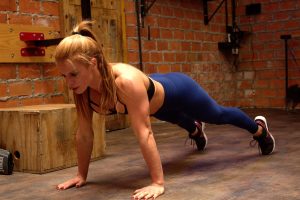
Plank: Yes, planks are everywhere—but they work. Keep a straight line from head to heels with zero hip sag or pike. Squeeze your glutes hard, brace your abs, and breathe steadily. If you can hold 45 seconds without struggling, you’re either not bracing intensely enough or you’re ready to add weight across your back.
Bicycle Crunch: Move slowly and with control—speed kills effectiveness here. Rotate your torso fully, driving your elbow toward the opposite knee. The fast, flailing version cluttering commercial gym floors does almost nothing. Spend 2-3 seconds per rep and actually feel your obliques fire.
The full circuit takes about 15 minutes with rest included. Tack it onto your regular lifting sessions or run it solo on easier training days.
The Timeline Question
Results show up on different timelines depending on where you start, how consistent you stay, and factors like stress and sleep that slip beyond your control. I won’t give you a false deadline.
Here’s what I’ve seen: clients starting at an average body fat percentage (roughly 20-25% for men, 28-33% for women) spot upper ab definition around month three if they maintain their deficit. A full six-pack typically appears within 4-6 months.
Your waist shrinks before the scale moves. Measure your waist at the navel every two weeks, first thing in the morning before eating. Watch that number drop by half an inch and you’ll stay locked in through month two—when water weight has plateaued and motivation naturally dips.
Track measurements. Trust the process. The math never lies, even when your mirror does.
Do You Need Cardio?
No. Your diet creates the deficit; cardio simply makes the equation move faster.
Do 20-30 minutes of moderate cardio three times weekly—you’ll likely cut your timeline by 15-20%, though results vary. The real payoff is mental flexibility: cardio creates a buffer for occasional higher-calorie days without breaking your weekly deficit.
The cardio type matters less than consistency. Walk fast on an incline, bike, swim, jump rope, or row—pick one you’ll actually stick with. Optimization loses to showing up every time.
When This Plan Isn’t Right for You
Get medical clearance first if you have existing lower back issues, hernias, cardiovascular conditions, or haven’t exercised in years (especially past 40). Ab wheel rollouts load your spine significantly, and a single injury can sideline you for months.
I learned this after my stress fracture. I returned too fast, missed warning signs, and added two months to my recovery. A 10-minute doctor’s conversation costs nothing compared to a setback that derails your entire timeline—don’t skip this step.
What I’d Actually Buy
Starting lean? Grab an ab wheel ($15-20), a multi-level resistance band set ($25-35), and optionally a jump rope ($10-15). Total: under $70. You can execute this entire plan from your living room.
The ab wheel delivers the best price-to-effectiveness ratio for direct ab work. Pair it with your band set for full-body circuits, maintain your calorie deficit for 12 weeks, and visible abs follow. No mystery. No magic. Just consistent fundamentals.
Stop reading. Go meal prep.
By Coach Alex Turner · Reviewed by the AuraFit Editorial Team · Last updated: August 2026
Sources & Further Reading
Frequently Asked Questions
What body fat percentage do I need to see my abs?
You need to hit 10-12% body fat as a man or 18-20% as a woman for abs to show clearly. I’ve watched clients reveal upper ab definition at 15%, while others required dropping to 9% before lower abs appeared—your genetics set your personal threshold. Most people underestimate their actual body fat by several percentage points, so that number is probably higher than you think.
How long does it take to get a visible six pack?
Expect 3-6 months if you’re starting from average body fat. A sustainable 300-500 calorie daily deficit burns roughly 0.5-1 pound of fat weekly without triggering muscle loss or metabolic slowdown. Crash diets accelerate the process on paper, but they destroy muscle and tank your metabolism.
Why can’t I see my abs even though I do ab workouts every day?
Your abs exist right now. They’re simply buried under a layer of fat. I’ve coached people training abs 4-5 days per week with impressive core strength and zero visible definition because their body fat remained too high. More crunches won’t fix this—only a calorie deficit will strip away the fat covering your muscles.
How do I accurately track calories for fat loss?
Weigh your food and log everything for at least 4 weeks, including oils, condiments, and creamer. Most people undercount calories by 30% on average, which turns a 2,000 calorie target into 2,600 in reality. Once you nail tracking for a month, your portion sense sharpens enough to loosen the reins slightly.
How much protein should I eat while cutting for visible abs?
Aim for 0.7-1 gram of protein per pound of bodyweight—I often push clients even higher. During a deficit, protein shields muscle tissue from being cannibalized for energy. Lose muscle while cutting, and you’ll have less definition to display once the fat disappears.
You Might Also Like


Coach Alex Turner
Fitness Writer & Content Creator
Coach Alex lost 34 lbs with a $30 ab roller and has spent 8 years helping 200+ people train at home. Every guide on AuraFitGuides comes from real training experience, not theory.
Coach Alex Turner
AuraFit Editorial Team
Alex covers home workouts, nutrition, and fitness gear. Every guide on AuraFitGuides is built around exercises you can actually do without a gym — practical, honest, and backed by published research.
Also from our team
You Might Also Like